
 Multiple Faces Detected



 October 27th, 2023
-Australia No. 2 Most Romance Scam Victims Per Capita in World-
-Men Victimized More Often Than Women Amid a Rise in “Sextortion” Scams
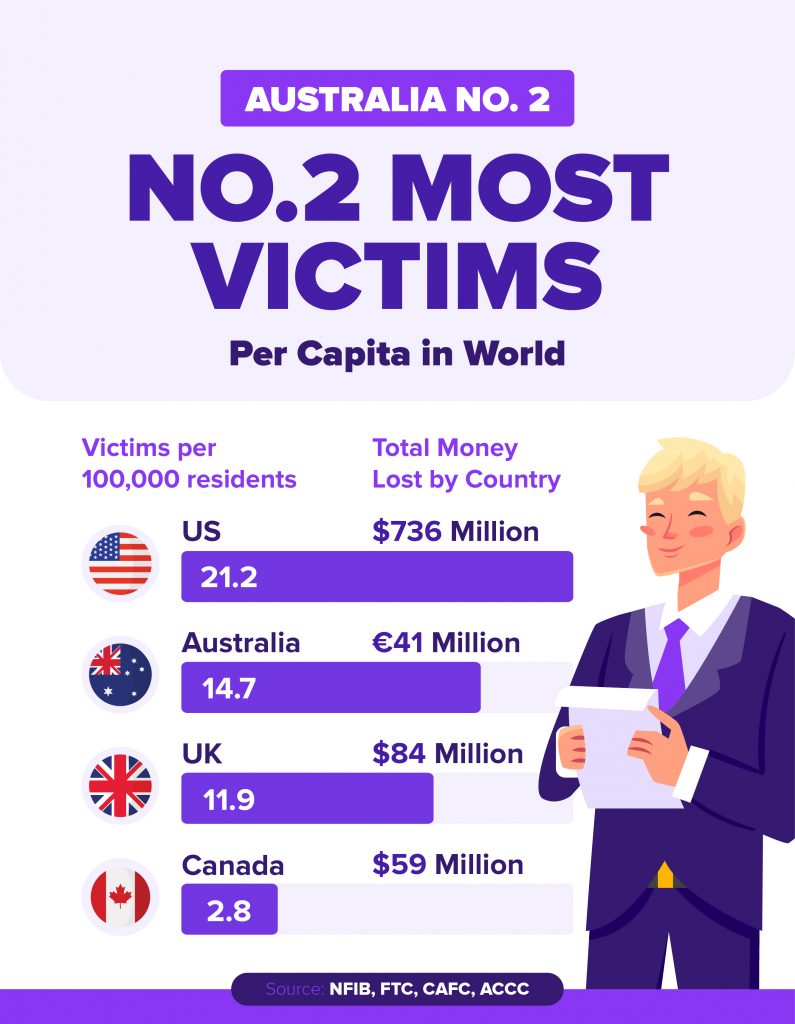
Romance scams are an enormous problem in Australia that leave far too many residents heartbroken and penniless. An analysis of the latest federal data shows Australia has more romance scam victims per capita than any country on earth, with the exception of the United States. Australia had 14.7 victims per 100,000 residents last year according to the Australian Competition and Consumer Commission (ACCC).
There is good news, however. Romance scams in Australia are projected to decline for the second consecutive year, returning to pre-pandemic levels. This is going against global trends where romance scams are continuing to skyrocket.
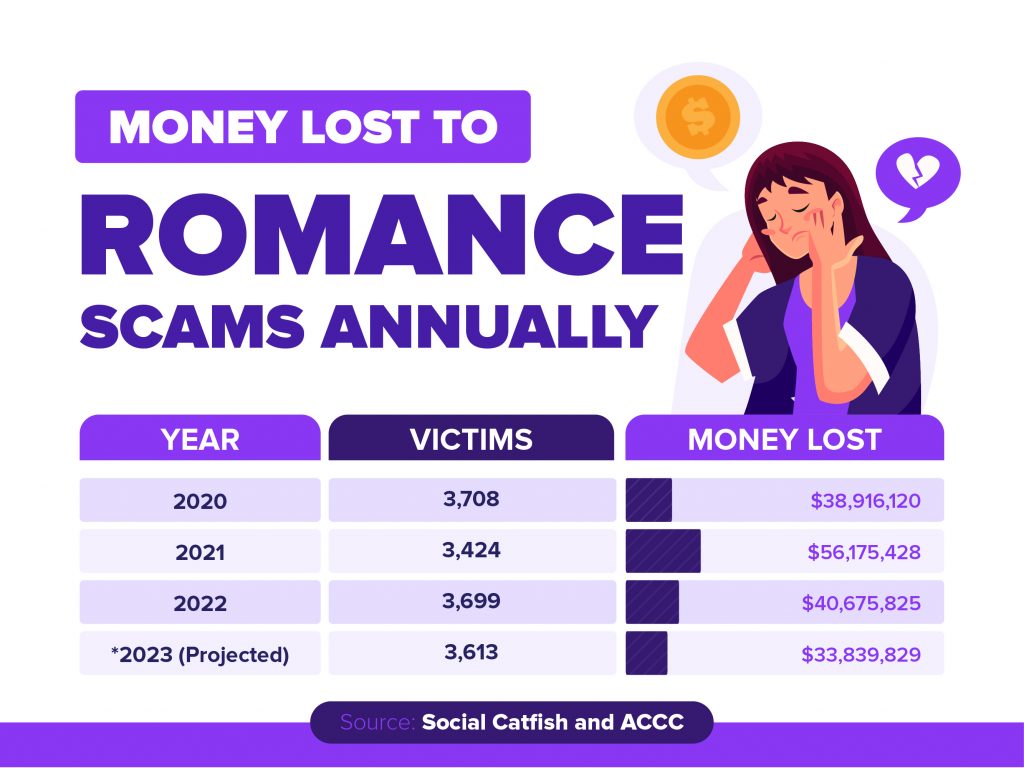
Romance scam victims are projected to lose approximately $33,839,829 in 2023. This is down from $40,675,825 in 2022 and down from $56,175,428 in 2021. The projected 2023 numbers – based on available ACCC data through August – will be the lowest since the global pandemic created enormous opportunities for scammers to exploit people looking for love online.
What is a Romance Scam?
A romance scam is when a scammer steals a photo from an attractive person and creates a fake profile on a dating or social media app to establish a romantic relationship with someone with the intention of defrauding them. The scammer sends affectionate messages and once they establish an emotional connection, they fabricate a crisis and ask for financial assistance for medical emergencies, travel expenses to meet the victim, or other financial troubles.
Methodology
Social Catfish – a company dedicated to preventing online scams through reverse search technology – released this study as part of its mission to prevent people from falling victim to romance scams.
We analyzed data from:
- Australian Competition and Consumer Commission (ACCC) from 2020 to 2023 (as of 10/24/2023, the most recent data this year was through August)
- Millions of reverse search users on Social Catfish.
- Additional sources are linked throughout the report.
KEY FINDINGS:
Australia No. 2 Most Victims Per Capita in World
Romance scammers predominantly target countries with strong economies and high levels of online activity. Employing this strategy, they can target regions where people have high levels of disposable income and financial resources.
We compared how romance scams in Australia compare with other top English speaking countries in 2022. We compared against countries that have good systems in place to track online scams including the U.S., United Kingdom and Canada.
When adjusting for population size, as mentioned, Australia ranks No. 2 with 14.7 romance scam victims per 100,000 residents. The U.S. ranks No. 1 with 21.2 victims per 100,000. When looking at total monetary losses in 2022, Australia – which has the smallest population of the four countries analyzed – lost the least money at $41 million. The U.S. ranks No. 1 losing $734 million according to the FBI, the UK ranks No. 2 losing €84 million according to the NFIB, and Canada was No.3 at $59 million according to the Canadian Anti-Fraud Centre.
These are the 10 Most-Scammed Regions in Australia
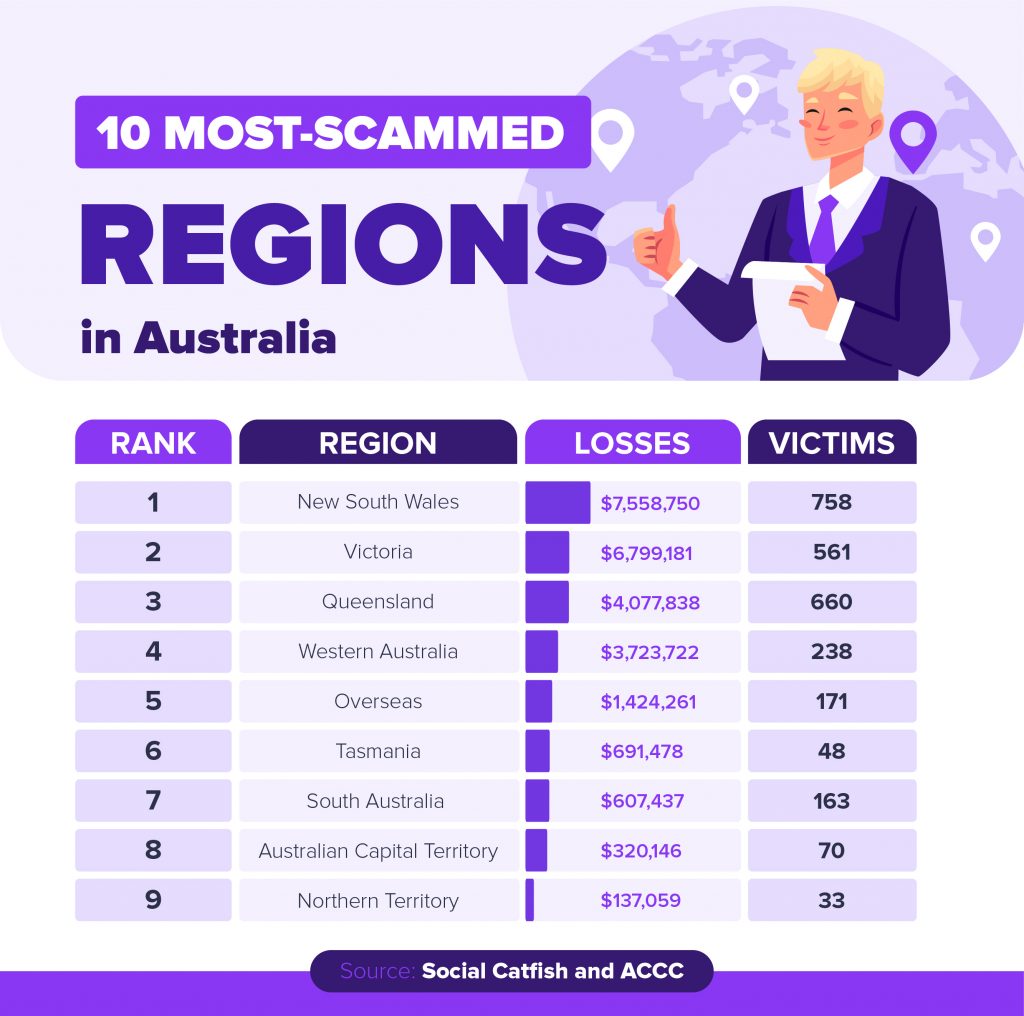
While romance scams occur all over Australia, certain areas are hit harder than others. Ultimately, regardless of where you live, it is critical to take romance scams seriously. Below we rank the regions of the country that lost the most money to romance scams in 2023 using the most recent available data through August. New South Wales ranks No. 1 losing $7,558,750, Victoria ranks No. 2 at $6,799,181 and Queensland ranks No. 3 at $4,077,838.
Men Victimized More Than Women
As it relates to the most-scammed gender in Australia, we found anomalies as compared to the international community. Typically, most romance scam victims are women. Many of whom are freshly divorced or widowed and targeted on purpose by scammers who prey on their loneliness.
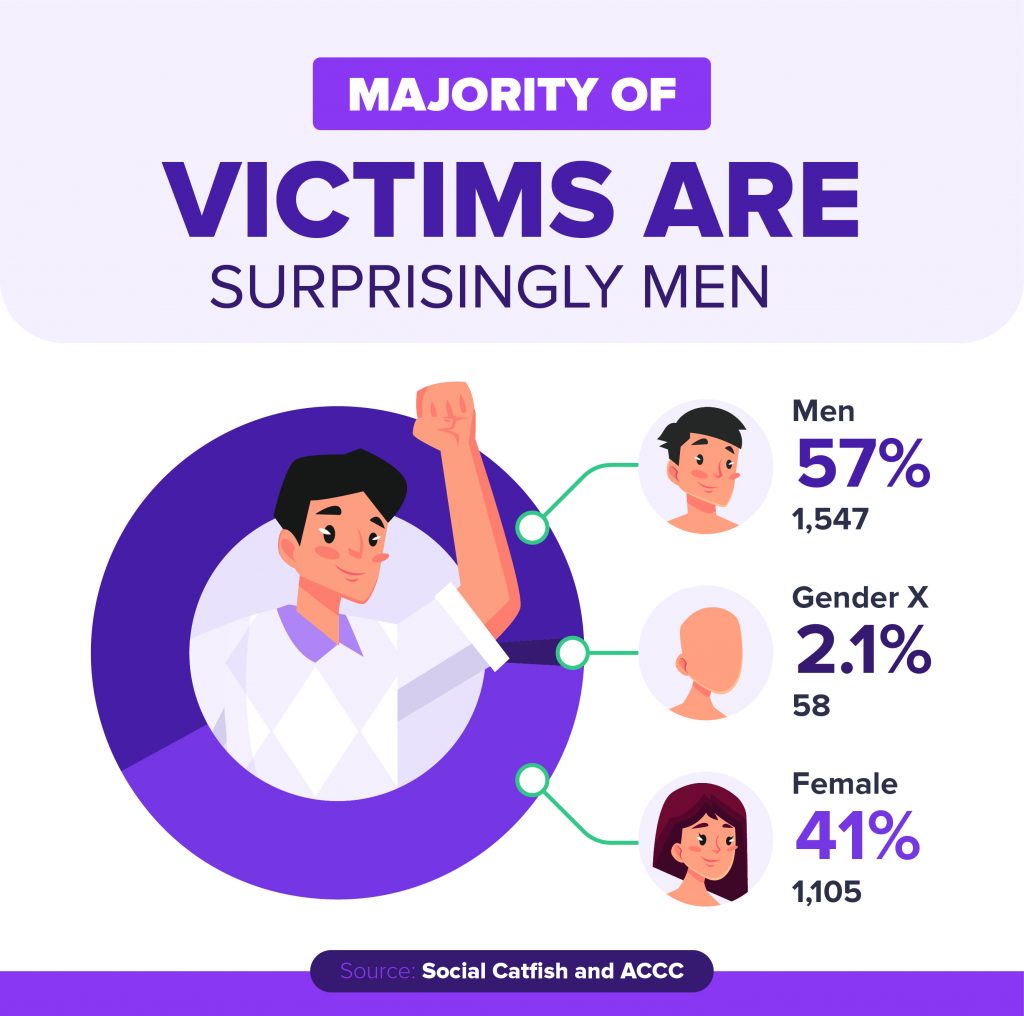
In Australia, however, the data surprisingly shows men are victimized more often than women. In fact, 57% of all victims are men, 41% are women and in 2% of cases the gender was not identified.
One reason for the rise in male victims is that the number of “sextortion scams” has tripled in the first quarter of 2023 compared to 2022 with about 90% being male.
In a sextortion scam, scammers steal photos of very attractive women and seduce lonely men. They trick victims into sending nude photos only to then be financially blackmailed to avoid having those photos shared online.
100 Most Common Photos Used in Romance Scams
Social Catfish released the 100 most common photos used in romance scams with the majority being of women. The report warns Australians stop interacting with anyone using these photos on dating apps or social media. The company analyzed data from 10 million users who performed a reverse image search in 2022 to verify someone’s online identity, and then calculated which photos were used fraudulently the most.
Here is a link to view the 100 most Common Photos Used in Romance Scams
Older Australians are Being Hit Hardest
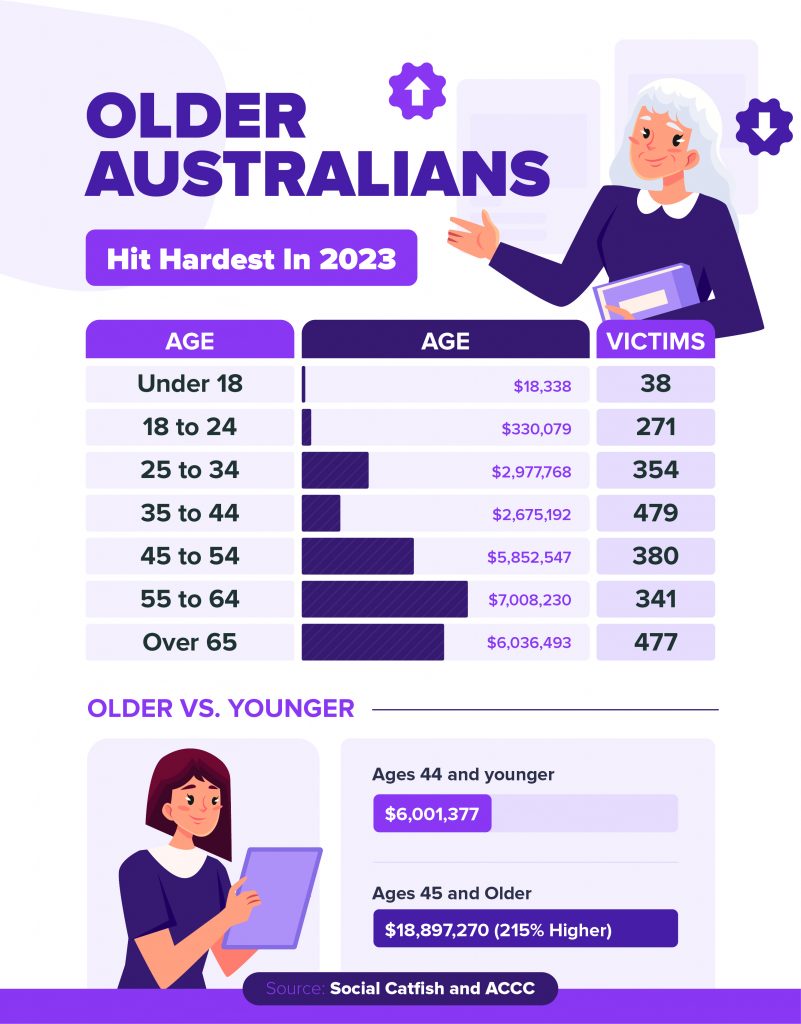
Through August of 2023, older Australians have lost significantly more money than their younger counterparts. People ages 44 and below lost $6,001,377 while those 45 and older lost $18,897,270 – this equates to financial losses that are 215% higher.
People ages 55-64 lost the No. 1 most money losing $7,008,230; people 65 and older ranked No. 2 losing $6,036,493; and middle aged people 45-54 ranked No. 3 losing $5,852,547.
Top 10 Delivery Methods Where Romance Scams Originated
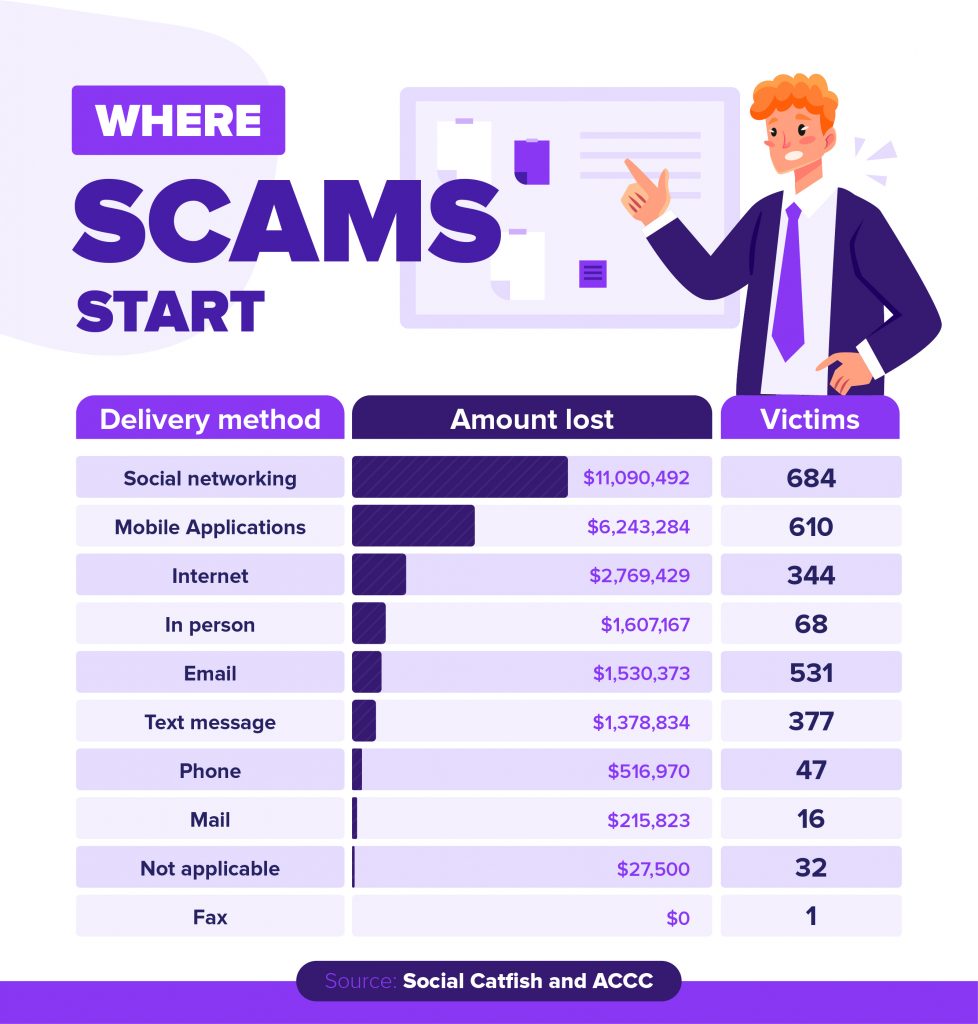
Despite increased public awareness, and persistent government warnings, scammers remain successful because their tactics have become increasingly sophisticated.They do not simply target people on dating apps. In fact, social networking ranks No. 1 with victims losing $11,090,492, mobile applications was No. 2 with victims losing $6,243,284 and the Internet was No. 3 with victims losing $2,769,429.
5 Common Romance Scams in Australia
- Investment Scams: Some scammers pretend to be wealthy individuals who are looking for love while also pitching lucrative investment opportunities. They may promise significant returns on investments and request money upfront. Victims end up losing their money and the so-called romance disappears.
- How to Avoid: Consult a third party financial advisor and conduct extensive research before investing. Beware of deals that sound too good to be true.
- Sextortion: A scammer will send sexually explicit content to their victim and ask for one in return. Once received, the perpetrator will threaten to release the photos or videos on the Internet if a ransom is not paid.
- How to Avoid: Perform a reverse image search to verify the real identity of the person in the photo. See if it matches up with the name of the person you are talking to.
- Fake Celebrity Scams: Fake celebrity romance scams are on the rise in the UK. In one recent case, a NSW woman lost $37,000 to a scammer pretending to be Australian actor Alex O’Loughlin.
- How to Avoid: If a rich celebrity asks for money you are being scammed. Fake social media accounts have few followers compared to real accounts.
- Military Romance Scams: Scammers may pose as military personnel serving overseas, often claiming to be in dangerous situations. They use this as an excuse as to why they cannot video chat. They create emotional connections with victims and ask for money for various reasons, such as medical bills, travel expenses, or to buy equipment.
- How to Avoid: If the person will not video chat or meet in person it is a scam.
- Money Laundering: The scammer will claim to have a problem with their bank and ask the victim to receive funds from a third party and then transfer the money to the scammer’s account. By involving the victim in this process, the scammer can obscure the origin of the funds, making it harder for authorities to trace the illicit activities.party. Unwittingly, the victim can be charged with money laundering.
- How to Avoid: Never provide your back information for any reason.
Where to File a Report if You Have Been Scammed
- ACCC (Australian Competition and Consumer Commission): The ACCC is the primary agency responsible for handling scams in Australia. You can report a romance scam on their website through the ScamWatch portal. Visit their website at ScamWatch and follow the prompts to report the scam.
- Contact Your Local Police: Provide them with all the relevant information about the scam and any evidence you may have.
- IDCARE: IDCARE is a national identity and cyber support service that offers free assistance to victims of scams and identity theft. You can contact IDCARE for help and guidance. Visit their website at IDCARE or call them at 1800 595 160.
- Stay Smart Online: The Australian Government’s “Stay Smart Online” website offers information and resources on online safety and cybersecurity. They have a reporting mechanism for various online threats, including scams. Visit their website at Stay Smart Online.
- Financial Institutions: If you’ve sent money to the scammer through a bank or other financial institution, contact your bank immediately to report the fraudulent transaction. They may be able to help you recover some or all of the funds.
- Australian Cyber Security Centre (ACSC): While primarily focused on cybersecurity and online threats, ACSC can provide guidance on dealing with online scams. Visit their website at ACSC.
- eSafety Commissioner: The eSafety Commissioner’s website provides information on online safety and resources for dealing with online abuse and scams. Visit their website at eSafety Commissioner.
Other Critical Steps to Take After You Have Been Scammed
- Cease all Communication with the Scammer: Once you have identified that you have been scammed, do not respond to any further messages or calls, and block them on all platforms. If you have sent money, don’t send any more.
- Protect Your Identity: Scammers may have collected personal information about you during the scam, so take steps to protect your identity. Change your passwords and enable two-factor authentication on all your accounts. Monitor your bank accounts and credit cards for any unusual activity.
- Get Help and Support: Being a victim of a romance scam can be a traumatic and humiliating experience. Most victims never come forward and without seeking help many commit suicide. Seek help from family, friends, or a professional counselor. Don’t feel ashamed or embarrassed to talk about what happened; remember that you are not alone.
- Be Cautious: Often the same victim gets scammed multiple times. Once a person has been scammed, scammers know they are susceptible so they will approach them in multiple places and ways. It is important to stop giving money and personal information to anyone online that you have never met.