
 Multiple Faces Detected


 September 27th, 2023
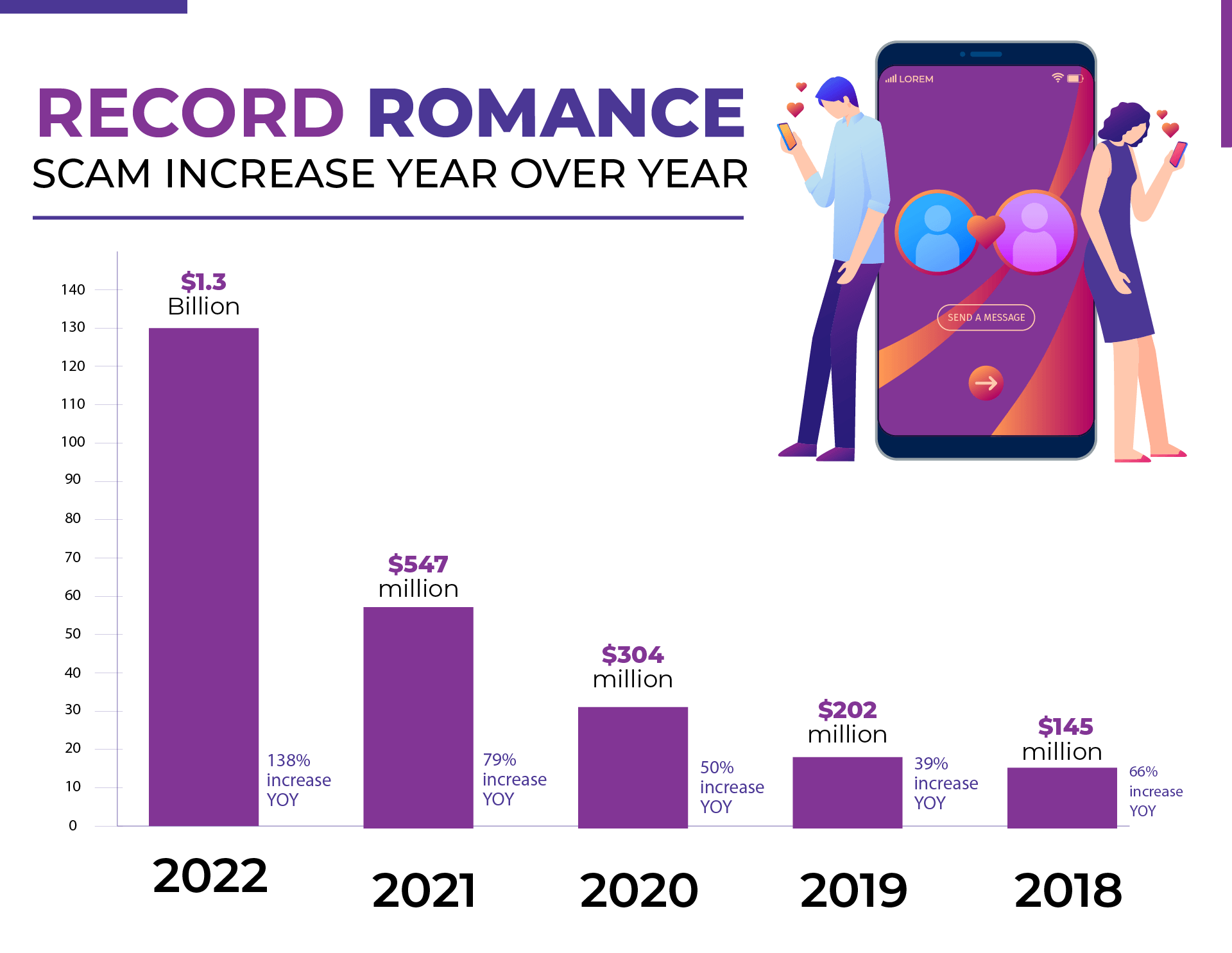
-Record $1.3 Billion lost in 2022, up an Unprecedented 138% Year over Year-
Nearly 70,000 Americans lost a record $1.3 billion to romance scams in 2022 according to the Federal Trade Commission, up a staggering 138% from $547 million in 2021.
The 138% jump last year is by far the largest this country has ever seen. Despite increased government warnings, pop culture shows like The Tinder Swindler — which aired last year on Netflix — and increased public awareness, romance scams continue to leave an unprecedented number of Americans broke and heartbroken.
What is a romance scam?
Romance scams are when criminals steal photos of attractive people and create fake profiles on dating apps or social media platforms. These scams can take many different forms, where sometimes a single person develops a relationship with the victim over a long period of time. In other cases, there are elaborate schemes that involve multiple individuals posing as love interests involving victims in money laundering, cryptocurrency, or gift card scams. While the methods used by scammers have evolved over time, the results remain the same: people are left penniless and heartbroken, with little recourse for justice due to governmental jurisdiction interviews.
Most Romance Scams Emanate from Nigeria in Office Buildings
The original romance scam was the infamous Nigerian prince scam that started during the infancy of the Internet in AOL chat rooms. Today, romance scams take place in large office buildings in Nigerian where criminals operate using a mix of strategies from Corporate America and other crime syndicates.
The office is filled 24/7 by scores of “employees” who are responsible for finding “clients” – otherwise known as victims. Operating like a mafia syndicate, when a scammer steals money from a victim, a healthy percentage of profits gets kicked up to the senior leaders, or the “Boss” in the organization. Senior leadership provides the new workers with infrastructure, training, and support.
Social Catfish has infiltrated these organizations and works with several reformed Nigerian romance scammers who serve as consultants on the ground in Nigeria. These reformed scammers have provided Social Catfish with leaked training manuals, details on how these organizations are run, and will track down information on specific romance scam cases Social Catfish is trying to help solve on behalf of their users.
In this report, we will take a closer look at how romance scams happen, how they have evolved, and what you can do to protect yourself from falling victim to this devastating crime.
Below we will break down the following:
- States the lost the most & least money to romance scams in 2022.
- Where romance scams increased the most or least year over year.
- Results of a poll of 3,047 romance scam victims conducted by Social Catfish.
- New romance scams to avoid in 2022.
- 100 Most Common Photos Used in Romance Scams in 2022
- Tips to avoid romance scams and what to do if you have been scammed.
- Click here to view a LEAKED Nigerian Romance Scammer Bible: Social Catfish exclusively obtained this training manual from a reformed Nigerian romance scammer who now works with Social Catfish as a consultant on the ground in Nigeria.
Methodology: Social Catfish created this report based on the following:
- Analysis of data from the 2022 FBI Internet Crime Complaint Center fraud report released in March 2023, and the Federal Trade Commission’s annual fraud report released in February 2023.
- Social Catfish conducted the largest poll of romance scam victims ever from a private company with 3,047 participants. The poll was conducted from May to August 2022.
- Trends and data from millions of reverse image search users on Social Catfish.
BEST AND WORST STATES FOR ROMANCE SCAMS:
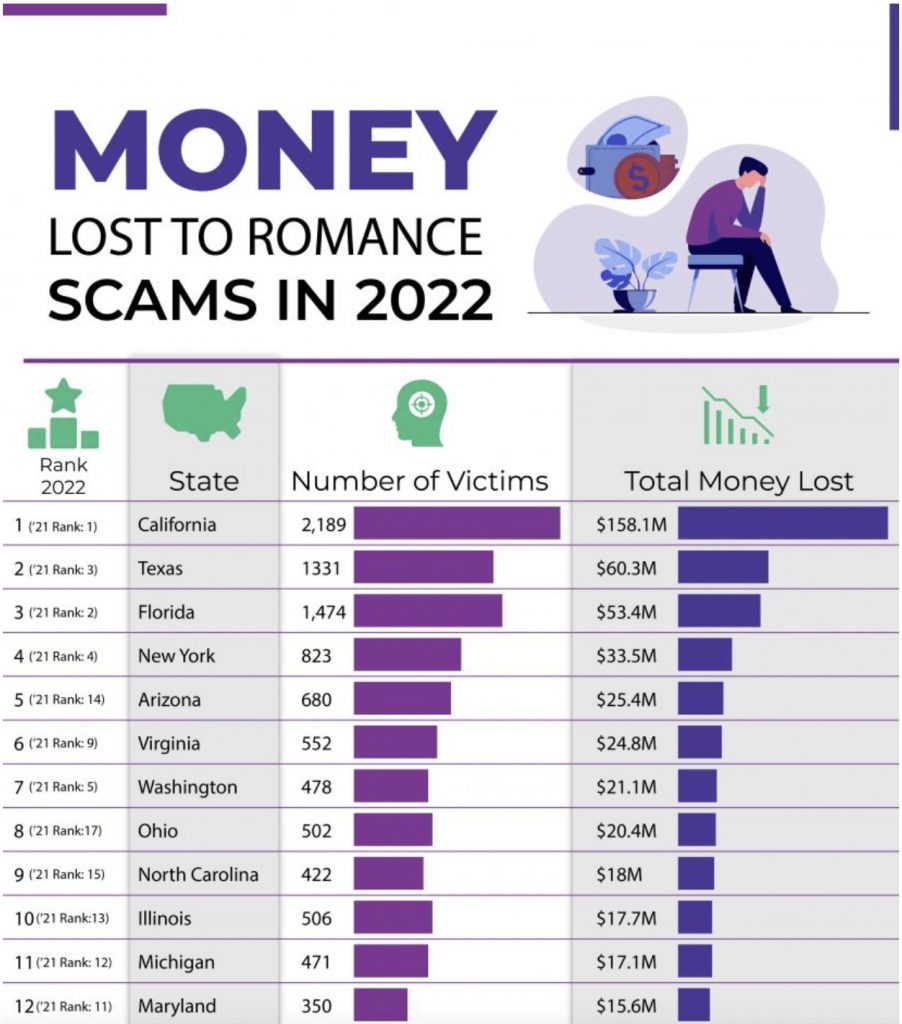
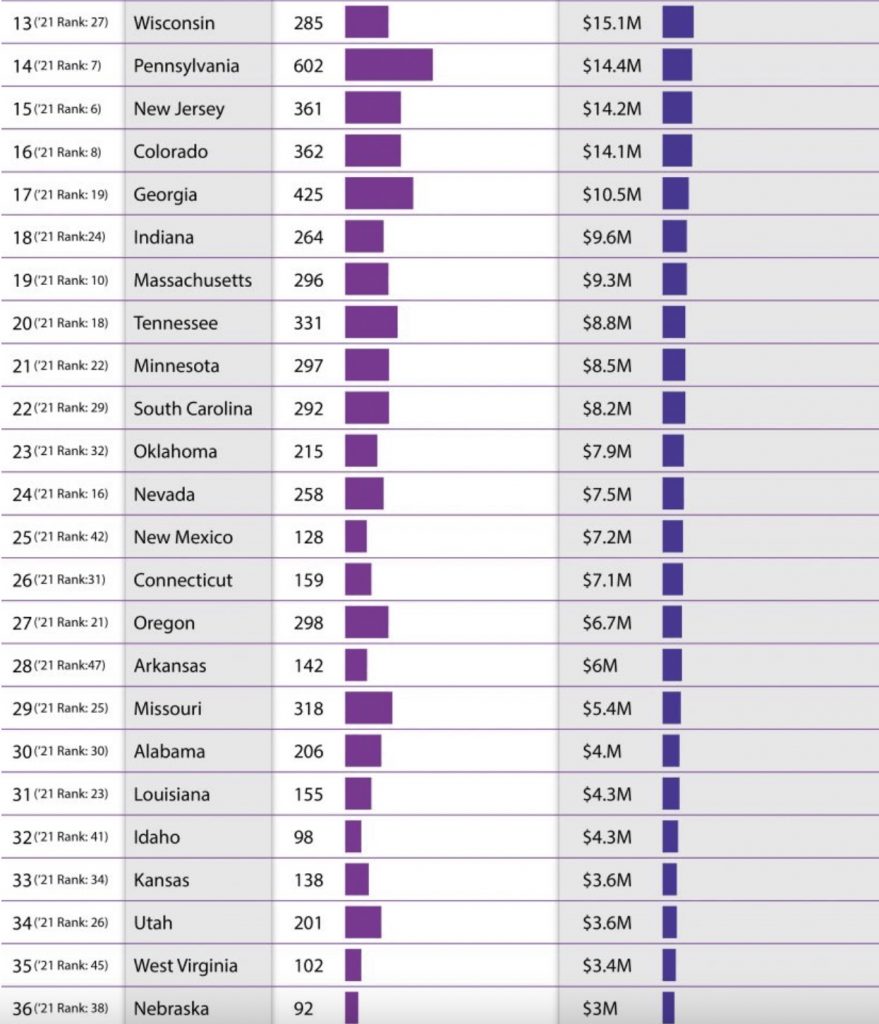
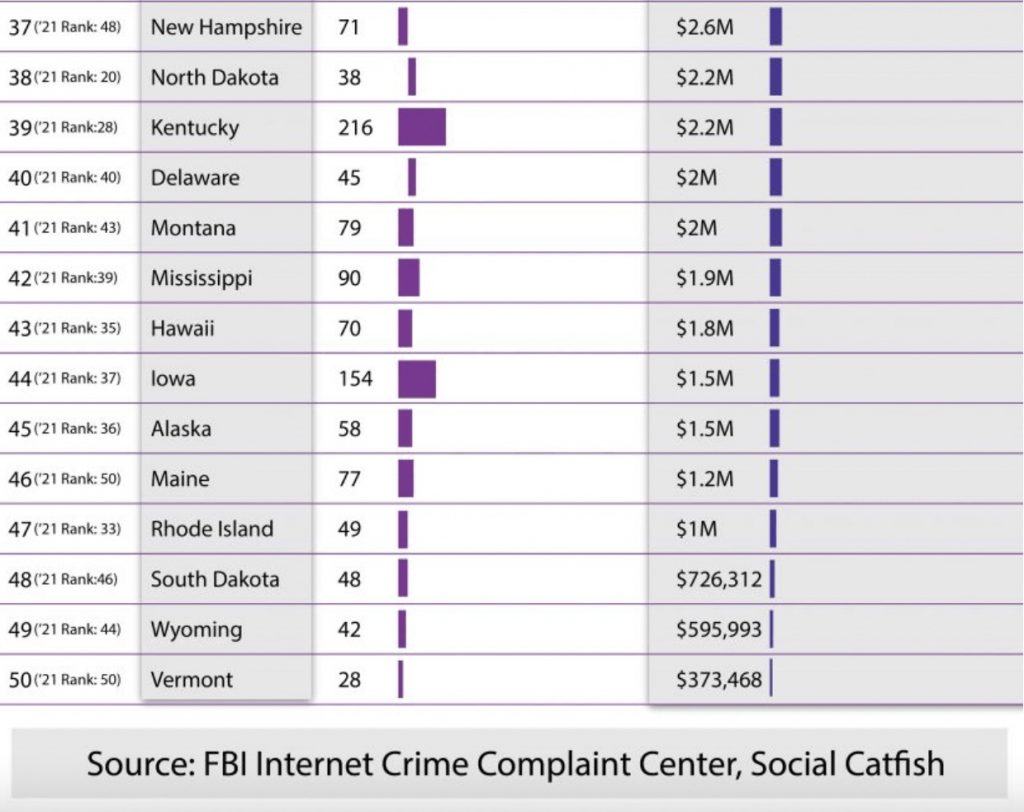
According to the FBI, California again ranks No. 1 for money lost to romance scams in 2022 with 2,198 victims losing $158 million. Texas moved into the No. 2 spot losing $60.3 million and Florida dropped to No. 3 losing $53.4 million.
There are four new states in top 10 in 2022 include Arizona (No. 5, up from No. 14), Ohio (No. 8, up from No. 17), North Carolina (No. 9, up from No. 15), and Illinois (No. 10, up from No. 13.)
Four states dropped out of the top 10 this year including Pennsylvania (No. 14, down from No. 7), New Jersey (No. 15 down from No. 6), Colorado (No. 16 down from No. 8), and Massachusetts (No. 19 down from No. 10).
WHERE WAS MONEY LOST PER VICTIM HIGHEST?
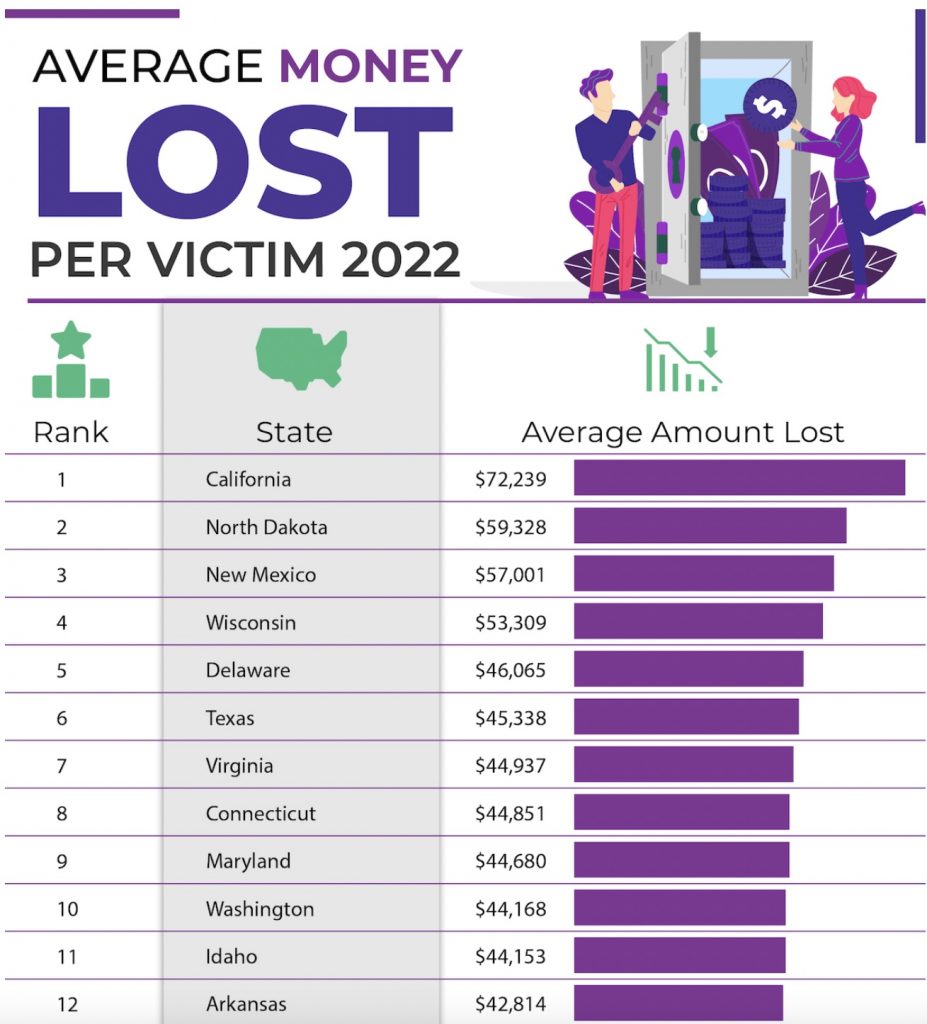
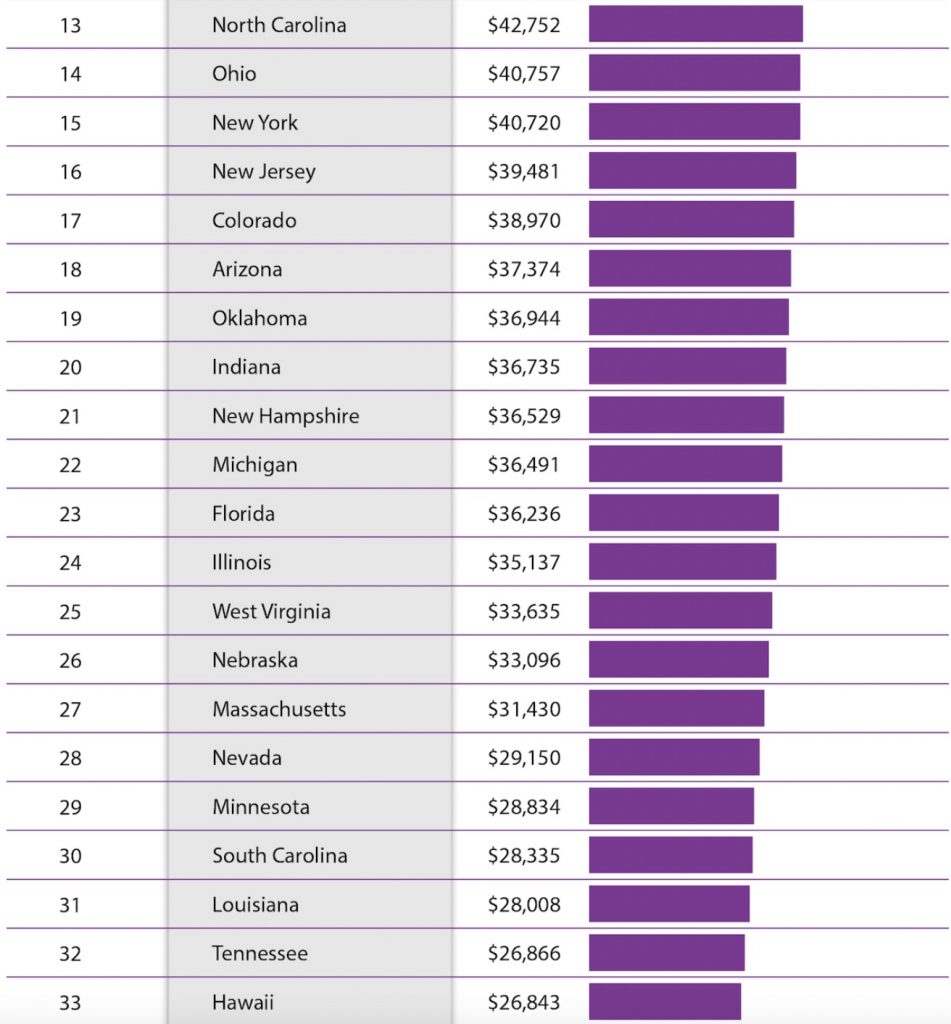
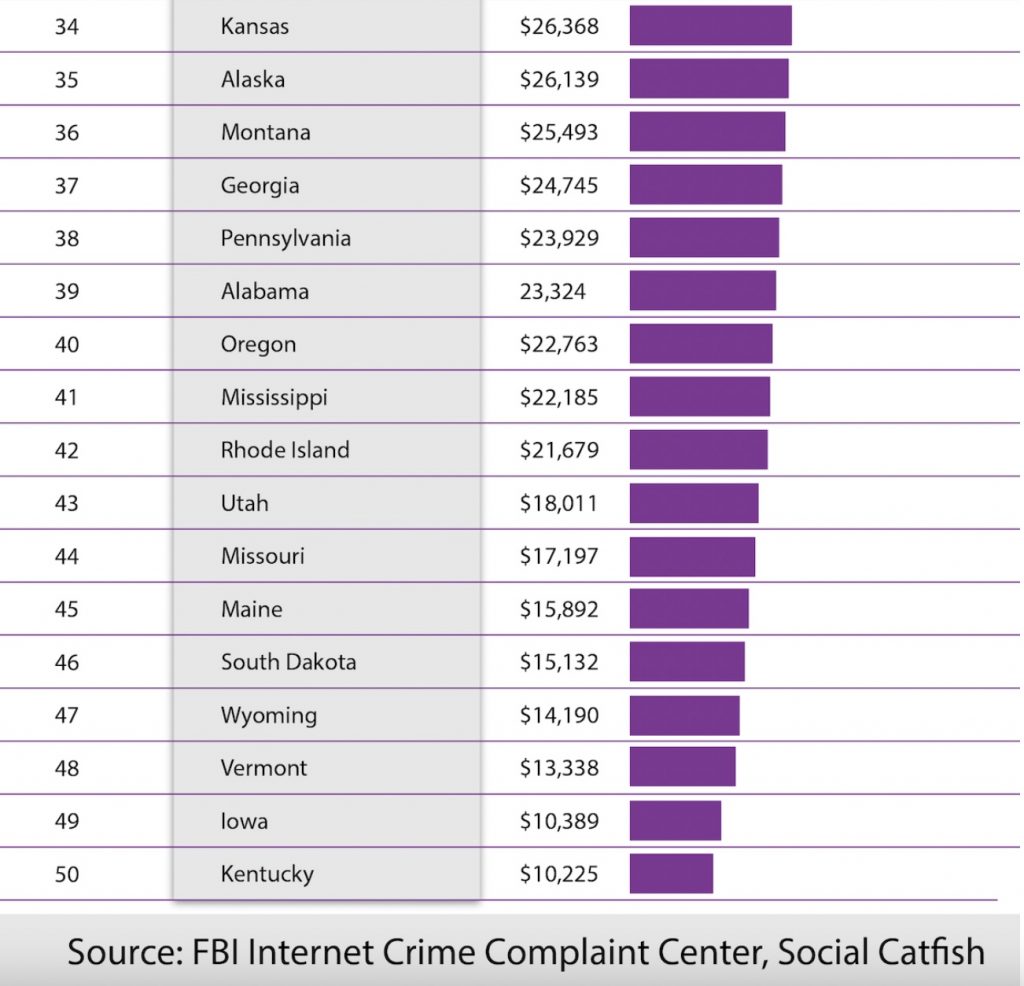
An analysis of FBI data shows no clear-cut trends as to which areas in the country lost the most per victim. For example, California – the most populous state — ranks No. 1 with each victim losing an average of $72,239. However, North Dakota – the No. 4 least populous state — ranks No. 2 with each victim losing $59,328.
WHERE DID ROMANCE SCAMS RISE OR FALL YEAR OVER YEAR?
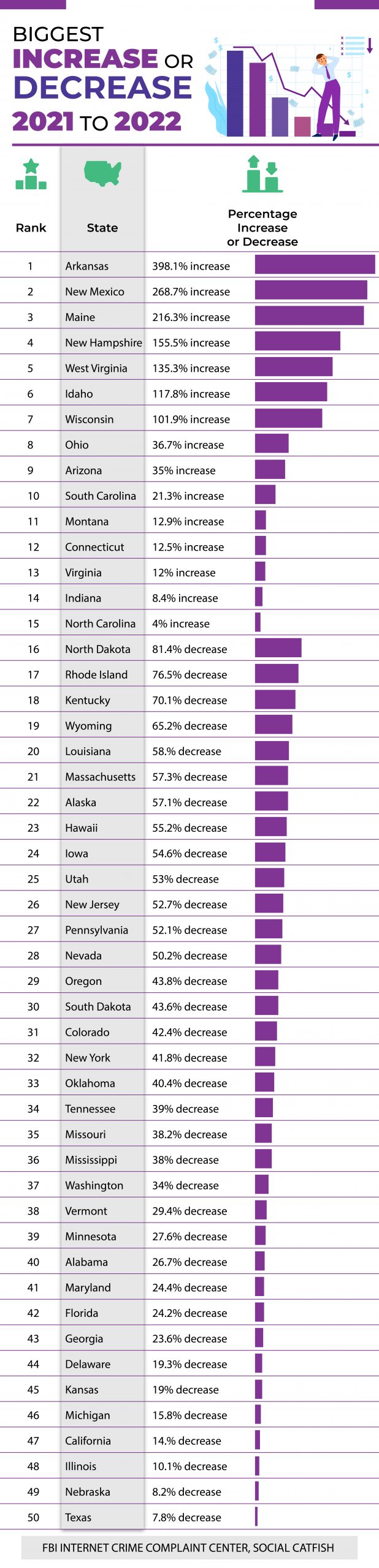
According to the FBI, many small or medium sized states tended to see the largest increase in money lost from 2021 to 2022. Arkansas ranks No. 1 seeing a 398% increase, followed by New Mexico (268% increase), and Maine (216% increase).
Wyoming saw the No. 1 largest decrease of 65% followed by Louisiana (58%) and Massachusetts (57%).
TOP PAYMENT METHODS FOR ROMANCE SCAMS IN 2022
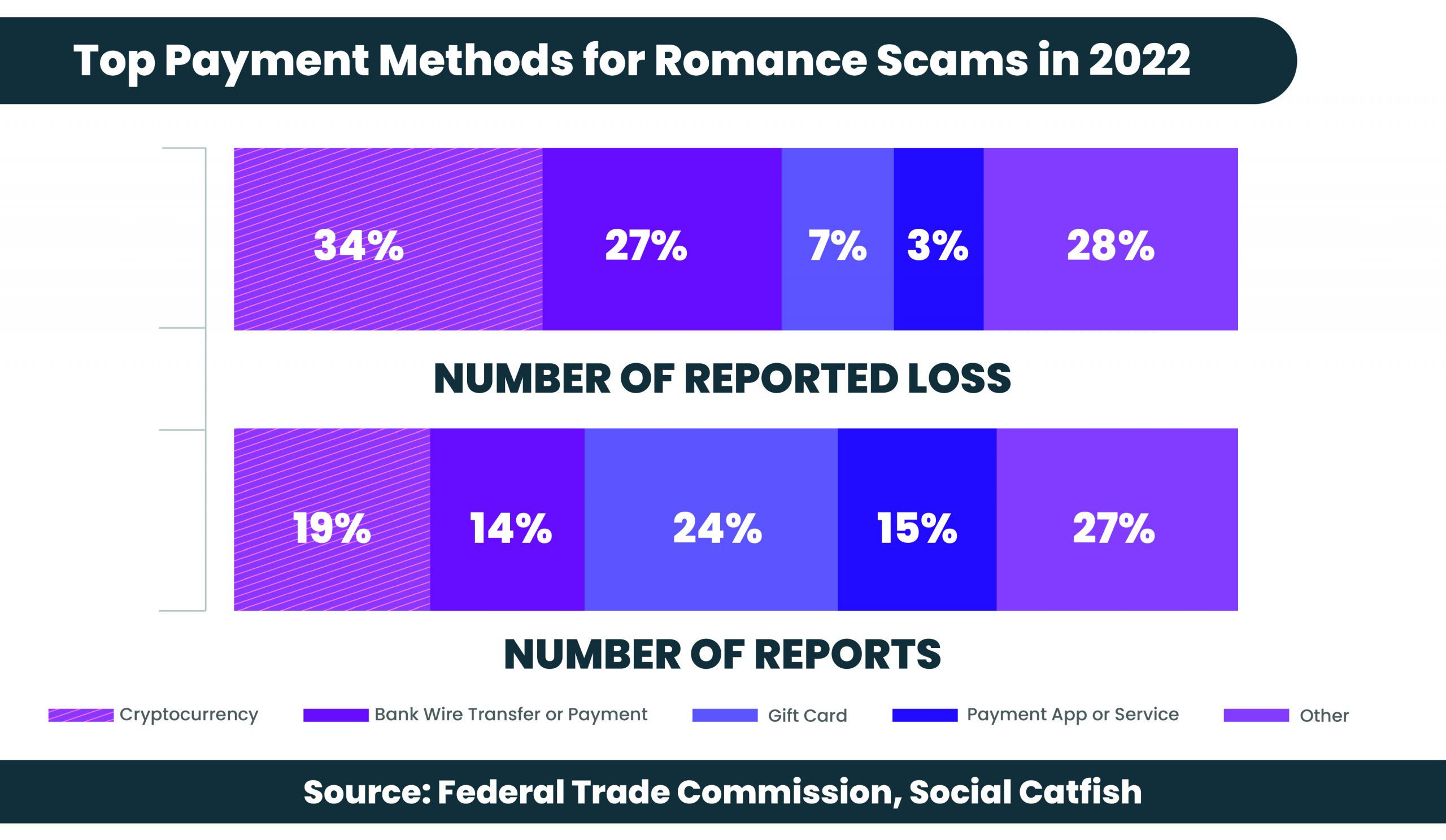
One way to recognize that you are dealing with a romance scammer is not only if they ask you for money, but what form of payment they request. Nearly 35% of all money lost to romance scams in 2022 were sent in using cryptocurrency. However, the most common form of payment requested by scammers is gift cards.
MOST COMMON REASONS ROMANCE SCAMMERS ASKED FOR MONEY IN 2022
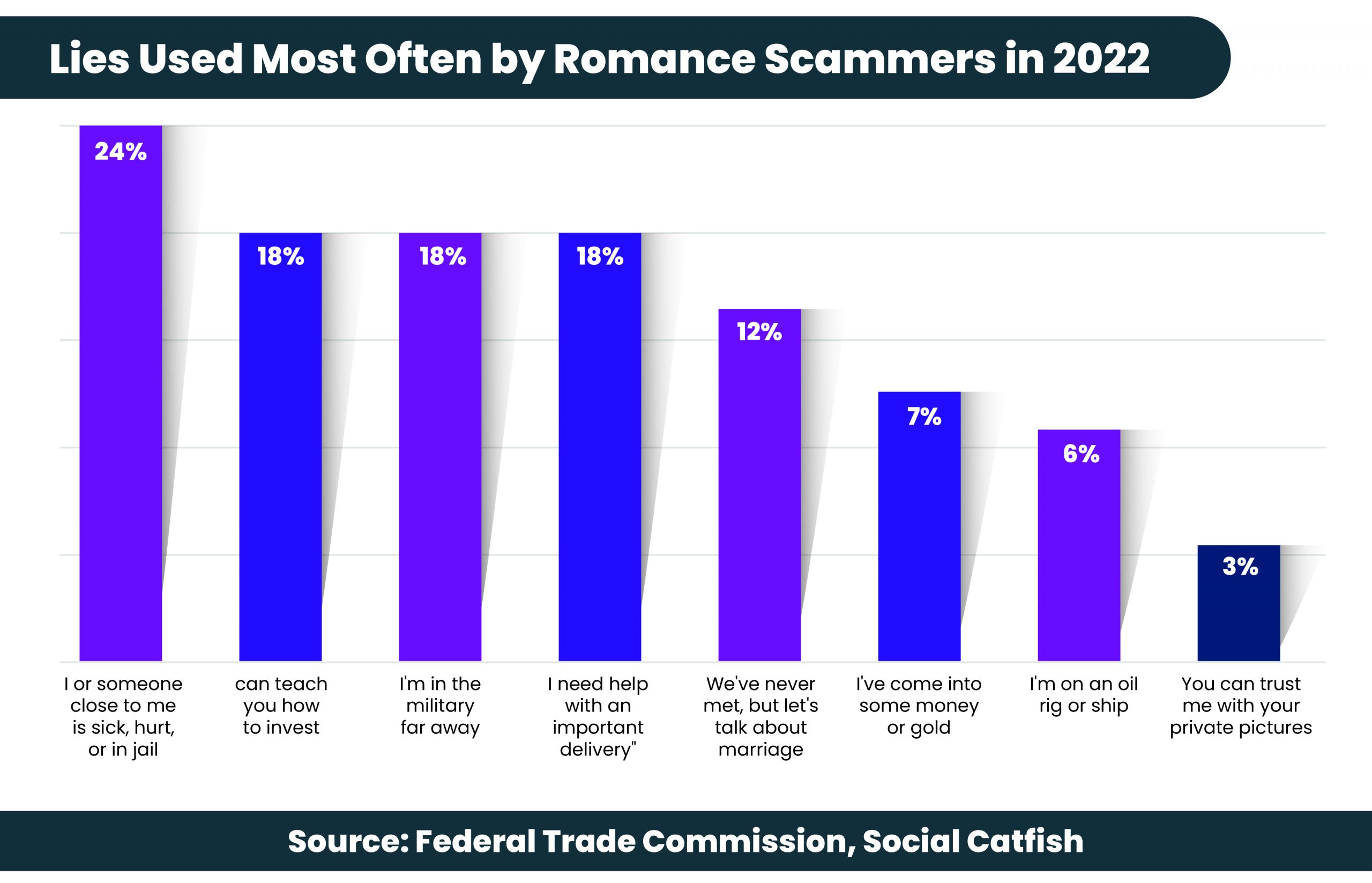
As mentioned earlier in this study, romance scammers receive robust training once they join the criminal organization. This includes a detailed training manual offering best practices developed and fine tuned over decades. Here are the most common lines used by scammers last year.
SOCIAL CATFISH POLLED 3,047 ROMANCE SCAM VICTIMS
Social Catfish conducted the largest poll of romance scam victims ever from a private company with 3,047 participants. The poll — conducted from May to August 2022 – was designed to learn more about the types of people who become victims. Some of the findings were surprising.
- 75% of Romance Scams Victims Are College Educated: There is a common misconception that people who fall for romance scams must be unintelligent. However, 75% of the 3,074 victims polled by Social Catfish report having some college education and 13% earned graduate degrees. The FTC reported a record $547 million was lost to romance scams in 2021, up from $304 million and labeled it the No. 1 type of fraud.
- Middle and Lower Class Americans Make up 84% of Romance Scam Victims: While lack of education did not increase the likelihood of being a romance scam victim, socio-economic factors did. The Social Catfish poll found 44% of romance scam victims make less than $100,000 and an additional 40% make less than $40,000 per year. In total, 84% of victims earn less than $100,000 and only16% earn six figures which shows a strong socio-economic correlation that those with less money are more susceptible.
- Romance Scams Leading to Financial Ruin: The Social Catfish poll found 10% of victims lost more than $100,000 with 4% losing more than $200,000. As noted earlier, 84% of victims earn less than $100,000 annually meaning many had to sell their assets or take out loans to pay their scammers. Moreover, 35% of victims were retired with many having to reenter the workforce.
3 ROMANCE SCAMS TO AVOID IN 2023
- Celebrity Romance Scam: There has been a rise in romance scammers pretending to be celebrities on social media. One criminal pretended to be Bruno Mars and stole $100,000 from a woman in Texas. Thankfully, another victim chose not to send a fraudulent Keanu Reeves $400,000 to help him shoot finance the latest John Wick movie. How to Avoid: If a rich celebrity claims to have fallen in love you – and asks for money – it is a scam, and you should block and report them on social media.
- Cryptocurrency Romance Scams: Fraudsters woo their love-struck victim by pretending to have gotten rich in crypto. They convince the target to invest alongside them by downloading an app. While the app even has data showing return on your investment, it is all just a scam. How to Avoid: Perform a reverse image search to confirm if the person is who they say they are. Conduct exhaustive research before making any investments.
- Military Romance scams: Scammers pretending to be military personnel are common in romance scams. They may use stolen military photos and claim to be stationed overseas which is why they cannot meet in person. They claim to need money to fly back to the U.S. so they can finally meet and be together. How to Avoid: Never give money to anyone that can’t meet in person or video chat.
100 Most Common Photos Used in Romance Scams in 2022
Social Catfish released the 100 most common photos used in romance scams last year. During a romance scam, fraudsters steal photos of attractive people, create fake online accounts, and make victims them fall in love so they can drain their bank account. The report warns Americans to stop interacting with anyone using these photos on dating apps or social media. The company analyzed data from 10 million users who performed a reverse image search in 2022 to verify someone’s online identity, and then calculated which photos were used fraudulently the most.
Here is a link to view the 100 most Common Photos Used in Romance Scams in 2022
Tips to Avoid Romance Scams
Romance scams can happen to anyone, but there are steps you can take to reduce the risk of falling victim to one. Here are six tips to avoid romance scams:
- Before entering a romantic relationship with someone online conduct a reverse image search to confirm their true identity.
- Research them thoroughly using search engines and social media to verify their identity and be cautious if you cannot find any information about them.
- If someone you have just met online asks for money, be wary. Do not send money or provide financial information to anyone you have not met in person and built a trusting relationship with.
- Scammers often initiate contact out of the blue, so be wary of messages or emails from people you don’t know. Be particularly cautious if the message is overly flattering or if they quickly profess their love for you.
- Scammers often avoid meeting in person, so make sure you meet your potential partner face-to-face before getting too invested in the relationship. Meeting in person will also allow you to assess their true identity and intentions.
- If something feels too good to be true or doesn’t feel right, trust your instincts. Scammers often use emotional manipulation to gain their victims’ trust, so be cautious of anyone who makes you feel uncomfortable.
- If you use dating sites, make sure they are reputable and trustworthy. Check the site’s safety guidelines and security features and be cautious of anyone who asks you to use a different platform or website to communicate with them.
By following these tips, you can reduce the risk of falling victim to a romance scam. Remember to be cautious when communicating with someone online and never give out personal or financial information unless you are sure it is safe to do so. If you suspect that you have fallen victim to a romance scam, report it to the relevant authorities immediately.
5 Steps to Take If You Have Been Scammed
Discovering that you have been the victim of a romance scam can be a traumatic experience, but it’s essential to take action quickly to minimize the damage.
- Report the Scam to the Authorities: File a report with your local law enforcement agency, the Federal Trade Commission (FTC) and the Internet Crime Complaint Center (IC3).
- Cease all Communication with the Scammer: Once you have identified that you have been scammed, do not respond to any further messages or calls, and block them on all platforms. If you have sent money, don’t send any more.
- Protect Your Identity: Scammers may have collected personal information about you during the scam, so take steps to protect your identity. Change your passwords and enable two-factor authentication on all your accounts. Monitor your bank accounts and credit cards for any unusual activity.
- Get Help and Support: Being a victim of a romance scam can be a traumatic and humiliating experience. Most victims never come forward and without seeking help many commit suicide. Seek help from family, friends, or a professional counselor. Don’t feel ashamed or embarrassed to talk about what happened; remember that you are not alone.
- Be Cautious: Often the same victim gets scammed multiple times. Once a person has been scammed, scammers know they are susceptible so they will approach them in multiple places and ways. It is important to stop giving money and personal information to anyone online that you have never met.