
 Multiple Faces Detected


 June 13th, 2024
Hinge has stepped out of the box to offer a (slightly) more personal, and deeper twist on the traditional dating app. The familiar matchmaking app formula remains largely intact, complete with the waiting for one or the other to express interest and the other to either reciprocate that interest or pass. While Hinge may not have removed the anxiety and awkwardness of deciding to take the leap of making first contact, they have at least made it easier to know who you are reaching out to…or have they?
Rather than the typical dating site headshot, and a few stats, Hinge allows users to create individual profiles that share multiple photos. Users are also given several conversation-starting prompts to provide clever responses. These profiles are designed to help users break the ice and build stronger initial connections with “real” people before taking the leap into the real world.
But, how certain can you be that the amazing man or woman that you are interacting with on Hinge is a real person? The uncomfortable truth is that even with the cool personalized profile concept, Hinge is as prone to bad actors creating fake profiles for nefarious purposes as most other dating sites. So how can you tell if the person on the other side of that profile is the love of your life or a scamming bot? Let’s explore!
How Does Hinge Work?
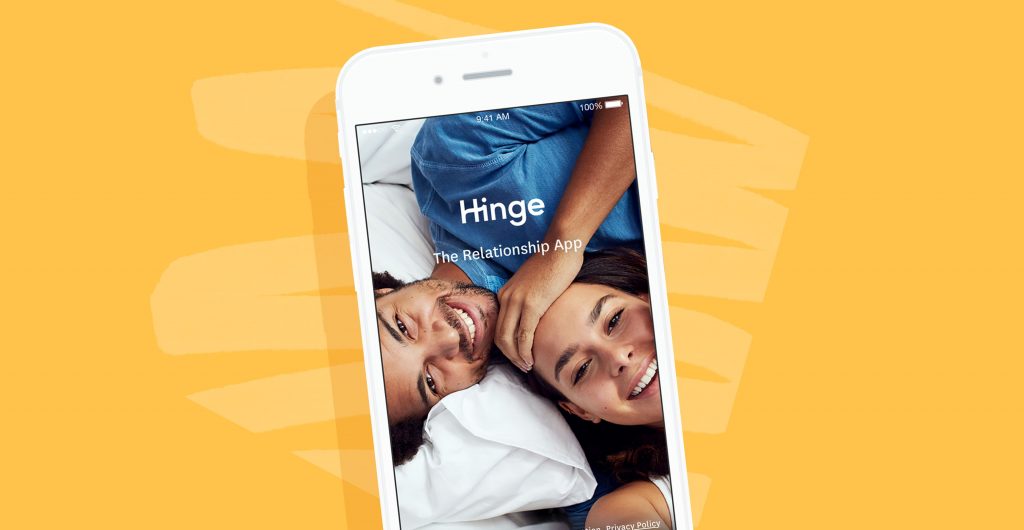
Hinge is designed as an algorithm-based dating app that is designed to produce long-term relationships rather than short-term hookups. The platform’s carefully designed algorithm produces precise matches that lead to real connections.
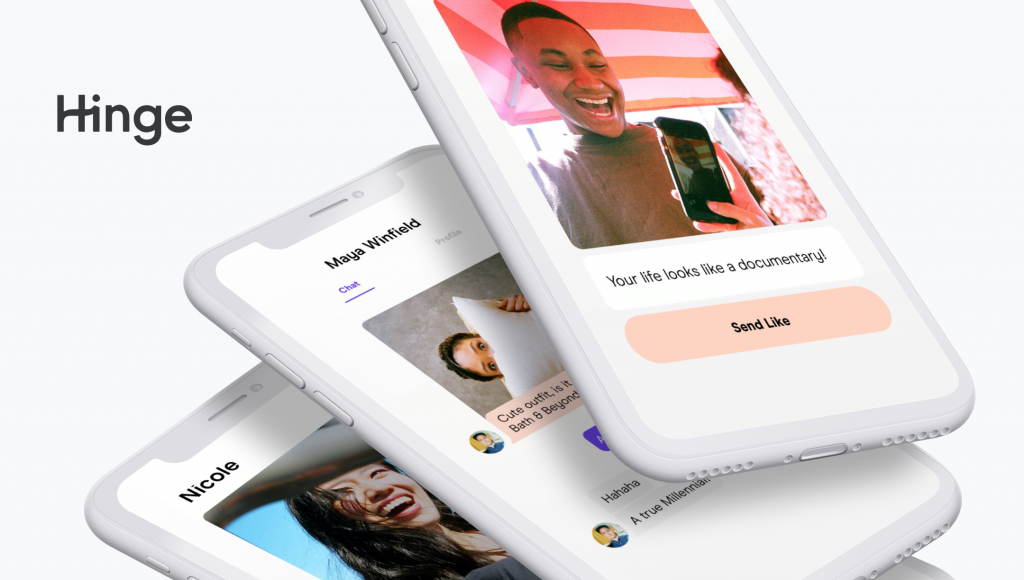
Hinge sets itself apart from other relationship-based dating websites by combining the look and feel of a social media platform with the standard dating app matching algorithm system. Hinge users are able to create social media-style user profiles complete with multiple pictures and clever posts. This unique formula creates a more organic and natural feel that allows users to get to know the person behind the picture through their various profile entries before deciding to take the leap into real-world dating.
What Type Of Vetting Process Does Hinge Use?
The unique profile concept not only helps users get to know more about each other’s preferences, but it also serves as an additional vetting step in Hinge’s vetting process. Unlike other dating sites, Hinge requires new users to submit a minimum of 6 photos, and 3 answers to prompt questions to create their user profile before beginning to interact with other website users.
That being said, the user vetting process on Hinge is generally on par with other dating apps. This means, that yes, there are likely to be a fair number of fake user profiles slipping through the gaps in security and onto the website.
It should be noted that while Hinge does conduct a variety of identity verification checks, including phone number verification and human profile review, the platform does not perform photo verification to identify false profile photos.
The website does employ diligent moderators to help keep users safe, however, a modicum of caution should be employed when meeting strangers via any online dating platform including Hinge, and others.
How Can You Detect (& Avoid) Fake Profiles On Hinge?
Scammers, catfishers, and other bad actors seem to get more inventive, and more nefarious with each passing year. Most online dating platforms, including Hinge, do take practical steps to help ensure the veracity of users. That being said, the very nature of the activity, meeting and interacting with veritable strangers, contains an inherent amount of risk that simply cannot be completely mitigated through security vetting practices.
With the frightening rise in the quantity and scope of web-based catfishing scams, users are more concerned than ever with the ability to positively identify the identity of the person behind the alluring or engaging online persona.
Fortunately, there are steps that users can take to help protect their safety by conducting their own photo and profile verification due diligence.
How Common Are Fake Dating Profiles?
Fake dating profiles are more common than you may think. Hinge recently reported that they removed more than 70,000 fake accounts and bots from their platform over the course of one month; a substantial number considering Hinge’s user base.
Unfortunately, fraudsters are increasingly preying on users who are looking for relationships online. With that said, there are steps both Hinge and individual daters can take to try to identify and prevent fake profiles from scamming people out of money or time.
Hinge actively monitors for fraudulent behaviour and encourages users to report any suspicious accounts or activity, while singles themselves can look for red flags like out-of-date profile photos or language that seems too good to be true. By taking these proactive steps, we can all work together to reduce the prevalence of fake dating profiles.
How Do You Tell If Hinge Match Is A Bot?

It can be difficult to tell if your Hinge match is a bot or not. In general, Hinge fake profiles usually have almost no profile information, no pictures, and generic interests listed.
Additionally, if your match sends you messages with poor grammar and strange syntax, along with links to external sites or websites, that may also be a sign of a Hinge bot. You can always check their profile for more clues; if the user’s descriptions appears to be copied from other Hinge users or doesn’t reference their own experiences, then it is likely a Hinge bot.
If you have any suspicions about your Hinge match being a bot then take extra precaution before engaging in conversation with them as they could be potentially harmful.
Reverse Photo Verification
Though Hinge does not conduct photo verification, that certainly does not mean that you cannot conduct your own background research. A simple reverse image search can help you quickly discover whether the photos used in a user profile have been pilfered from another website, or whether the identity of the person in the photo matches the identity provided on the profile.
A reverse image search uses a given photo to scan the internet for any other locations where that exact photo may be published. Many people tend to use the same images for their profile pictures on multiple social media websites. This can be a great tool to help verify that the person in the image is the same person that you are interacting with online.
Additionally, reverse image searches can provide a great opportunity to gain deeper insight into the person behind the glossy dating app profile. People tend to present the very best version of themselves on dating apps, a reverse image search can help you discover the nuanced reality behind the scenes.
While a reverse image search is the best method for detecting online catfishing accounts, you can also learn a great deal of valuable information by searching various social media and dating sites for the individual’s email address or phone number.
Look for reverse search engine websites, such as SocialCatfish, that allow you to easily search multiple websites at once to help make the task as quick and easy as possible.
Can You Trust Hinge?

Hinge has established itself as an efficient and reliable dating app. However, there is still concern that Hinge’s user base is not entirely legitimate.
Recent reports have raised questions about Hinge fake profiles; while the company promises it has a “zero-tolerance policy towards these kinds of accounts,” it can be daunting to put yourself out there if you are worried about running into something suspicious online.
It is important to remember that Hinge has clearly distinguished rules when it comes to verifying user identities and reporting any inappropriate behavior. If something feels off or too good to be true, don’t compromise on your own safety.
Hinge should always be a safe space for users to explore connection opportunities so make sure that trust remains intact by doing some research before swiping left or right!
Final Thoughts
Taking a few minutes to conduct a bit of background research on your own can go a long way toward helping you stay safe while you are seeking your perfect match. Internet connections offer an opportunity to meet new friends, and perhaps the love of your life. Practice a bit of common sense caution, don’t share your vital information with individuals that you have yet to meet in person, and you likely have little to worry about. Now, get out there and have a good time. Remember, strangers are simply friends you haven’t met yet!