Multiple Faces Detected


 January 21st, 2026
Scammers are quick to grab, crop, and post photos of social media influencers, public accounts, and even your accounts to their own fake accounts or sites. They even use fake names to fool innocent people and steal their money. That is why you should know whether someone you are talking to online is using a stolen image. If you want to learn why people steal other people’s images, how to tell if someone’s image is stolen, and how to avoid these scammers, check out our article below!
Why Do People Steal Images?

One of the main reasons scammers steal images is that they want to make a business out of it. For instance, they would easily take a screenshot of social media influencers’ Instagram photos, crop them, and make them their own. Using these influencers’ attractive photos would make you fall for their beauty.
Once you think they’re the real influencers whom you look up to, they will start telling you touching stories, convincing you to send them money. Then, you realize you’ve just been a victim of romance scams.
Wondering how much money they make by stealing images? It can be as big as $1.4 million. This is what happened when photos of the popular social media influencer and cruise ship navigation officer Alessandro Cinquini were stolen. Aside from making money, scammers want to create hateful messages online, which will eventually ruin your name.
How to Tell if Someone Is Using a Stolen Image

How to tell if someone’s image is stolen includes doing your research regularly. Here are some of the most common ways:
Use Our Reverse Image Search
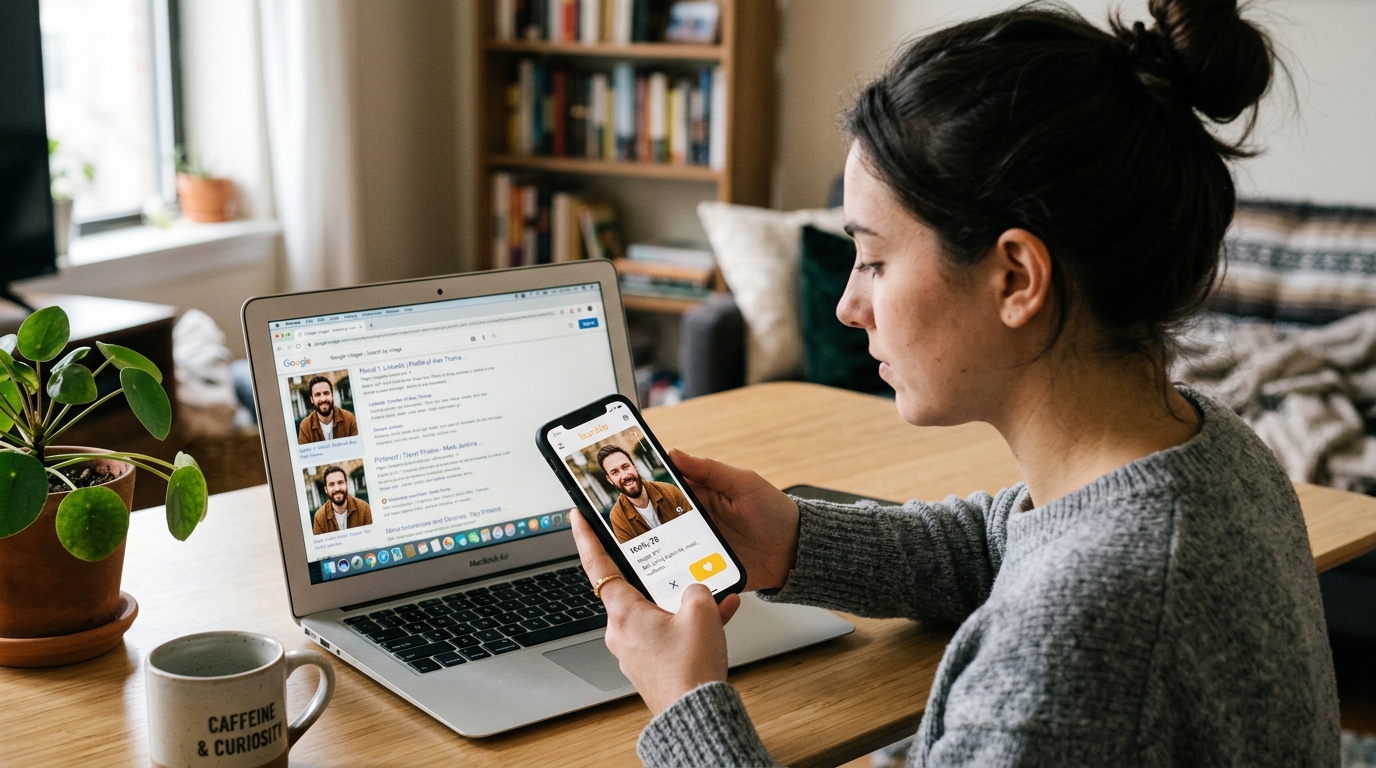
One of the easiest and most effective ways to find out whether someone is using a stolen image is by accessing our reverse image search. Once you signed up for an image search membership, simply provide the photo that you wish to check into our search bar.
Then once you do this, all you need to do is wait a few minutes for your results. Once the results pop in, you can compare the photo you have inputted with other photos to see if someone is using a stolen image.
If you see multiple photos of the person that is also in the image you searched, chances are that the person’s images have been stolen. If there are no images of the person you searched up, chances are the person could be legit if they are willing to video chat with you or meet you in person.
After performing any of these steps, you can now check for similar photos. Even if your image has been modified or edited, Google can still detect these images.
Reverse Search Their Name
How to tell if someone’s image is stolen? You can just type the person’s name on our reverse search platform. With this method, you will be able to tell if someone stole these photos and created fake social media accounts under a fake name.
To do this, type in the name of the person you want to search on the reverse search bar. Then, look at the results to see what information is under the name you searched. If there is no information under the name, chances are that it’s a fake name that was created. If there is information on the name, then chances are it could be a real name.
Utilize Our Tracking Feature

With Social Catfish, you can now track an image or name to see if there are changes to the information! To do this, turn on the tracking feature when you view the results. Then, you will get notified via email or your dashboard if there were any changes to your results. Perform a reverse search down below to utilize our tracking feature:
How To Avoid Scammers Who Steal Images

To figure out how to check if an image is stolen, consider the tips that we’re sharing below:
- Limit the people who can see your images on different social media platforms. Instead of making your posts and pictures public, try to limit who can view them. You can choose from Friends, Friends Except, Specific Friends, and even Only Me options. Apply the same privacy options to your other accounts, like Instagram, Twitter, and LinkedIn.
- Do not reveal your personal and financial details. Talking to someone on social media includes the risk of meeting a romance scammer. If they start asking for your credit card number or Social Security number, then they’re not there to find real partners; they are just pretending to be someone using stolen images.
- Watch out for spelling, typographical, and grammatical errors. This is one of the most common signs that they’re not the influencer they claim to be and just some scam artist stealing images to make money.
- Do not send money to anyone. To avoid scammers who steal your favorite influencer’s images, remind yourself that there’s no reason for you to send money. No matter how genuine these scammers sound, remain skeptical, not trusting.
- Block and report scammers immediately. If you think someone just stole your images or you met someone who’s stealing other people’s photos, block the account. Then, report them to the Federal Trade Commission. Provide all the necessary details for a smoother and quicker investigation process.
How Can I Find Out if My Images are being Used?
There are several ways you can find out if your images are being used online:
- Reverse Image Search: You can use search engines like Google, TinEye, or Bing to conduct a reverse image search. Simply upload your image or provide the image URL, and these search engines will find all instances where the image appears online.
- Watermarking: Adding a visible or invisible watermark to your images can help you track their usage. A visible watermark is a logo or text overlay on the image that identifies the owner. An invisible watermark is embedded into the image metadata and can be detected using specialized software.
- Google Alerts: You can set up a Google Alert for your name or image to receive notifications when they appear online. This way, you can keep track of where your images are being used and take action if necessary.
- Social Media Monitoring: You can monitor your social media accounts to see if anyone has used your images without your permission. Some social media platforms like Facebook have built-in tools that allow you to report copyright infringement.
- Image Monitoring Services: There are also image monitoring services like Pixsy, PicRights, and ImageRights that can help you monitor the web for unauthorized use of your images. These services use advanced algorithms and machine learning to detect and report image theft.
Social Catfish is Here to Help You!
At Social Catfish, we want to help you verify the identities of those who might seem suspicious to you. If you have their name, email address, phone number, social media username, or image, you can reverse search and see who the suspected person was that you’ve been in contact with while figuring out how to check if an image is stolen. If you were involved in a scam, make sure to report it to the FTC as well.