
 Multiple Faces Detected


 September 28th, 2023
Which Americans are Most at Risk This Holiday Season?
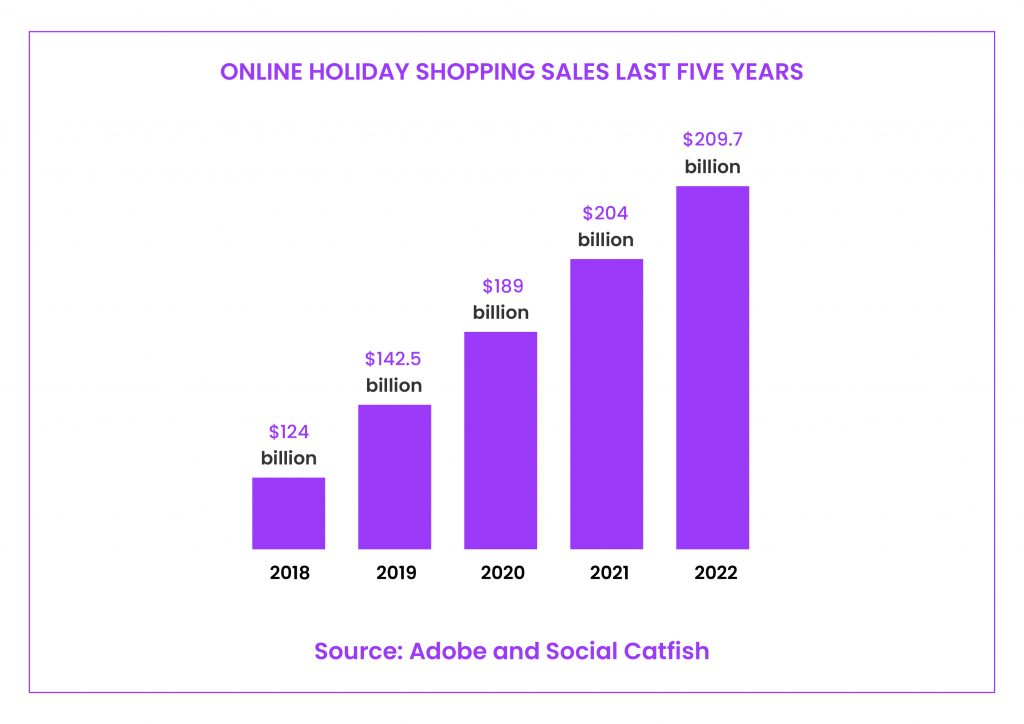
Americans are projected to spend a record $209.7 billion while online shopping this holiday season. This is expected to lead to an unprecedented surge in online holiday shopping scams.
With inflation reaching a 40-year high in 2022, consumers are expected to be even more vulnerable to scams as they desperately try to find gifts online at a lower price point.
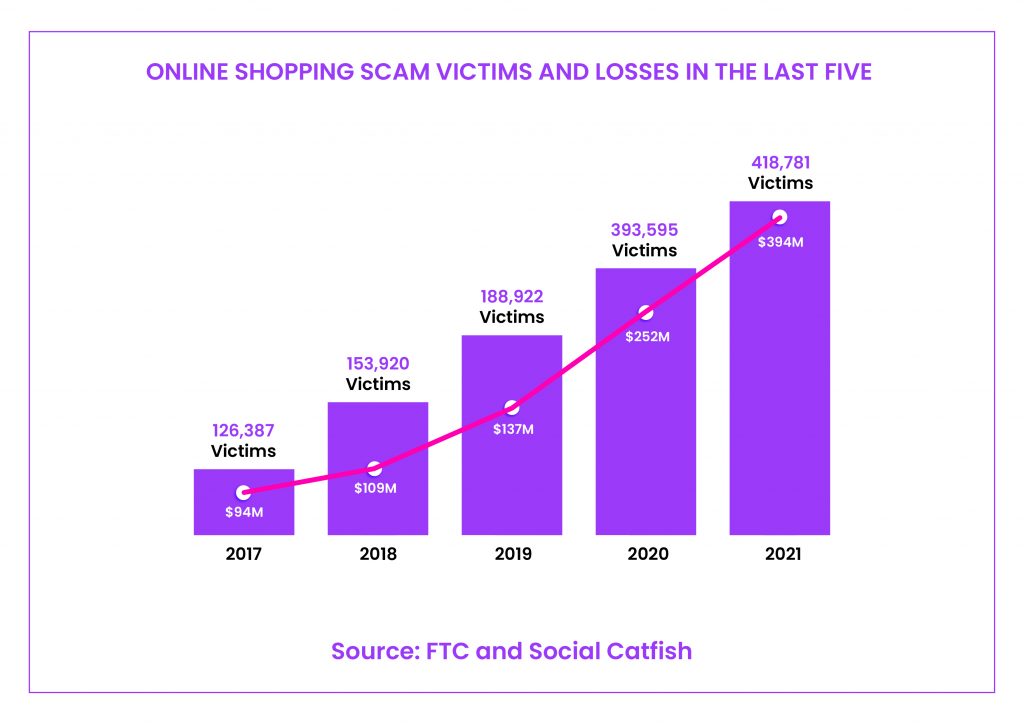
More than 5.7 million Americans lost a record $5.9 billion to all types of online scams in 2021 according to the Federal Trade Commission. Of those scams, online shopping scams resulted in the most complaints filed with the FTC of any fraud categories except for imposter scams. Nearly 400,000 victims lost $392 million while shopping online last year with each victim losing an average of $150.
In fact, over the last five years, we have seen a direct correlation between the growth of online shopping sales and losses from online shopping scams.
The holiday season is by far the busiest season for online shopping scams and the time of year when Americans are most at-risk. Each season, scammers unveil new tactics and methods able to fool even the savviest of Internet shoppers including non-delivery and non-payment scams, fake websites, credit card fraud, identity theft, and more.
For example, the FBI Internet Crime Report 2021 reported non-payment or non-delivery scams cost people more than $337 million last year, while credit card fraud accounted for another $173 million.
Social Catfish, a company dedicated to preventing online scams, also saw a major uptick in activity on its platform last holiday season. The number of ‘reverse searches’ performed by consumers increased as people attempted to verify if the person or entity they were shopping with online was legitimate.
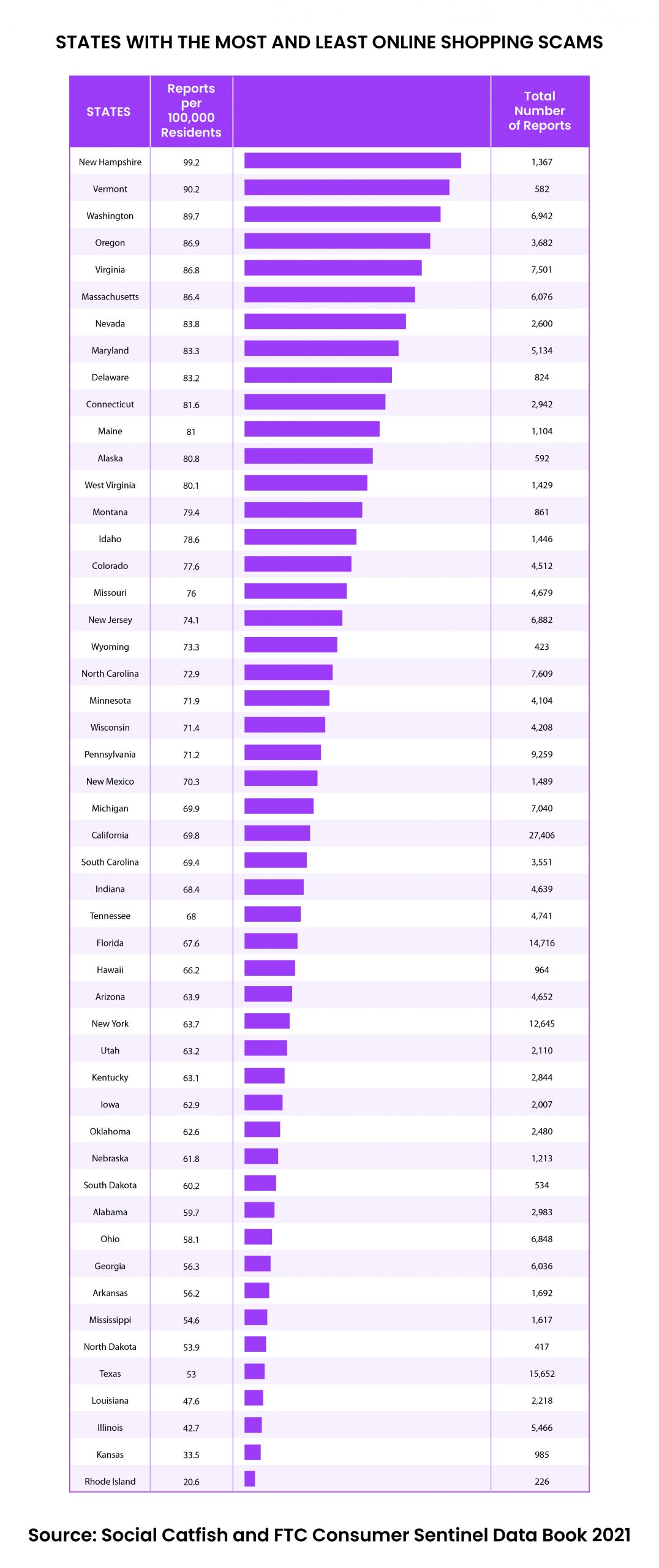
Social Catfish analyzed the most recent federal data to find out in which states people are most at risk for online shopping scams this holiday season. To level the playing field between larger and smaller states, we calculated the number of online shopping scam complaints filed with the Federal Trade Commission per 100,000 residents in all 50 states and D.C.
6 Online Shopping Holiday Scams to Avoid in 2022:
1. Fake Deals on Gaming Consoles: Gaming consoles have been among the most popular holiday gift ideas since the original Nintendo came out in the 1980s. Aware of this, scammers are advertising deals on the latest XBOX and PlayStation. Unfortunately, there has been a rise in gaming console scams where the money is stolen, and the video console arrives broken if at all.
How to Avoid: Try to purchase from sellers you already know but if you see a deal from an unknown merchant do research and perform a reverse search of their email, phone, name, or address to see if they exist.
2. $100 Gift Cards on Sale for $50: Gift cards are perfect holiday gifts for people you may not know intimately such as coworkers, neighbors or distant family members. People can save money by purchasing gift cards from exchanges and resale sites like GiftCards.com, however, in many cases, the cards end up having no balance on them. Gift cards are the preferred payment method of scammers as they cannot be tracked.
How to Avoid: Stick to stores you know and trust, and avoid buying gift cards from online auction sites like eBay where the cards could be fake.
3. Holiday Puppy scams: Kids often ask for a puppy as a holiday gift but ever since there was a shortage during COVID-19, online pet scams are skyrocketing. Scammers create a website or social media post with a photo of an adorable puppy on sale for the holidays. They ask the buyer to pay via wire transfer, gift card or Zelle and promise to ship the puppy right away. The puppy never arrives.
How to Avoid: Research the breeder on AKC.org, avoid puppies priced too low, and perform a reverse image search to see if the photo of your puppy is a stock photo used on other websites.
4. Fake Shipping Notifications: Consumers have an increased number of packages delivered during the holidays. Scammers are taking advantage by emailing or texting a delivery notification with a “tracking link”. This is a phishing link that allows the scammer to steal your personal information to commit identity theft.
How to Avoid: If you receive a delivery notification, do not click on the link, instead go directly to the UPS, USPS, or FedEx website, and track the package from there.
5. Secondhand Store Scams: Consumers, especially Millennials and Gen Z, are increasingly buying discounted holiday gifts from secondhand stores such as Mercari and Poshmark. These sites are also crawling with scammers who create fake accounts to steal your money and personal information.
How to Avoid: Most resale sites have solid security policies if you pay within the App. Sellers offering discounts to pay via gift cards or cash apps are scammers.
6. Social Media Sales: Scammers are advertising holiday deals on sites like Instagram, Facebook and TikTok. Once you click on the link, it takes you to a look-a-like website of a major brand, however, it is fraudulent and any gifts purchased will never arrive and credit card or bank information will be stolen.
How to Avoid: Signs of a fake social media account include a low number of followers, while signs of a fake website include bad grammar and misspelled URLs. Only buy from secure sites with URLs starting with HTTPS (rather than HTTP).
METHODOLOGY
To determine which states have the highest rates of online shopping scams, we analyzed the FTC Consumer Sentinel Data Book 2021 which contains the total number of online scam complaints in each state as well as the percentage of those that were related to online shopping. We computed the total number of online shopping complaints in every state and calculated the number of complaints per 100,000 residents to create a population-adjusted level playing field.