Multiple Faces Detected


 March 6th, 2026
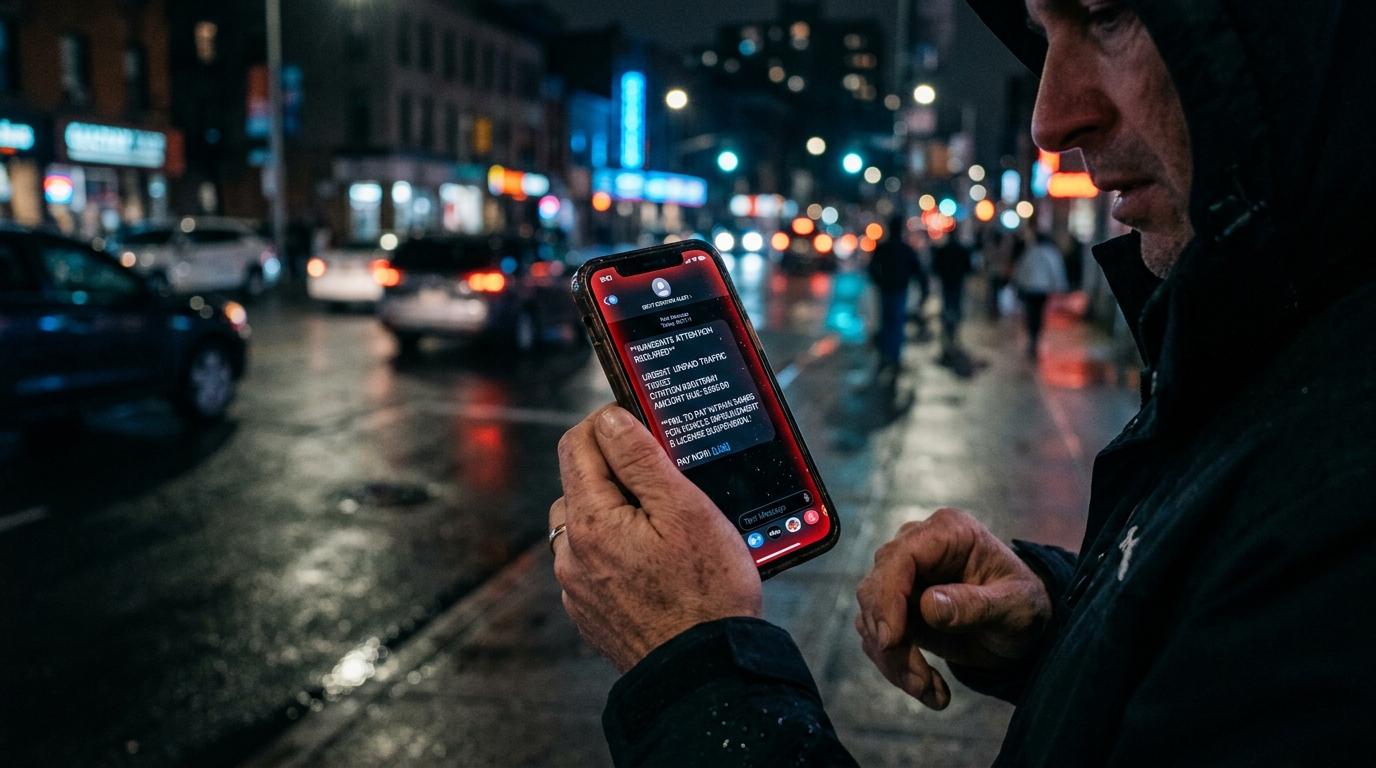
You are driving home, your phone buzzes, and there it is: a text from what looks like your state’s DMV saying you have an unpaid traffic violation. Pay now or face a suspended license, a 35% penalty fee, possible prosecution.
Your stomach drops. You click the link.
That moment of panic is exactly what scammers are counting on.
The FBI received nearly 60,000 complaints about fake toll and traffic ticket texts in 2024 alone. Transportation departments in states from Arizona to Massachusetts have issued public warnings as the scam spreads. And it is getting more convincing every year.
Before you pay a single dollar, here is how to tell if the notice you received is real. And if you suspect the number that texted you is part of a scam operation, run it through Social Catfish to find out who is really behind it.
How the Scam Works
This scheme is called smishing, a combination of SMS and phishing. Criminals send mass text messages impersonating government agencies like the DMV, DOT, or a toll collection service. The messages look official. They use agency names, government-sounding language, and alarming warnings about what happens if you do not act immediately.
The FTC described one version this way: a text claiming to be from the DMV warns that you have an overdue traffic ticket and threatens to report you to a “DMV violation database,” suspend your vehicle registration and driving privileges, and tack on a 35% service fee, all if you do not pay immediately through a link in the message.
The link leads to a fake website designed to harvest your payment card details, personal information, and sometimes your Social Security number.
What makes it effective is the combination of fear and plausibility. Most people have driven somewhere. Most people cannot immediately confirm whether or not they have an outstanding ticket. The scammers are betting that enough people will panic and pay before they stop to think.
Red Flags That Give It Away
The government does not text you to collect payments
This is the single most important thing to know. DMVs, departments of transportation, and traffic courts across the United States do not contact you by text message to collect fines or payments. Multiple state agencies, including those in Connecticut, Arizona, Iowa, North Carolina, and Massachusetts, have issued explicit public statements confirming this.
Traffic tickets are issued in person by an officer, or mailed to your address on file after a camera-based violation is recorded. Payment reminders and court notices come by physical mail. If you receive a text demanding payment, it is not from a government agency.
The urgency is artificial
Real government violations do not give you 24 hours to pay before your license gets suspended. Official notices include a court date weeks out, a case number, and clear instructions for how to dispute or pay through official channels. Scam texts manufacture panic because panic bypasses judgment. The moment a message tells you to act immediately or face severe consequences, slow down.
The agency name is wrong or generic
Arizona’s vehicle division is the MVD, not the DMV. Iowa has no toll roads, yet residents received texts claiming they owed toll fees to the Iowa DOT. Many scam texts use generic terms like “Department of Motor Vehicles” or “DMV” even in states where that is not the name of any actual agency. Scammers send these messages to millions of people across the country; they do not customize them per state, which creates easy-to-spot errors.
The link does not go to a .gov domain
Official government websites in the United States use .gov domains. If the link in the message leads anywhere other than a verified .gov address, no matter how convincing the URL looks, do not click it. Scammers create domains like myturnpiketollservices.com or dmv-payment-portal.com that look plausible at a glance.
You do not recognize the violation
This sounds obvious, but it matters. If the ticket references a location, date, or violation you have no memory of, that is a signal to verify before paying, not a reason to panic and pay faster.
Spelling errors and odd formatting
Scam texts are often sent from overseas criminal operations. Telltale signs include unusual capitalization, grammar errors, phrases that sound slightly off (“Now payment required”), or a sender number with a foreign country code.
What a Real Traffic Notice Looks Like
A legitimate traffic citation or violation notice will:
- Be delivered in person by an officer at the time of the stop, or mailed to your registered address for camera-based violations
- Include a specific case or citation number you can look up
- Direct you to pay through an official court or DMV website with a .gov domain, a physical payment address, or an in-person location
- Give you a reasonable window of time typically weeks, not hours to respond, pay, or dispute
- Never demand cryptocurrency, gift cards, or wire transfers as payment methods
If you receive a notice by physical mail and want to verify it is real, do not call any number printed on the notice itself. Instead, look up your state’s DMV or court system independently and contact them directly.
Variations of This Scam to Watch For
The text message version gets the most attention, but scammers are running this scheme across multiple channels. Knowing the other formats means you will not be caught off guard if the text is not how it finds you.
- Fake Email Notices. Email versions look like official court or DMV correspondence, complete with agency logos, case numbers, and formal language. Subject lines like “Final Notice: Unpaid Traffic Violation” or “Action Required: Outstanding Citation” are common. The same rules apply: real agencies do not email you to collect fines, and any link that does not go to a verified .gov domain is a red flag.
- Fake Physical Mail. This is the version that catches the most people off guard because a physical letter feels more official. Scammers send professionally printed notices designed to look like court summons, complete with fake case numbers, official-looking seals, and payment instructions. If you receive a mailed notice that does not match anything you remember, do not call the number on the letter. Look up your state’s court or DMV independently and verify whether the citation actually exists.
- Calls From “Law Enforcement.” Some operations follow up fake notices with a phone call from someone claiming to be a police officer, court official, or collections agent. They tell you the ticket is about to go to a warrant and you need to pay immediately by gift card, wire transfer, or cryptocurrency. Real law enforcement does not call you demanding immediate payment over the phone to avoid arrest. Hang up.
- The Scam Number Itself. Whether the fake notice came by text, email, or a follow-up call, the phone number behind it is a piece of evidence worth checking. Social Catfish’s reverse phone search lets you run that number to see if it has been flagged by other victims, linked to fraudulent activity, or tied to a pattern of scam behavior before you decide whether to engage or report it.
The Identity Theft Risk You Might Not Think About
Most people focus on the immediate financial risk of losing $12 or $50 to a fake fine. The real danger is bigger than that.
When you click the link and enter your information, you are handing scammers your name, address, card number, and sometimes more. That data gets used for identity theft, sold to other criminal networks, or used to open fraudulent accounts in your name.
If you have already clicked a link and entered information, the scam does not end when you close the browser. Your data is now in circulation.
Want to know if your personal information has already been used to open accounts or create profiles you did not authorize? Run a search on Social Catfish using your name, phone number, or email address to see what is linked to your identity online.
What to Do If You Receive a Suspicious Notice
Do not click the link. Even visiting the page without entering information can expose your device to malware.
Do not call any number in the message. Scammers sometimes run phone operations alongside the text campaign, using live operators to complete the theft.
Verify independently. If you think there is any chance you have a real outstanding violation, go directly to your state’s official DMV or court website, type the address yourself, do not follow any link, and log in or look up your record there.
Report it. Forward the text to 7726 (SPAM) on your phone, which reports it to your carrier. Then file a complaint with the FTC at ReportFraud.ftc.gov and with the FBI at IC3.gov. These reports help law enforcement track and shut down active scam campaigns.
Delete the message. Once reported, delete it.
What to Do If You Already Clicked and Paid
If you clicked the link and entered your payment or personal information, act quickly.
Contact your bank or card issuer immediately and explain what happened. Request that the charge be disputed and your card be reissued. Banks can often reverse fraudulent charges if you report them promptly.
Place a fraud alert with the major credit bureaus Equifax, Experian, and TransUnion to prevent new accounts from being opened in your name. If the situation warrants it, request a full credit freeze.
File an identity theft report at IdentityTheft.gov. The FTC’s site walks you through a personalized recovery plan based on what information was exposed.
The phone number the scam text came from is a data point worth investigating. Social Catfish’s reverse phone search lets you run that number to see who or what is behind it, whether it ties to a known scam operation, a burner number, or a pattern of fraudulent activity reported by other victims. You can also search your own name and email to check whether your information is already being used to create accounts or profiles you never authorized.
FAQ
No. DMVs and transportation departments across the United States do not contact drivers by text to collect payment for traffic violations or fines. Any text claiming to be from a DMV and demanding payment is a scam.
Log in to your state’s official DMV or court portal directly; do not follow any link from a text or email. You can look up your driving record and any outstanding violations there. Your state’s DMV website will have a .gov domain.
You may be. Simply visiting a scam page can sometimes install tracking software, so it is worth running a security scan on your device. If you did not enter any personal or payment information, your financial accounts should not be at immediate risk, but monitor them closely.
Official courts and DMVs accept checks, credit, and debit cards through their verified portals, and sometimes in-person cash payments. They never ask for cryptocurrency, wire transfers, or gift cards. Any demand for these payment types is an immediate red flag, regardless of how official the notice looks.
Contact your bank or card issuer immediately. Credit card charges can often be disputed and reversed, especially if you act quickly. Debit card reversals are possible but less guaranteed. Wire transfers and cryptocurrency payments are extremely difficult or impossible to recover.
The Bottom Line
A text about an unpaid traffic ticket is almost certainly a scam. Government agencies do not text you to collect fines. The entire playbook relies on you panicking before you think.
The next time one of these messages hits your phone, the right move is simple: do not touch the link, look up your actual driving record through your state’s official website, and report the message.
Your license is not about to be suspended. But your financial information could be compromised if you act before you verify. If you have already received a suspicious message, search the number on Social Catfish to see if it is tied to a known scam before you do anything else.