Multiple Faces Detected



 February 24th, 2026
Most people believe they would recognize an AI scam if they encountered one.
That confidence is exactly what scammers are counting on.
According to a Sift survey, 73% of consumers said they could identify an AI scam if they came across one online, yet more than one in five are still falling for them. And the most overconfident group? Younger generations. Millennials and Gen Z reported the highest confidence in their ability to spot AI fraud while simultaneously being scammed at a higher rate than older adults.
The Federal Trade Commission reported that consumers lost $12.5 billion to fraud in 2024, a 25% increase over the prior year, with AI-powered scams driving much of that growth. The myths people carry about how these scams work are not just wrong. They are dangerous. If someone you have connected with online does not quite add up, do not wait; run a search on Social Catfish before you go any further. And in 2026, the gap between what people believe about AI scams and what is actually happening has never been wider.
Here is what the evidence actually says.
Myth #1: “I Would Know If I Was Talking to an AI”
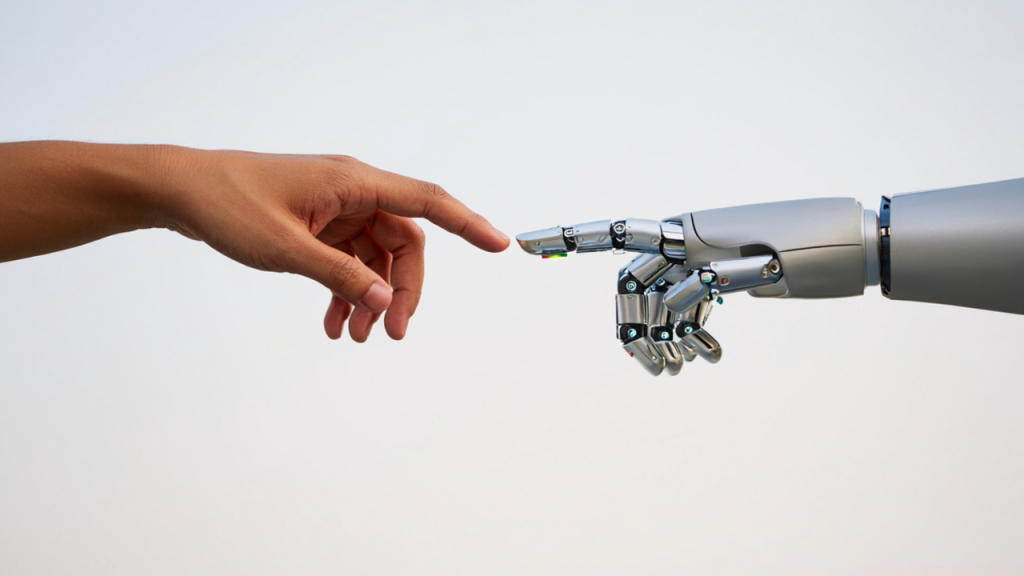
This is the most widespread and most costly myth of all.
People imagine AI scam bots as robotic, stilted, and easy to identify. The reality is that modern AI writes more naturally than most humans, never makes a typo unless it is deliberate, maintains perfect emotional consistency, and can hold a conversation for weeks or months without a single slip.
A 2025 iProov study found that only 0.1% of participants correctly identified all fake and real media shown to them. A woman in Los Angeles named Abigail maintained a deepfake relationship for months with a scammer impersonating actor Steve Burton. Her daughter later said of the AI-generated video calls: “It wasn’t grainy. To the naked eye, you couldn’t tell.” A French woman lost $850,000 over 18 months to criminals using AI to impersonate Brad Pitt. She had been suspicious enough to run a reverse image search, but because the photos were AI-generated and did not appear elsewhere online, she believed they were real.
These are not naive people. They are ordinary people targeted by technology that is now genuinely difficult to distinguish from reality. If you have been talking to someone online and something feels slightly off, trust that instinct and search their name or username on Social Catfish before the relationship goes any further.
Myth #2: “AI Scams Only Target the Elderly”
This myth has a grain of historical truth but is dangerously outdated.
Yes, elderly people are frequently targeted, and the losses are significant. But in 2026, AI scams are hitting every demographic. Corporate executives, finance professionals, and even cybersecurity experts have been successfully deceived.
In February 2024, a finance worker at global engineering firm Arup, a trained professional, working at one of the most sophisticated companies in the world, attended what appeared to be a video conference with his CFO. Every person on that call was a deepfake. He transferred $25 million. In March 2025, a finance director in Singapore authorized a $499,000 wire transfer after a similarly convincing fabricated Zoom call.
Over 1 in 4 executives surveyed by Deloitte in 2024 said their organization had already experienced a deepfake incident. AI scams are not targeting a specific age group. They are targeting whoever is available, distracted, or emotionally vulnerable in a given moment, and that can be anyone.
Myth #3: “You Can Always Spot a Deepfake”
Most people think deepfakes look obviously fake, a glitchy video, a mismatched voice, a face that does not quite move right.
Some do. Many do not.
Research shows that 68% of deepfakes are now nearly indistinguishable from genuine footage, and the human detection rate for high-quality video deepfakes sits at just 24.5%. The deepfake Biden robocall that disrupted the 2024 New Hampshire primary cost $1 to create and took less than 20 minutes to produce.
There are still tells that can help. AI-generated faces frequently have inconsistent light reflections in the eyes, 94% of them, according to researchers. Deepfakes struggle with spontaneous unscripted movement, which is why asking someone on a video call to turn their head sideways remains one of the most reliable real-time tests available. Lips can be slightly out of sync. Edges around hair and faces can blur unnaturally.
But banking on your ability to visually detect a deepfake in real time is not a reliable defense. By the time you notice something is off, the scammer has already made their ask. If you are on a video call with someone whose identity you cannot fully verify, run their photo through Social Catfish’s reverse image search before taking any action they request.
Myth #4: “Scammers Only Go After Less Tech-Savvy People”
The idea that intelligence or tech literacy is a shield against AI scams is directly contradicted by the evidence.
Overconfidence is actually one of the most exploited vulnerabilities scammers rely on. Research from the National Cyber Security Alliance found that most people rate their ability to detect fraud as nearly perfect and that overconfidence creates blind spots that attackers deliberately exploit. A 2025 study found that higher AI literacy actually correlated with more overconfidence, not less. People who knew more about AI were more likely to assume they could not be fooled.
Psychology Today has noted that falling for a scam is not a matter of intelligence; it is a matter of emotional timing. Scammers do not go after your intellect. They go after your fear, your love for family, your trust in authority, and your instinct to act when someone you care about appears to be in danger. In those moments, education and tech savvy provide almost no protection.
Attorney Gary Schildhorn, a professional trained in critical thinking, nearly wired $9,000 to scammers using his son’s cloned voice before catching himself at the last moment. These are not failures of intelligence. They are examples of what happens when sophisticated psychological manipulation meets technology that is nearly impossible to distinguish from the real.
Myth #5: “Strong Passwords and Antivirus Software Are Enough”
Technical security measures are important. They are not sufficient on their own against AI-driven social engineering.
AI scams typically do not need to hack into your accounts. They do not need to bypass your firewall. They get you to hand over the money or the credentials voluntarily by impersonating someone you trust, creating a manufactured emergency, or building a fake relationship over weeks until a financial request feels completely natural.
The deepfake robocall does not care about your password manager. The AI chatbot running a romance scam on a dating app does not need to breach your cybersecurity. These attacks bypass technology entirely by targeting the human element: your emotions, your trust, and your decision-making under pressure.
Technical hygiene still matters. But it needs to be paired with behavioral habits: slowing down when urgency is involved, verifying through a separate channel, and confirming who you are actually dealing with before acting on any request.
Myth #6: “A Clean Reverse Image Search Means a Photo Is Real”
This used to be a reliable rule. AI has broken it entirely.
When scammers used stolen photos from someone’s real social media account, a reverse image search would often surface the original profile and expose the fraud. But AI-generated photos are created from scratch. They have never appeared anywhere online. Running a standard search returns nothing, which victims frequently interpret as proof that the photo is genuine and personal, when it is actually proof of nothing at all.
The French woman who lost $850,000 to the Brad Pitt impersonation scam performed a reverse image search on the photos she was sent. Nothing came up. She concluded the scammer had taken those photos specifically for her.
A basic reverse image search is still worth running, but a clean result no longer means a photo is real. This is exactly where Social Catfish goes further than standard tools. Their reverse image search is built specifically for this cross-referencing photos across a much wider range of sources to surface connections and inconsistencies that a Google image search would miss entirely. If you have a photo from someone you met online that you cannot verify, upload it to Social Catfish and let their search do what a basic lookup cannot.
How Social Catfish Helps

When standard verification methods no longer work reliably, having access to deeper identity search tools is what makes the difference.
The moment something feels off, a new match on a dating app whose story does not quite add up, a recruiter who reached out unexpectedly, someone who has been messaging for weeks but always has a reason they cannot meet, do not wait. Run a search on Social Catfish before the situation goes any further.
Verify Before You Trust
Social Catfish gives you multiple ways to check who you are really dealing with:
- Reverse image search — goes far beyond a standard Google search, cross-referencing photos across a much wider range of sources to surface fake or AI-generated profile photos that a basic lookup would miss entirely
- Username search — checks an identity across dozens of platforms simultaneously to look for inconsistencies between accounts
- Email lookup — surfaces who is really behind an address and whether it connects to known scam activity
- Phone number search — verifies whether a number matches the person claiming to own it
- Name and address search — confirms whether the personal details someone has given you actually check out
A scammer can control one account. They cannot control every digital footprint at once, and that is exactly what these searches are designed to find.
What to Do the Moment You Suspect Something
If you are already in a situation that does not feel right, act before it escalates:
- Stop responding and screenshot everything messages, profile photos, usernames, and any payment requests
- Do not send money, gift cards, or personal information until identity is confirmed
- Run their photo, username, email, or phone number through Social Catfish immediately
- If money has already been sent, contact your bank right away, report to the FTC at ReportFraud.ftc.gov, and file with the FBI at IC3.gov
- If the situation needs a deeper investigation, Social Catfish’s Search Specialists are trained investigators who can research on your behalf and deliver findings directly to you
In 2026, verification is not paranoia. It is the most practical thing you can do.
Top 5 Frequently Asked Questions
No. Data shows younger adults are being scammed at higher rates than older generations, while believing themselves to be the least at risk. AI scams target anyone who is emotionally vulnerable in a given moment, regardless of age or tech literacy.
Not necessarily. Research has found that higher AI literacy actually correlates with more overconfidence, not better detection. Scammers target emotions and psychological vulnerabilities, not intelligence.
No. AI-generated photos are created from scratch and will not appear in standard searches. Use Social Catfish’s reverse image search for a more thorough cross-reference that goes beyond what a basic lookup can find.
Run their photo, username, email address, and phone number through Social Catfish. AI-generated profiles and stolen identities leave behind inconsistencies across platforms that a thorough search will surface even when simpler tools come up empty.
No. Most AI scams bypass technology entirely by targeting human psychology, manufacturing urgency, building trust, and impersonating people you know. Technical tools need to be paired with behavioral habits and identity verification.
Conclusion
The most dangerous thing about AI scams in 2026 is not the technology itself but the false confidence people carry about their ability to recognize them. Every myth on this list is a door left open for a scammer to walk through. Believing you are too smart, too young, or too tech-savvy to be fooled is not a defense. It is a vulnerability.
Awareness is the real first line of protection. And when awareness alone is not enough, Social Catfish gives you the tools to verify what is real before you trust what you see and hear.