 Multiple Faces Detected


 July 6th, 2026
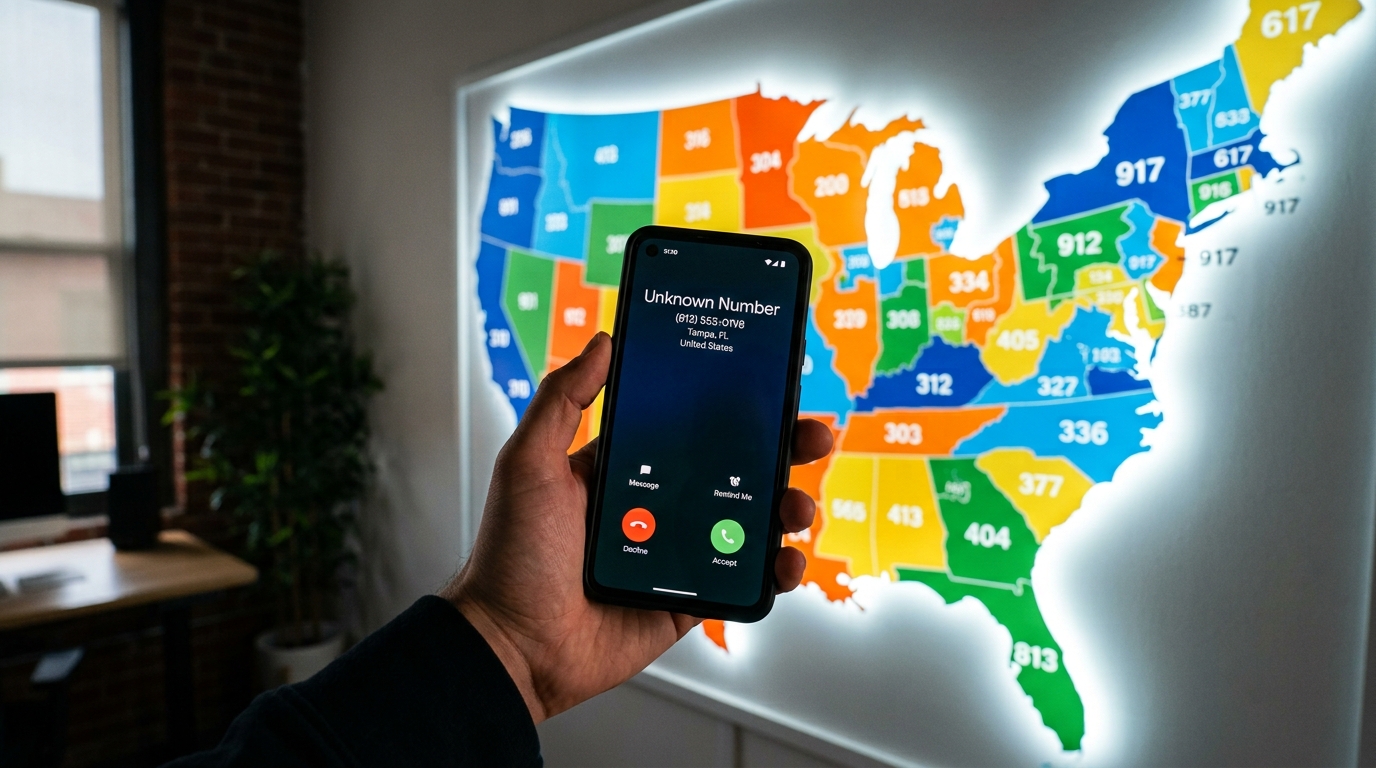
When an unknown number calls you, the area code is your first clue, but only your first. It tells you roughly where the number was originally registered. It does not tell you who is calling, whether the person has moved states since registering the number, whether it is a VoIP number someone selected specifically to appear local, or whether it is one of the Caribbean area codes that charge you international rates when you call back, even though they look identical to US numbers on caller ID.
This guide covers what area codes actually tell you, a reference for every major US area code organized by region, the area codes most commonly associated with scam calls, and what to do when the area code alone is not enough. When the area code raises a flag, and you need to know who is actually behind the number, Social Catfish’s reverse phone lookup returns the full identity in minutes.
How US Area Code Lookup Works — What the Numbers Actually Mean
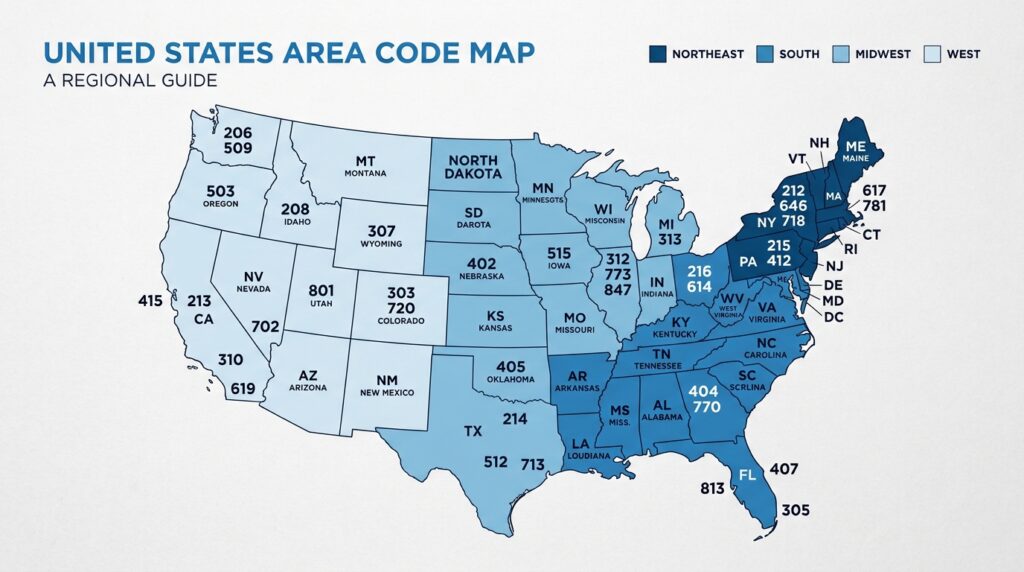
Area codes are three-digit prefixes assigned to geographic regions under the North American Numbering Plan, which has governed phone number assignment across the US, Canada, and several Caribbean territories since 1947. The system has expanded significantly since then as demand for new numbers grew.
The key limitation of area code lookup is number portability. Since 1996, US mobile customers have been able to keep their phone number when they move to a different state or switch carriers. A 212 New York City area code may now belong to someone living in Texas. A 310 Los Angeles area code may belong to someone in Georgia. The area code reflects where the number was originally registered, not where the caller is today.
VoIP services extend this further. Any person or business using a VoIP phone service can select any area code they want regardless of their actual location. Scammers use this extensively. A fraudster operating overseas can present a 202 Washington DC area code on the caller ID to impersonate a government agency. A scammer in a different country can display your own local area code to appear as a neighbor.
Special area codes to recognize immediately:
- 800, 833, 844, 855, 866, 877, 888 — toll-free numbers, free for you to receive and call back
- 900 — premium rate numbers that charge the caller per minute
- 268, 284, 473, 649, 664, 767, 784, 809, 829, 849, 876 — Caribbean area codes that use the same +1 country code as US numbers but incur international charges when called back
Phone Area Code Lookup — Major US Area Codes by Region
Northeast Area Codes
New York City and New York State:
212, 332, 347, 516, 518, 585, 607, 631, 646, 716, 718, 845, 914, 917, 929
New Jersey:
201, 551, 609, 732, 848, 856, 862, 908, 973
Connecticut:
203, 475, 860, 959
Massachusetts:
339, 351, 413, 508, 617, 774, 781, 857, 978
Pennsylvania:
215, 267, 272, 412, 445, 484, 570, 610, 717, 724, 814, 878
Southeast Area Codes
Florida:
239, 305, 321, 352, 386, 407, 561, 689, 727, 754, 772, 786, 813, 850, 863, 904, 941, 954
Georgia:
229, 404, 470, 478, 678, 706, 762, 770, 912
North Carolina:
252, 336, 704, 743, 828, 910, 919, 980, 984
Virginia:
276, 434, 540, 571, 703, 757, 804
Tennessee:
423, 615, 629, 731, 865, 901, 931
South Carolina:
803, 839, 843, 854, 864
Midwest Area Codes
Illinois and Chicago:
217, 224, 309, 312, 331, 447, 464, 618, 630, 708, 773, 779, 815, 847, 872
Ohio:
216, 220, 234, 330, 380, 419, 440, 513, 567, 614, 740, 937
Michigan:
231, 248, 269, 313, 517, 586, 616, 734, 810, 906, 947, 989
Minnesota:
218, 320, 507, 612, 651, 763, 952
Missouri:
314, 417, 573, 636, 660, 816
South and Southwest Area Codes
Texas:
210, 214, 254, 281, 325, 346, 361, 409, 430, 432, 469, 512, 682, 713, 726, 737, 806, 817, 830, 832, 903, 915, 936, 940, 945, 956, 972, 979
Arizona:
480, 520, 602, 623, 928
Nevada:
702, 725, 775
Colorado:
303, 719, 720, 970
West Coast Area Codes
California:
213, 310, 323, 408, 415, 424, 442, 510, 530, 559, 562, 619, 626, 628, 650, 657, 661, 669, 707, 714, 747, 760, 805, 818, 820, 831, 858, 909, 916, 925, 949, 951
Washington State:
206, 253, 360, 425, 509, 564
Oregon:
458, 503, 541, 971
Washington DC:
202
Area Codes Commonly Used in Scam Calls
Knowing which area codes are most frequently associated with fraudulent calls helps you assess risk before deciding whether to call back or investigate further.
Caribbean Area Codes That Look Like US Numbers
These area codes use the same plus-one country code as US domestic numbers, which means they appear identical to US numbers on caller ID. When you call them back, you are making an international call and may be billed international rates without any notification.
- 268 — Antigua and Barbuda
- 284 — British Virgin Islands
- 473 — Grenada
- 649 — Turks and Caicos
- 664 — Montserrat
- 767 — Dominica
- 784 — Saint Vincent and the Grenadines
- 809, 829, 849 — Dominican Republic
- 876 — Jamaica
The fraud pattern associated with these is called the one-ring scam. A caller lets the phone ring once and disconnects, hoping curiosity drives the recipient to call back. The return call connects to a premium rate line, and charges accumulate while the caller keeps you on hold with music, recorded messages, or scripted conversation. Do not call back any of these area codes from an unknown number.
Area Codes Frequently Spoofed by Scammers
Spoofing allows callers to display any area code they choose on your caller ID regardless of where they are actually calling from. Common spoofing patterns include:
Your own area code — neighbor spoofing. Calls appearing to come from your own local area code have significantly higher answer rates than unfamiliar codes. Scammers use local area code spoofing to increase the likelihood that you pick up.
202 — Washington DC. The most frequently spoofed area code in the United States is due to its association with government agencies. IRS impersonators, Social Security Administration scammers, and Medicare fraud operations routinely spoof 202 numbers to appear official.
800 series toll-free codes. Spoofed to appear as legitimate business or customer service calls. A spoofed toll-free number does not mean you are receiving a call from a real business.
Major city codes matching claimed business locations. A scammer claiming to represent a New York bank may spoof a 212 number regardless of where they are actually calling from.
An area code alone cannot confirm a call is legitimate under any circumstances. Verification requires going beyond the area code to the full number and the identity behind it.
Phone Number Area Code Lookup — What to Do After You Identify the Area Code
Identifying the area code gives you geographic context and flags obvious risk signals like Caribbean codes or common spoofing patterns. It does not tell you who is calling. These steps bridge the gap between what the area code tells you and what you actually need to know.
Do not call back one-ring calls from unknown numbers. Particularly from Caribbean area codes listed above. Curiosity-driven callbacks are the mechanism the one-ring scam depends on.
Google the full number in quotes.
Search the complete ten-digit number in quotation marks in Google. If the number has been reported by previous recipients on scam reporting forums, consumer complaint sites, or community warning boards, those reports surface in results. This free check takes under a minute and occasionally provides an immediate definitive answer.
Run the full number through Social Catfish.
When the area code raises a concern, and a Google search does not return enough information, Social Catfish’s reverse phone lookup goes significantly further than any free directory.
What Social Catfish returns beyond what an area code lookup tells you:
- The real name registered to that phone number through carrier and public records databases
- Whether it is a genuine mobile number or a VoIP number with no verified identity behind it, which is the most important single signal for scam assessment
- Whether the number has been previously reported in connection with scam activity in Social Catfish’s databases
- Social media accounts and online profiles connected to that number
- Associated email addresses and other contact details linked to the same identity
- Whether the area code matches the person’s claimed location, which is a direct indicator of spoofing when it does not
A number that presents as a 202 Washington DC area code but traces to a VoIP service with no legitimate registered identity tells you everything you need to know before returning the call.
Area Code Reverse Lookup — How to Find Out Who Called You
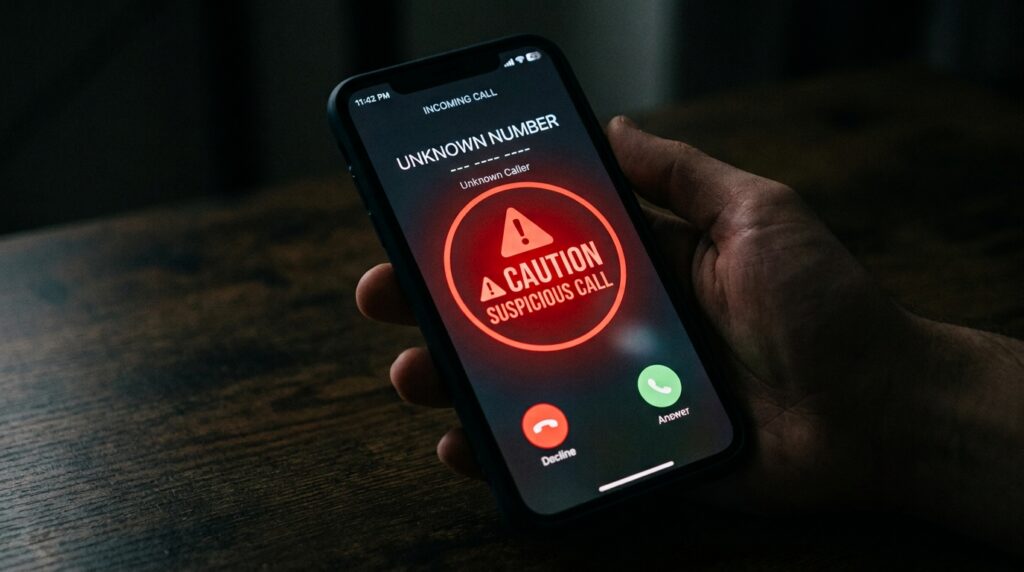
For a full reverse lookup that goes beyond what the area code alone provides, these are the methods available in order of comprehensiveness.
Free methods:
- Google the full ten-digit number in quotes to find any scam reports, business listings, or public mentions
- Check Truecaller at truecaller.com, a crowdsourced caller ID database with strong coverage for spam and scam numbers
- Check 800notes.com or WhoCalledMe.com for community-reported scam number databases
- Check your carrier’s built-in scam protection — most major US carriers now offer free scam identification tools that flag known fraud numbers before you answer
When free methods return nothing:
An unlisted number, a recently created VoIP number, or a spoofed number may return nothing through free directories, regardless of how many you check. Social Catfish’s reverse phone lookup accesses carrier databases and cross-references social media accounts, returning results for unlisted and VoIP numbers that free public directories cannot reach. If the number belongs to a real person with any online presence, Social Catfish surfaces the connection. If it belongs to a VoIP service with no real identity behind it, that result is itself informative.
FAQ
Use the regional reference table in this article to identify the geographic area associated with any three-digit US area code. For Caribbean area codes using the plus-one country code, check against the list of Caribbean codes that incur international charges when called back. For a full reverse lookup that identifies who owns the number, run the complete ten-digit number through Social Catfish.
An area code identifies the geographic region where a phone number was originally registered. Due to number portability since 1996 and VoIP services that allow any area code to be selected regardless of location, the area code does not confirm the caller’s current location. It is your first clue, not a definitive answer.
Major examples include New York City at 212, 646, and 718; Los Angeles at 213, 310, and 323; Chicago at 312 and 773; Houston at 713, 281, and 832; Miami at 305 and 786; Washington DC at 202; and Dallas at 214, 469, and 972. The full regional reference table above covers all major US metro areas.
Never call back one-ring calls from Caribbean area codes, including 268, 284, 473, 649, 664, 767, 784, 809, 829, 849, and 876. These use the same plus-one country code as US numbers but charge international rates when called back. Also, avoid calling back any unknown number from a 900 area code, which are premium rate lines that charge per minute.
Search the full ten-digit number in quotes in Google for any scam reports or public mentions. Check Truecaller and 800notes.com for community reports. Run the complete number through Social Catfish’s reverse phone lookup to identify the registered name, whether it is a VoIP or real mobile number, and any social media accounts or contact details linked to that identity.
Conclusion
An area code lookup is your first step when an unknown number calls you, not your last. It gives you geographic context, flags obvious Caribbean codes that can incur surprise charges, and helps you assess whether the area code matches the caller’s claimed location. It does not tell you who is calling, whether the number is genuine, or whether the person behind it is who they claim to be.
When the area code raises enough concern to warrant a deeper check, Social Catfish’s reverse phone lookup takes the three-digit area code question to its logical conclusion: returning the full identity behind the complete number, confirming whether it is a real registered mobile line or a VoIP number with no verified identity, and surfacing any scam reports or social media connections linked to that number. The area code gets you started. Social Catfish gets you the answer.