Multiple Faces Detected


 March 13th, 2026
You got a DM on Threads. Maybe it’s someone who follows you back, a brand that wants to collaborate, or a stranger who just seems genuinely interested in connecting.
And maybe it’s a scammer.
Instagram Threads crossed 300 million monthly active users in 2024 and hasn’t slowed down since. Wherever a large audience gathers online, scammers follow, and Threads is no exception. Cybersecurity experts consistently note that the earliest stages of any new platform are among the most dangerous, with fake accounts able to amass large followings before being exposed. Threads is no longer new, but the scam ecosystem that took root early has matured and gotten harder to spot.
If you use Threads, this is what you need to know. And if you’ve already connected with someone whose story doesn’t quite add up, Social Catfish lets you run a reverse search on their photo, name, or profile to find out who you’re actually talking to.
Why Threads Is a Target for Scammers
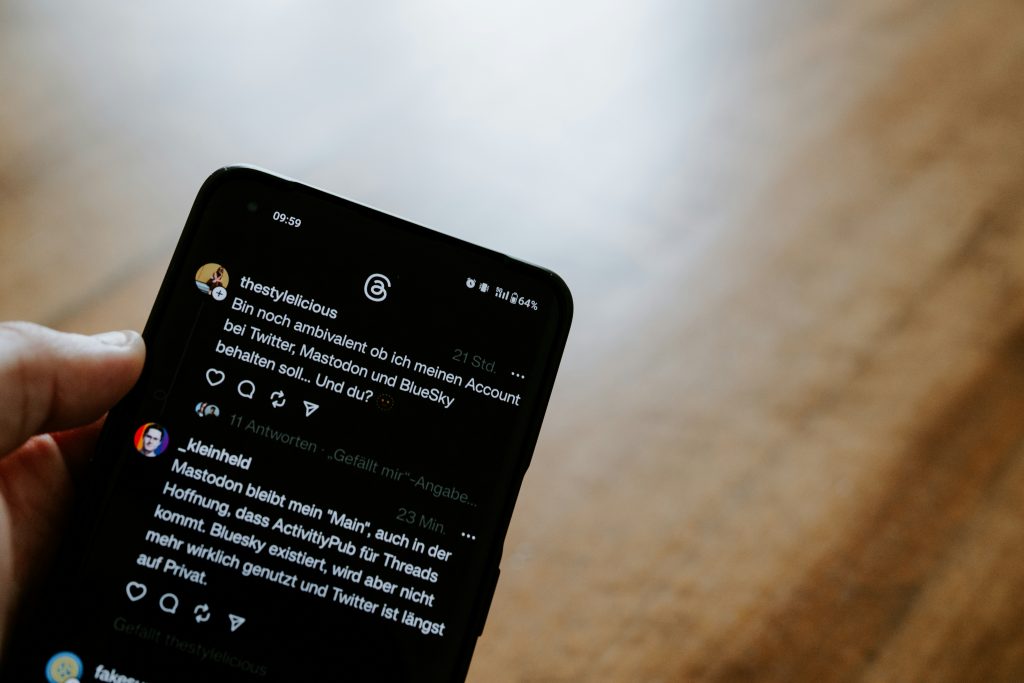
Threads is built on Instagram’s infrastructure, which means it inherited both Instagram’s massive user base and its fraud vulnerabilities. When you sign up for Threads, you use your Instagram account, which also means scammers can cross-reference both platforms when building fake profiles or targeting victims.
A few things make Threads specifically appealing to bad actors:
- Public by default. Most Threads profiles are visible to anyone, which gives scammers easy access to your content, follower list, and posted information before they ever contact you.
- Conversation-first design. Threads is built around text and replies, which creates a natural opening for scammers to slide into conversations and DMs in ways that feel organic.
- Verification gaps. Outside of Meta Verified badges, which require a paid subscription, there’s no built-in identity verification on Threads. Anyone can claim to be anyone.
- Cross-platform exposure. Because Threads and Instagram are linked, a scammer targeting you on one platform has context from both.
The Most Common Instagram Threads Scams in 2026
Impersonation and Fake Accounts
This is the most widespread scam on Threads and the one that sets the others in motion. Scammers create fake profiles impersonating real people, celebrities, influencers, brands, customer service accounts, and sometimes people you personally know to establish false credibility before making a request.
A fake celebrity account might run a giveaway requiring you to “verify” your identity or pay a shipping fee. A “brand” account might offer you a collaboration deal that requires your personal information. A fake customer service account might reach out, claiming there’s a problem with your order and asking you to click a link.
The profiles often look convincing at first glance, with borrowed profile photos, a bio that mirrors the real account, and a follower count that seems plausible. What they typically lack is a history of genuine engagement over time.
Before trusting any account that reaches out with an offer or request, run their profile photo through Social Catfish’s reverse image search. If the photo appears elsewhere under a different name, you’re looking at a fake.
Romance Scams
Romance scams are among the most financially damaging frauds running on Threads right now. The playbook is consistent: a stranger makes contact, shows genuine interest, moves quickly toward an emotional connection, and eventually introduces a financial emergency or investment opportunity once trust has been established.
The process is slow and deliberate. Scammers may spend weeks or months building the relationship before asking for anything. They typically avoid video calls, citing technical problems, work constraints, or a desire to “keep things simple,” and their stories involve dramatic circumstances like being overseas for military service, working on an offshore oil rig, or caring for a sick family member.
When the ask finally comes, it usually takes the form of emergency travel money, a medical bill, a wire transfer to “unlock” funds, or an invitation to invest in a trading platform the scammer controls. Once money is sent, it is rarely recoverable. Only 4% of online scam victims worldwide are able to get their money back.
Red flags to watch for:
- They initiate contact and move emotionally fast
- They avoid video calls or in-person meetings with consistent excuses
- Their story involves being far away or unable to meet
- They eventually introduce a financial need or investment opportunity
- They ask you to continue the conversation on WhatsApp, Telegram, or another private platform
Investment and Crypto Scams
Threads has become a common staging ground for investment fraud, particularly crypto scams. Scammers create profiles posing as financial advisors, successful traders, or passive income coaches, often with fabricated screenshots of returns, and use Threads posts and DMs to recruit victims.
A common variation is the “pig butchering” scam: the scammer builds a relationship first, then introduces an investment platform that shows convincing (but entirely fake) returns. Victims are encouraged to invest more over time, shown a growing balance they can’t actually withdraw, and eventually hit with a “tax fee” or “release payment” required before they can access their funds. The money never comes. Investment scams carried a median loss of $5,000 per victim in 2024.
What these scams have in common: the platform is always one you’ve never heard of, the returns are always unusually high, and there’s always a reason you can’t withdraw your money right now.
Phishing via DM and Links in Posts
Phishing on Threads takes two main forms. The first is a direct message that appears to come from Meta, Instagram, or Threads itself, claiming your account has been flagged, suspended, or compromised, and directing you to click a link and “verify” your credentials. The link leads to a fake login page that captures your username and password.
The second is more indirect links embedded in posts, comments, or DMs that appear to lead to legitimate sites but redirect to phishing pages or malware downloads. These often ride on trending topics, viral moments, or fake giveaway announcements designed to generate clicks.
Neither Meta nor Instagram will contact you about account issues through a DM. Any urgent account message that arrives via Threads and asks you to click something should be treated as suspicious.
Fake Brand Collaborations Targeting Creators
If you have any kind of following on Threads or Instagram, you’re a target for fake brand collaboration scams. A “brand representative” reaches out offering a paid partnership, free products, a commission structure, or a flat fee and asks for your contact details, your mailing address, or payment information to “set up the contract.”
Some versions ask you to pay upfront for a “starter kit” of products you’ll be promoting. Others use the outreach to harvest your personal information for identity theft. Legitimate brands do not require creators to pay anything up front to participate in a collaboration.
How to Tell If a Threads Account Is Fake
No single sign is definitive, but these patterns together are a reliable signal:
- The account was recently created or has minimal posting history relative to its follower count
- The profile photo looks professionally shot but generic reverse image search it
- They reach out with unusual warmth or flattery from the start
- Their bio or posts are vague about who they are or what they do
- They push the conversation toward a private platform quickly
- They avoid any form of video verification
- Their story involves being overseas, in a high-stress profession, or otherwise unavailable in person
- Any offer they make requires you to pay something, share personal information, or click a link
How to Protect Yourself on Threads
Set your account to private. Threads is public by default. Switching to a private account limits who can see your content and reduces your exposure to strangers looking for targets.
Verify before you trust. Before engaging with any account that contacts you with an offer, collaboration, or opportunity, take a moment to verify. Check their posting history. Look for a verified badge. Search for the brand or person independently outside of Threads.
Reverse image search any profile photo. If a stranger’s profile photo shows up under a different name elsewhere online, the account is fake. Social Catfish makes it fast to paste the image or URL and see where else it appears.
Never send money to someone you’ve only met online. This applies regardless of how real the connection feels. If someone you’ve never met in person asks for money for any reason, that is the defining characteristic of a scam.
Don’t click unsolicited links. Whether they arrive in a DM, a comment, or a post, treat any link from an unknown account as potentially dangerous. Go directly to the source by typing the URL yourself.
Report and block suspicious accounts. Go to the account’s profile, tap the three-dot menu, and select Report. Choose Scam, Fraud, or Spam. The more users report fraudulent accounts, the faster Threads can act on them.
What to Do If You’ve Already Been Scammed on Threads
If you’ve sent money, shared personal information, or clicked a suspicious link, act quickly:
- Contact your bank or payment provider immediately. If money was sent via a payment app, bank transfer, or credit card, report it as fraud. The faster you act, the better your chances of reversing the transaction.
- Change your passwords. If you entered your credentials anywhere, change your Instagram and email passwords immediately and enable two-factor authentication.
- Report the account to Meta. Use the in-app reporting tools on both Threads and Instagram.
- File a report with the FTC at ReportFraud.ftc.gov. This helps federal authorities track fraud patterns and may support any recovery process.
- Search your own information. If a scammer has your name, phone number, or email, check what else they might be able to find. Social Catfish lets you search your own details to see what’s publicly linked to your identity useful for understanding your exposure and staying ahead of any follow-on attempts.
FAQ
Threads is a legitimate platform, but like any social network with a large user base, it attracts scammers. The risk isn’t the platform itself; it’s the people on it. Taking basic precautions like setting your account to private, verifying unknown contacts, and never sending money to people you haven’t met in person significantly reduces your exposure.
Check the account’s posting history, look for a Meta Verified badge, and reverse image search their profile photo. If the photo appears elsewhere under a different name, the account is fake. Accounts with few posts, a recent creation date, and unusually high follower counts relative to their engagement are also red flags.
Not through the message itself, but scammers can use DMs to manipulate you into sharing personal information, clicking links, or sending money. Replying alone doesn’t compromise you. Clicking links, entering credentials, or making payments based on a stranger’s request is where the risk lies.
Stop engaging, do not send any money or personal information, and report the account through the three-dot menu on their profile. You can also reverse image search their profile photo to confirm whether the identity has been stolen.
Yes, if they gather enough of your personal information through phishing links, fake forms, or information you’ve shared publicly. If you suspect your details have been compromised, run your name and contact information through Social Catfish to see what’s publicly accessible and monitor your credit for unusual activity.
The Bottom Line
Threads is where conversations happen, and scammers know it. The platform’s public-by-default design, its link to Instagram’s massive user base, and its conversational format make it a natural environment for fake accounts, phishing attempts, romance fraud, and investment scams.
Most scams follow a predictable pattern: establish contact, build trust, make an ask. Recognizing that pattern early is your strongest defense. If something feels off about a profile or a conversation, the warmth came too fast, the story has gaps, the opportunity sounds too good, trust that instinct.
And if you’re not sure who you’re really talking to, find out before you go any further. Social Catfish lets you search a name, photo, or profile to verify whether someone is who they claim to be the simplest step you can take before extending any trust to a stranger on Threads.