Multiple Faces Detected


 February 20th, 2026
You meet someone online who seems perfect. Their profile photos are flawless, professional quality, perfectly lit, and strikingly attractive. You video chat once, but the quality is poor, and they claim their camera is broken. Weeks later, after developing an emotional connection and sending money for an “emergency,” you discover the person never existed. The photos you fell for weren’t real; they were AI-generated or enhanced images created specifically to deceive you. Welcome to the new frontier of online fraud: scammers weaponizing AI photo enhancers to create convincing fake identities at an unprecedented scale.
According to FBI reports, romance scam losses reached $1.12 billion in 2023, with authorities warning that scammers now use AI-generated photos, deepfake videos, and chatbots to craft more convincing fake personas that bypass traditional detection methods. As AI photo enhancement and generation tools become accessible to anyone with internet access, scammers exploit these technologies to create hyper-realistic fake identities that bypass traditional detection methods like reverse image searches.
Social Catfish helps you verify suspicious online profiles before you trust AI-generated identities, send money to someone you’ve never met, or develop an emotional attachment to someone who may not exist. Understanding how scammers use AI photo enhancers reveals why traditional verification methods no longer work and what you need to do differently.
How Scammers Use AI Photo Enhancement Tools
AI Face Generation: Creating People Who Don’t Exist
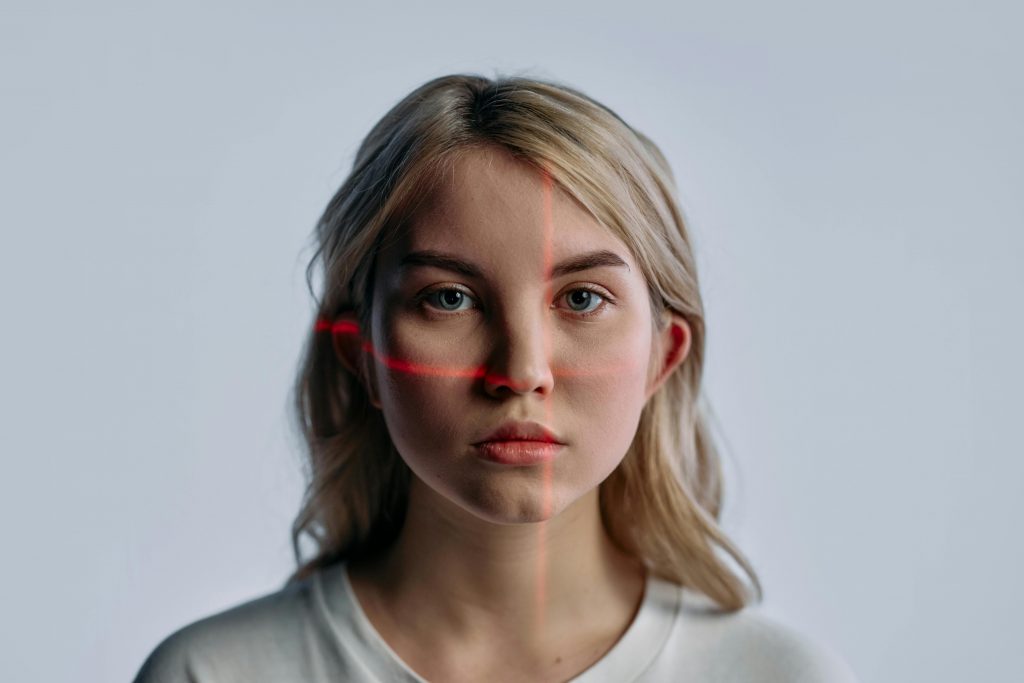
The most sophisticated scam technique involves generating entirely synthetic faces using AI platforms like StyleGAN, This Person Does Not Exist, and similar neural network technologies.
How it works:
- Scammer accesses free AI face generation website
- Platform generates photorealistic face that doesn’t belong to any real person
- Scammer uses this synthetic image as profile photo across dating sites, social media, or business platforms
- The victim performs a reverse image search and finds nothing because the person literally doesn’t exist
Why it’s effective:
- No stolen photos means no angry real person reporting impersonation
- Reverse image searches return zero results, creating false legitimacy
- Generated faces look completely realistic with proper lighting, skin texture, and features
- Scammers can generate unlimited unique faces for different scam operations
Scale of the problem: Researchers estimate AI-generated faces now appear in millions of fake social media accounts, with scammers creating new synthetic identities faster than platforms can detect and remove them.
Photo Enhancement to Avoid Detection
When scammers steal photos from real people’s social media, they enhance them using AI tools to avoid reverse image search detection.
AI enhancement techniques:
Upscaling and Quality Improvement: Tools like Remini, Let’s Enhance, and Topaz Labs improve image resolution and quality, making photos appear professionally taken while altering pixel patterns that reverse image searches rely on.
Style Transfer: AI applies artistic filters or style changes that maintain the person’s appearance while modifying enough pixels to escape detection algorithms.
Background Removal and Replacement: AI removes original backgrounds and adds new ones, breaking the visual fingerprint reverse image searches use for matching.
Facial Feature Adjustments: Subtle AI modifications to facial features (slight nose reshaping, eye color changes, skin tone adjustments) maintain attractiveness while avoiding exact matches in image databases.
Why traditional reverse image search fails:
- AI alterations change enough pixels that matching algorithms don’t recognize the original
- Enhanced images appear as “new” photos to search engines
- Stolen photos become effectively untraceable after AI enhancement
Deepfake Photo Manipulation
Advanced scammers use deepfake technology to swap faces in existing photos, creating fake “proof” of identity.
How deepfake photos work in scams:
- Scammer finds photos of attractive person in various settings (travel, events, daily life)
- Uses deepfake AI to swap faces while maintaining body, clothing, and background
- Creates entire fake photo library showing “their” life across different contexts
- Provides “proof” through multiple consistent photos that pass casual scrutiny
Recent development: Mobile apps like Reface, FaceSwap, and Deepfake Studio have made deepfake creation accessible without technical expertise, dramatically lowering the barrier for scammers.
AI-Powered Aging and De-Aging
Scammers modify photos to match fake ages or create multiple identities from single source images.
Applications in fraud:
- Aging photos down to appear younger on dating platforms targeting specific demographics
- Aging photos up to appear older for romance scams targeting elderly victims
- Creating “before and after” photos for fake weight loss or product scams
- Generating “family photos” showing fake relatives or children
Why it works: AI aging tools create realistic age progressions that maintain facial structure while adding or removing age-appropriate features (wrinkles, skin texture, hair changes).
Why AI-Enhanced Photos Bypass Traditional Verification
Reverse Image Search Limitations
Traditional verification relies heavily on reverse image search through Google, TinEye, or Yandex. AI enhancement breaks this method.
How AI defeats reverse image search:
Pixel-Level Changes: AI modifies millions of pixels in ways humans can’t detect but algorithms can’t match to originals.
Unique Image Creation: Generated faces have no original source to match against in image databases.
Metadata Stripping: AI tools remove EXIF data (camera info, location, timestamps) that help verify image authenticity.
Compressed Fingerprints: Enhancement alters the digital fingerprint algorithms use for matching while maintaining visual quality.
What this means: Victims perform reverse image searches, find no matches, and conclude the profile is legitimate when it’s actually AI-generated or enhanced stolen photos.
Social Proof Fabrication
AI tools enable scammers to create entire fake social media histories with consistent identities.
How scammers build fake social proof:
- Generate or enhance 20-50 photos of the same synthetic face
- Create Instagram/Facebook accounts with years of “history”
- Use AI to place the face in various contexts (restaurants, travel, events)
- Add AI-generated captions and posts that appear authentic
- Purchase fake followers and engagement to appear established
Victim perspective: They see an account with hundreds of photos spanning years, mutual friends (also fake or purchased), and a consistent visual identity, all AI-fabricated.
Video Call Manipulation
While less common, advanced scammers now use real-time deepfake technology during video calls.
How real-time deepfakes work:
- Software like DeepFaceLive applies fake face over scammer’s real face during video calls
- AI tracks facial movements and expressions in real-time
- Victim sees the fake profile photo’s face moving and talking
- Poor connection quality excuses AI artifacts or lag
Current limitations: Real-time deepfakes still show glitches, unnatural movements, and lag, but are improving rapidly. Most scammers avoid video calls entirely or use pre-recorded deepfake videos claiming “live” calls.
Red Flags of AI-Enhanced or Generated Photos
Despite sophistication, AI-manipulated photos show detectable patterns.
Visual Artifacts in AI-Generated Faces
Uncanny valley effects:
- Eyes that don’t quite focus naturally or look in slightly different directions
- Teeth that appear too perfect or have unnatural patterns
- Earrings or jewelry that don’t match on both sides
- Hair with impossible strands or unnatural textures
- Backgrounds with warped or illogical elements (melting objects, impossible architecture)
- Asymmetrical facial features that real faces rarely have
Lighting inconsistencies:
- Shadows that don’t match light source direction
- Face lit differently than background
- Skin that appears too smooth or waxy (AI over-correction)
Repetitive patterns:
- Same exact pose across multiple photos
- Identical lighting conditions in supposedly different locations
- Perfectly centered composition (AI generation default)
Cross-Platform Inconsistencies
Red flags across profiles:
- Photos only appear on one platform (no cross-posting from Instagram to Facebook, etc.)
- Account created recently but claims years of online presence
- No tagged photos from other people (AI-generated faces can’t be tagged)
- Friends/followers but no genuine interaction in comments
- Professional-quality photos but no photographer credits or amateur snapshots mixed in
Metadata and Technical Clues
Digital forensics red flags:
- Missing or stripped EXIF data (AI tools remove metadata)
- Unusual file formats or compression artifacts
- Recent creation dates despite claims of old photos
- Inconsistent image dimensions (AI upscaling creates non-standard sizes)
How to Verify Online Identities Despite AI Enhancement

Use Advanced AI Detection Tools
New verification services specifically detect AI-generated or manipulated images.
AI detection methods:
Social Catfish Verification: Use Social Catfish’s reverse image search and verification tools, which employ AI detection algorithms alongside traditional matching to identify synthetic faces, enhanced photos, and deepfakes.
Multiple Search Engines: Search the same image across Google, TinEye, Yandex, and Bing. AI-enhanced photos may slip through one engine but get caught by another.
AI Detection Software: Tools like Sensity AI, Reality Defender, and FakeCatcher analyze images for AI generation patterns invisible to human eyes.
Request Spontaneous Verification
AI struggles with unpredictable, real-time requests.
Effective verification methods:
Video Call with Spontaneous Actions: Request they hold up specific number of fingers, write specific word on paper, or perform unexpected gestures AI can’t predict.
Real-Time Photo with Specific Requirements: Ask for selfie holding today’s newspaper, specific object, or written note with unique phrase.
Multiple Angles: Request photos from different angles. AI-generated faces struggle with a consistent 3D structure across angles.
Live Social Media Story: Ask them to post an Instagram/Snapchat story mentioning you. AI can’t generate real-time social content.
Verify Through Multiple Channels
Cross-reference information:
Phone Number Verification: Use Social Catfish’s phone number lookup to verify their number matches the claimed identity and location, isn’t a VoIP or burner number commonly used by scammers, and has a legitimate history.
Email Verification: Check email through Social Catfish’s email search to confirm account age and associated profiles, verify it’s not a recently created temporary email, and find connected legitimate accounts.
Background Checks: Run Social Catfish’s background check to confirm the person exists with their stated identity, verify age and location match claims, and check for public records supporting their story.
Analyze Behavioral Patterns
Psychological red flags beyond photos:
- Reluctance to video chat despite good internet connection
- Excuses for why spontaneous photo requests are difficult
- Pressure to move quickly or make decisions before thorough verification
- Stories that don’t quite add up or change over time
- Financial requests after building emotional connection
Protecting Yourself from AI-Enhanced Identity Fraud
Never Trust Photos Alone
Verification checklist:
- ☐ Reverse image search across multiple engines
- ☐ Check for AI generation artifacts in photos
- ☐ Verify across multiple platforms and accounts
- ☐ Request spontaneous real-time verification
- ☐ Use Social Catfish‘s comprehensive identity verification
- ☐ Confirm through phone, email, and background checks
- ☐ Video chat with unpredictable verification requests
Recognize High-Risk Scenarios
When AI-enhanced fraud is most common:
- Online dating and romance (highest risk category)
- Investment opportunities from online contacts
- Business partnerships with people never met in person
- Social media friend requests from attractive strangers
- Job offers requiring upfront payments or personal information
Trust Your Instincts
Warning signs something feels wrong:
- Photos look too perfect or professional
- Their life seems impossibly attractive
- Story has inconsistencies when questioned
- They avoid specific verification requests
- Pressure to trust without verification
Frequently Asked Questions
Look for visual artifacts like unnatural eyes, asymmetrical features, impossible backgrounds, or too-perfect skin. Use Social Catfish’s AI detection, which employs algorithms that analyze images for AI generation patterns. Request real-time verification, like video calls with spontaneous actions AI can’t predict.
Partially. AI enhancement can defeat reverse image search by altering enough pixels that matching algorithms fail. However, searching across multiple engines (Google, TinEye, Yandex) increases detection chances. Combine reverse image search with AI detection tools and behavioral verification for comprehensive checking.
Yes, but with limitations. Real-time deepfake software exists but shows glitches, lag, and unnatural movements. Most scammers avoid video calls entirely or use pre-recorded deepfake videos. Protect yourself by requesting spontaneous actions during calls that pre-recorded videos can’t perform.
Use multi-channel verification: Social Catfish’s comprehensive tools including reverse image search with AI detection, phone number and email verification, background checks, plus spontaneous real-time requests (video calls with unpredictable actions, real-time photos with specific requirements). Never trust photos or single verification methods alone.
Creating fake profiles with AI-generated photos for fraud purposes violates wire fraud laws, identity theft statutes, and platform terms of service. However, enforcement is challenging since scammers often operate internationally. Report suspicious profiles to platforms and authorities, and use verification tools before trusting online identities.
Conclusion
The weaponization of AI photo enhancers has transformed online identity fraud from easily detectable stolen celebrity photos to sophisticated synthetic identities that bypass traditional verification methods. With 15-20% of fake profiles now using AI-generated or enhanced images, the old rule of “reverse image search and you’re safe” no longer protects victims.
Social Catfish provides AI-aware verification tools specifically designed to detect synthetic faces, enhanced stolen photos, and deepfake manipulation that traditional methods miss—combining reverse image search, AI detection algorithms, phone and email verification, and background checks for comprehensive identity confirmation.
Protect yourself by never trusting photos alone, requesting spontaneous real-time verification AI can’t fake, using Social Catfish’s multi-layered identity verification, and remembering that if someone has dozens of perfect photos but endless excuses for video calls, you’re likely dealing with AI-enhanced fraud.