
 Multiple Faces Detected



 April 9th, 2026
Something feels off. The person you have been talking to online seems almost too perfect, attractive, attentive, emotionally available in a way that real life rarely produces. Or maybe the opposite: small inconsistencies have started to add up, and you cannot quite shake the feeling that the story does not hold together.
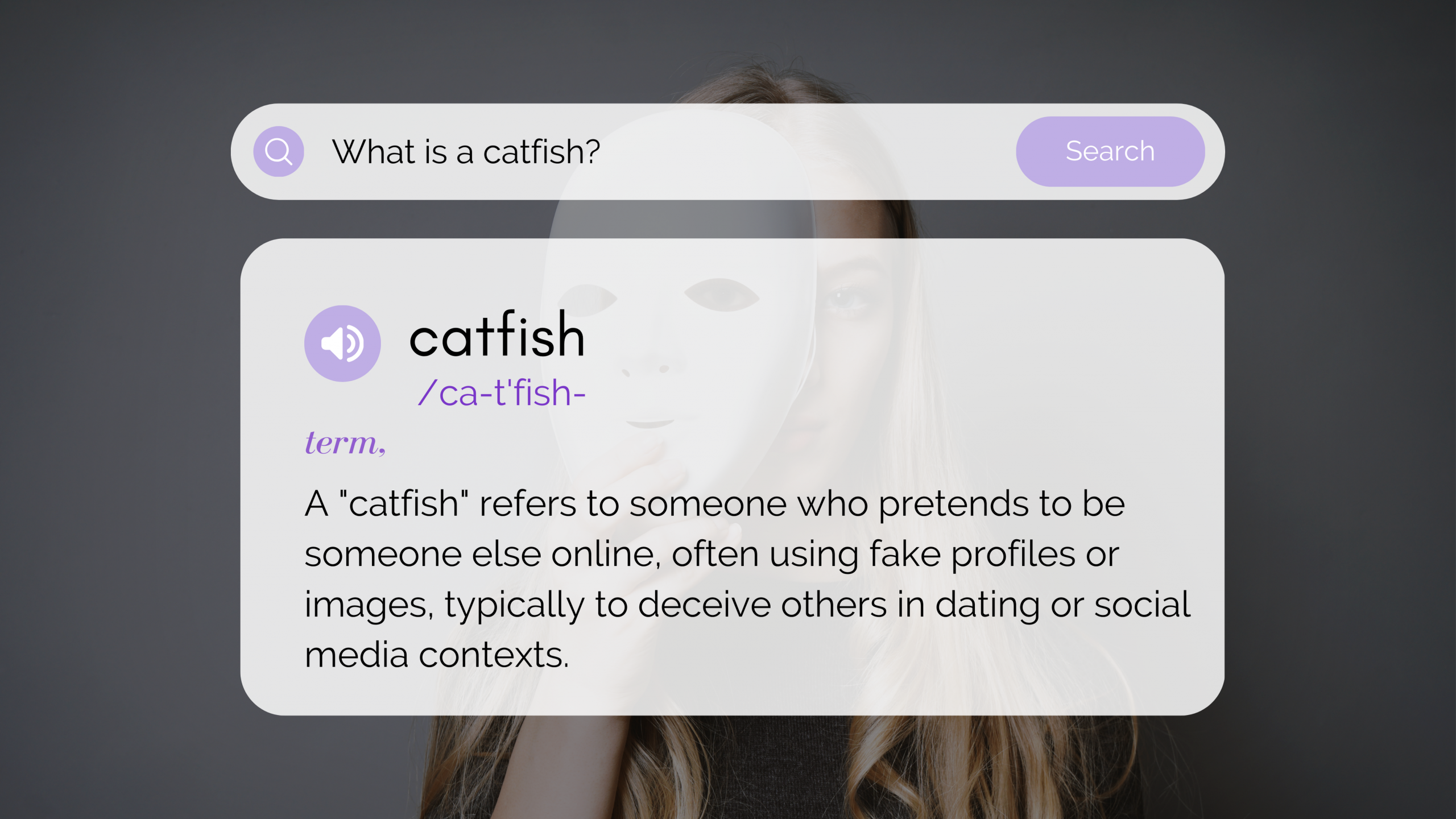
Catfishing is when someone creates a fake online identity to build a relationship, usually to extract money, personal information, or emotional investment from the person on the other end. The Norton Cyber Safety Insight Report found that 55% of online daters in the US have encountered catfishing, and the tactics used in 2026 are significantly more sophisticated than they were even a few years ago.
The good news is that most catfishers still leave traces. Every sign below comes with a verification step, so you can act on the suspicion rather than just carry it. If you want to run a private identity check on someone right now, Social Catfish lets you search their photo, username, phone number, or email; they will never know you looked.
Sign 1: Their Profile Photos Look Too Good
Check every sign that matches your situation. The more you check, the higher the risk that you are dealing with a catfish.
The profile photos are striking, professionally shot, perfectly lit, and consistently attractive across every image. Real people's photo libraries are messy: candid shots, bad lighting, different settings across years. A set of photos that all look like they came from the same photoshoot, or that are implausibly attractive without a single unflattering angle, is worth investigating.
How to verify: Run a reverse image search immediately. Save the photo and upload it to Google Images or TinEye. If the image surfaces under a different name on another platform or appears on a stock image site, the account is using a stolen identity. Social Catfish's reverse image search goes further, cross-referencing the photo against dating platforms and social networks that standard web searches do not index.
Note that AI-generated photos will not surface in a reverse image search because they have no prior existence online. Look for subtle tells, hands with too many fingers, backgrounds that blur unnaturally, ears or hair that shift between images, or faces that look hyper-realistic in a way that feels slightly off.
Sign 2: They Refuse to Video Call
They have a reason every time. The camera is broken. The connection is bad. They are at work, at a family event, or traveling. The excuses are always plausible individually, but the pattern of always having an excuse is the signal.
A genuine person can video call. A catfisher using stolen photos cannot appear on camera without exposing the fraud immediately.
How to verify: Request a live, unscripted video call and ask them to do something spontaneous, hold up a specific number of fingers, wave with a particular hand, or show you something specific in their environment. A real person handles this easily. A deepfake video call, which is increasingly common in 2026, can sometimes be exposed by asking for sudden, unexpected movements that the AI cannot render in real time, or by checking for unnatural blurring around the edges of the face.
Sign 3: The Emotional Connection Accelerates Unnaturally Fast
Within days or a few weeks of first contact, the conversation has already reached expressions of deep affection, talk of the future, or declarations of love. This technique, known as love bombing, is one of the most consistent patterns in catfishing because it works. It creates emotional investment before you have had time to evaluate the relationship critically.
Genuine connections develop at a natural pace. Manufactured ones accelerate deliberately because time works against the catfisher. The longer the relationship takes to develop, the more chances you have to notice inconsistencies.
How to verify: Notice the pace. If affection is escalating faster than your real-world experience of how relationships develop, slow things down intentionally. A genuine person will respect that. Someone following a script will push back against slowing down because the emotional acceleration is the strategy.
Sign 4: Their Social Media Presence Is Thin or Recently Created
A real person's social media accounts accumulate organically over the years, tagged photos from friends, old posts, life events, and a following list that reflects genuine relationships. A profile with few posts, minimal followers, no tagged content from other users, and an account creation date within the last year is a consistent pattern for fabricated identities.
Some catfishers build more elaborate fake social media ecosystems to appear credible. But even those tend to lack the organic randomness of a genuine account; every post is curated, the interactions feel thin, and mutual connections are absent or suspiciously sparse.
How to verify: Check the account creation date using third-party tools where available. Search the username across other platforms; a real person typically has some consistent presence elsewhere. Look for tagged photos from other users, which are harder to fake than self-posted content.
Sign 5: Their Stories Contain Inconsistencies
Details shift between conversations. The job they mentioned last week has slightly different specifics this week. The city they are from changes in a subtle way. The family situation they described does not quite match what they said earlier. Catfishers managing multiple fake personas simultaneously struggle to maintain consistency across extended conversations.
How to verify: Keep a mental note of specific details they have shared, their city, workplace, siblings' names, and how long they have lived somewhere, and revisit them in later conversations. Ask indirect follow-up questions about things they told you before. A genuine person remembers their own life without effort. A scripted persona produces inconsistencies under specific questioning.
Sign 6: They Push to Move the Conversation Off the Platform
Within the first few messages, they suggest moving to WhatsApp, Telegram, Google Chat, or text. The reason given is usually convenience or privacy, but the real reason is that dating platforms and social networks have reporting systems, moderation, and security features that disappear once the conversation moves off-platform.
Moving you off the platform also makes it harder to verify their identity through the platform's own tools and removes any record of the conversation from a system where it could be reported.
How to verify: There is no legitimate reason for a new contact to urgently need to move off the platform before any relationship has developed. Treat any early push to leave the app as a significant red flag, regardless of how natural the reason sounds.
Sign 7: Their Profile Has No Mutual Connections and No Verifiable Context
Real people exist within social networks; they have mutual friends, they went to schools that are verifiable, and they work at companies that exist. A profile with no mutual connections, a job at a company you cannot find, a school that does not appear in any search, or a hometown with no verifiable local context is worth scrutinising.
How to verify: Search their name, employer, and hometown on Google. Look for any public record, LinkedIn profile, company website, or local news mention that confirms the details they have given you. Social Catfish's name search cross-references the identity against public records to confirm whether a real, verifiable person matching their description actually exists.
Sign 8: They Cannot or Will Not Meet in Person
Every time a meeting gets close to being arranged, something comes up. They are abroad for work. A family emergency intervenes. Travel plans fall through. The meeting gets pushed back indefinitely with a plausible new reason each time.
Catfishers cannot meet in person without exposing the fraud. The excuses are always emotionally resonant, designed to make you feel guilty for pushing the issue rather than suspicious of the pattern.
How to verify: Propose a specific meeting with a fixed date and watch how they respond. A real person who genuinely cannot make a particular date will propose an alternative. A catfisher will produce another reason why a meeting is not possible while maintaining the emotional connection through other means.
Sign 9: They Ask for Money, Gift Cards, or Financial Help
This is the most unambiguous sign of all. Once the emotional groundwork is laid, the request arrives for help with a medical bill, legal fees, a flight to come and see you, an investment opportunity, or an emergency that only you can resolve. The story is always emotionally compelling, and the urgency is always high.
Requests come by gift card, wire transfer, cryptocurrency, or payment apps, all methods that are difficult or impossible to reverse. The method of payment is specifically chosen because recovery is not available once the money has moved.
How to verify: There is no legitimate reason for someone you have only known online to need financial help from you before meeting in person. Any financial request from someone you have not met, regardless of how long the relationship has felt genuine, should stop the conversation until identity is independently verified.
Sign 10: Something Just Feels Wrong

This one is less specific than the others but no less valid. The conversation feels slightly off in a way you cannot name precisely. Responses arrive at odd hours. The messages feel slightly too perfect, as if each one was carefully constructed rather than typed spontaneously. The emotional availability is higher than anything you have experienced in real relationships.
Catfishers in 2026 frequently use software platforms that manage multiple conversations simultaneously, suggesting responses based on the target's mood and message history. The result is a conversation that feels unusually attuned to you because it is being engineered to feel that way.
How to verify: Trust the instinct enough to act on it. Run the profile photo through a reverse image search. Search the username across platforms. Ask a direct question that requires specific, unscripted knowledge. The verification takes minutes and costs nothing. The cost of not verifying can be significantly higher.
How to Verify Anyone You Met Online
If any of the signs above feel familiar, these are the steps to take before the relationship goes any further.
Reverse image search their photos — Upload their profile photo to Google Images or TinEye for a free first check. Social Catfish's reverse image search goes deeper, cross-referencing the photo against dating platforms and social networks that standard searches miss.
Search their username across platforms — Most people use a consistent handle across Instagram, TikTok, Twitter, Reddit, and other platforms. A username that exists nowhere beyond where you found it is a meaningful signal.
Search their contact details — Run their phone number or email address through Google in quotation marks. Social Catfish's phone number and email lookup cross-reference contact details against public records and platform data to surface the real identity behind the information they gave you.
Run a full identity search — Social Catfish's combined identity search takes a name, photo, username, email, or phone number and cross-references all of it simultaneously against public records, social profiles, and dating platform data. If the identity they have presented is real, the search will confirm it. If it is not, that result is the most important information you could have.
Every Social Catfish search runs privately. The person you are checking will never know you looked.
What to Do If You Are Being Catfished
If the signs above match your situation and verification confirms the suspicion, take these steps:
- Stop all financial transfers immediately — do not send anything regardless of what threats or emotional appeals follow
- Document everything before blocking — screenshot the profile, the conversation, any contact details, and any requests that were made
- Report the account to the platform where the contact originated
- File a complaint with the FTC at reportfraud.ftc.gov
- If money was already sent, contact your bank or payment provider immediately and report it as fraud
- File a report with the FBI's Internet Crime Complaint Center at ic3.gov
Conclusion
Most catfishers rely on one thing: that you will not check. The emotional connection feels too real to question, the story is too compelling to doubt, and the verification feels like a betrayal of something genuine. That is exactly the environment a catfisher needs to operate successfully.
Every sign in this article is checkable in minutes using free tools or Social Catfish's private identity search. A real person with genuine intentions will hold up to any of them without issue. A catfisher will not. The check costs you a few minutes. Not checking can cost significantly more.
Top 5 FAQs
What are the most common signs of catfishing? The most consistent signs are profile photos that reverse search under a different name, refusal to video call with consistent excuses, an emotional connection that accelerates unnaturally fast, stories that contain inconsistencies under specific questioning, and any financial request before meeting in person.
Run a reverse image search on their profile photo using Google Images or TinEye, search their username across platforms, and Google their name combined with their claimed employer or location. These free methods identify the majority of catfish profiles where the person has not been extremely careful.
Yes, AI-generated deepfake video calls are increasingly convincing in 2026. Ask for sudden, unexpected movements the AI cannot render smoothly, look for unnatural blurring around the face edges, and ask questions that require real-time unscripted responses rather than prepared answers.
No. Every Social Catfish search runs completely privately and confidentially. The person you are searching will never receive a notification or any indication that a lookup was run.
Stop the conversation and do not send anything, regardless of the story or emotional pressure. Verify their identity through a reverse image search and Social Catfish before making any decision. File a report with the FTC at reportfraud.ftc.gov if you believe you are being targeted.