
 Multiple Faces Detected


 September 1st, 2026
Twenty-six victims. Four states. One point three million dollars lost. And not one scammer, two. The fake 49ers player case that resulted in federal wire fraud charges in August 2026 follows a playbook that is more sophisticated than most romance scam coverage acknowledges, and understanding exactly how it worked matters more than any single headline. The specific claim NFL player, real estate investor will change in every repetition. The structure underneath it will not.
Name Search Examples
To get more accurate results, enter the full name including at least First name, Middle name and Last name.
Email Search Examples
Phone Search Examples
Username Search Examples
Address Search Examples
Start typing the initial part of the address and select from the addresses given dropdown afterward.
We Respect Your Privacy.
What Happened in the Fake 49ers Player Scam

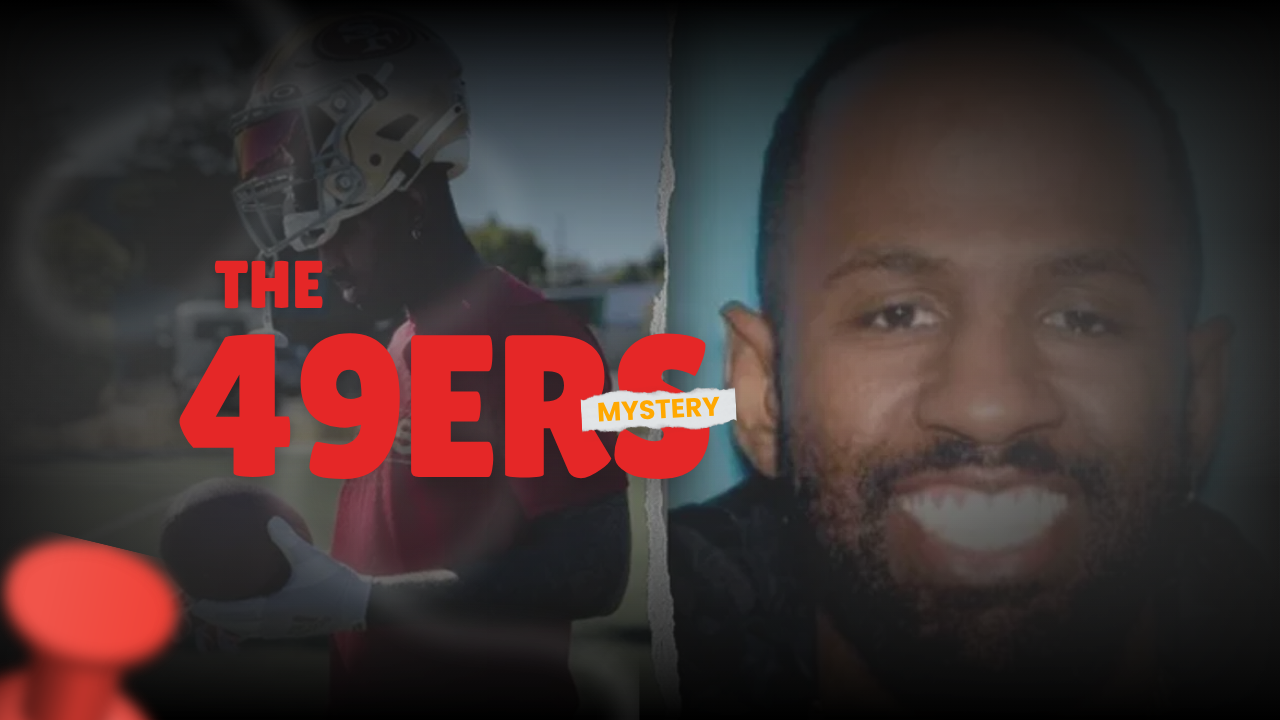
According to the U.S. Attorney’s Office in Oregon and reporting from NBC Bay Area, Daejon Labrayae Love, 35, posed as a San Francisco 49ers player and successful real estate investor on dating apps. He used this identity to build romantic relationships with women across Oregon, Washington, Idaho, and California before steering those relationships toward what appeared to be a lucrative investment opportunity.
Love’s accomplice, Taylor Jamie Chan, 18, played the role of Love’s personal investment adviser. Chan sent fabricated messages and documentation that Love forwarded to victims as though they were independent third-party confirmation of the investment’s legitimacy. The pair used phone applications capable of generating fake bank and investment account balances, and they ran video calls designed to show victims fabricated financial gains in real time.
When victims ran out of their own money, the pair pressured them to take out personal loans to continue investing. Twenty-six women across four states lost a combined $1.3 million before law enforcement intervened. Both men were arrested in Boise, Idaho, after Chan flew to meet Love there. Both were charged with conspiracy to commit wire fraud and wire fraud.
The Two-Scammer Playbook: Why a Fake Advisor Makes the Lie Work
Most romance scam coverage focuses on a single bad actor. This case is structurally different, and that difference is the part worth understanding.
A solo scammer making investment claims is asking you to trust them alone. Everything they tell you about their financial success, their industry connections, and the returns they are generating exists only in the conversation between the two of you. There is no external validation.
When a second person enters the picture an adviser, a broker, a colleague, a friend the dynamic changes entirely. The second voice appears to corroborate the claims from outside the relationship. The investor did not tell you the returns are real. The investor’s adviser did. The adviser appears to have no romantic stake in convincing you. That appearance of independence is exactly what makes the social proof effective.
This two-person mechanic is a scaled-down version of the same tactic used in larger pig-butchering operations, where entire teams of scammers play different roles: a romantic lead, a customer service representative, a financial adviser, and sometimes a fake regulator, each reinforcing the legitimacy of the others. In this case, the operation was smaller: two people, dating apps, and a fake advising role that existed only through forwarded messages. The psychological effect on the target was the same.
The key insight is that an independent-seeming voice corroborating an investment claim is not actually independent just because it appears to come from outside the romantic relationship. Anyone introduced to you through the person you are evaluating is a potential part of the same operation.
How They Faked the Money: Fabricated Investment Apps and Video Calls
The financial proof in this case came from two sources: phone applications that generate fake account balance displays, and staged video calls showing fabricated investment gains.
Both of these warrant direct attention because they represent a category of evidence that feels authoritative but is trivially easy to produce.
Screenshots of financial accounts, investment dashboards, and brokerage statements have no verification mechanism. Any image editing tool, any number of apps specifically designed to produce realistic-looking financial displays, and any screen recording of a staged interface can produce a screenshot that is visually indistinguishable from a genuine account. The visual appearance of a financial screenshot is not proof of anything.
Live video calls showing investment dashboards face the same problem. A screen share during a video call that shows an account with impressive gains shows you an interface that the other person controls completely. They choose when to show it, what it displays, and for how long. There is no mechanism for you to verify that what you are seeing reflects a real account at a real institution.
The practical takeaway is direct: financial proof in the form of screenshots, screen shares, or video demonstrations of account balances should be treated as unverifiable regardless of how realistic they appear. The only financial documentation that carries any weight is documentation you obtain directly from a verified institution, not documentation the other person provides.
How to Verify Before You Send Money or Your Trust
The mechanics of this scam are not impossible to check. Here is what verification looks like in practice before any money or significant trust is extended.
Reverse image search any profile claiming to be a public figure or athlete.
Real athletes are photographed extensively throughout their careers. Their images are licensed, published, and indexed across news sites, team websites, and sports coverage. Those same images are also heavily reused by impersonators who steal them for fake dating profiles. Uploading a profile photo to Social Catfish’s reverse image search runs facial recognition across social media, sports coverage, and other indexed sources, confirming whether the photos belong to the claimed identity or appear under a different name elsewhere. This is the single fastest available check, and it directly addresses the foundation the identity claim rests on.
Be skeptical of any second party who only communicates in the first person.
In this case, the adviser’s contact existed only as forwarded messages. A genuine adviser, broker, or financial professional has an independent verifiable identity. They have a firm, a registration, a license number, and a direct contact method that does not run through the romantic contact introducing them. If you cannot independently verify a second party’s existence and credentials through sources outside the relationship, treat them as potentially part of the same operation.
Verify claimed employment through official sources, not what the person tells you.
Every NFL team publishes its active roster publicly. Every licensed real estate broker is listed in state licensing databases. Any professional credential claim is verifiable through an independent official source. If someone claims affiliation with a specific team, firm, or institution, the verification path runs through that organization’s official website or official licensing database, not through documents, screenshots, or contact information the person provides themselves.
Name Search Examples
To get more accurate results, enter the full name including at least First name, Middle name and Last name.
Email Search Examples
Phone Search Examples
Username Search Examples
Address Search Examples
Start typing the initial part of the address and select from the addresses given dropdown afterward.
We Respect Your Privacy.
What to Do If You Think You’re Being Targeted
Stop sending money immediately. Additional payments in response to pressure, new fees, or loan suggestions represent additional losses rather than a path to recovering what has already been sent.
Do not confront the person before reporting. Confrontation often results in immediate blocking and the loss of any communication record that would support a report. Preserve everything first.
Document all communications. Screenshot every message, every contact detail, every financial display you were shown, and every name and platform involved before taking any other action.
Report through the right channels:
- FBI Internet Crime Complaint Center at ic3.gov
- FBI tip line at 1-800-CALL-FBI
- FTC at reportfraud.ftc.gov
- Your bank or payment platform immediately if any transfer can potentially be reversed
Run a Social Catfish check on their photos and identity before the situation progresses further. If you are unsure whether you are being scammed, uploading their profile photo to Social Catfish’s reverse image search takes minutes and tells you whether the photos belong to a consistent real identity or appear under different names elsewhere. Enter any contact details they have shared into Social Catfish’s reverse search to confirm whether the identity behind the profile is genuine.
FAQ
No. According to the U.S. attorney's office in Oregon, Love falsely portrayed himself as a San Francisco 49ers player. He was not impersonating a specific named player on the roster but claiming the identity of an NFL player generally. No current or former 49ers player has been named in connection with this case.
Upload their profile photo to Social Catfish's reverse image search. The facial recognition searches across sports coverage, social media, and other indexed sources, finding where that face appears and under what names. A genuine athlete's photos appear consistently under their real name and team across multiple independent public sources.
Contact your bank or payment platform immediately; the window for any potential reversal narrows quickly. File reports with the FBI at ic3.gov and the FTC at reportfraud.ftc.gov. Preserve all communications. If wire transfers were involved, contact your bank's fraud department specifically about a wire recall request, though recovery is not guaranteed.
The FTC reported that Americans lost over $1.3 billion to romance scams in 2023 alone, with investment-related romance scams accounting for a significant share of those losses. The fake adviser or corroborating second contact is a known element of pig-butchering and romance-investment hybrid operations.
Conclusion
The specific claim in this case, NFL player and real estate investor, will appear in different forms in every repetition. The structure underneath it repeats exactly: a romantic identity built on a verifiable-sounding public role, a second voice that appears to independently confirm the financial claims, fabricated financial proof that looks authoritative but carries no verification, and escalating pressure when the money runs out.
Each element of that structure has a verification counter. The identity claim is verifiable through official rosters and public records. The profile photos are reverse-searchable through Social Catfish in minutes. The second contact's credentials are checkable through independent licensing and registration databases. The financial proof is not verifiable at all, which is itself the signal.
Verify identity and photos before feelings or money are on the line. The earlier in a connection that verification happens, the less there is to undo.
Name Search Examples
To get more accurate results, enter the full name including at least First name, Middle name and Last name.
Email Search Examples
Phone Search Examples
Username Search Examples
Address Search Examples
Start typing the initial part of the address and select from the addresses given dropdown afterward.
We Respect Your Privacy.