
 Multiple Faces Detected



 May 27th, 2022
It’s all glam on the gram until you get scammed. It is common knowledge that social media may be a dangerous place. There have been a number of high-profile social media frauds in recent years. This is mainly because these platforms are free to download and use. However, Instagram is the greatest offender when it comes to digital marketing scams, with an estimated 1.4 billion users as of 2022 and an average of 11 million posts per day on the network you can never be too cautious. While many networks have taken steps to prevent future frauds, scammers on Instagram are becoming more inventive, devising sneakier and more heinous methods to rip off unsuspecting users. Seeing as social media will never be completely safe, we must continue uncovering these frauds and educating ourselves on how to avoid them because, without this information, we are just sitting ducks.
In this piece, we’ll look at some of the most common Instagram scams.
1. The verification badge/blue tick
[aesop_image img=”https://wp.socialcatfish.cloud/wp-content/uploads/2022/02/Screen-Shot-2022-02-02-at-10.17.08-AM.png” panorama=”off” align=”center” lightbox=”on” captionsrc=”custom” captionposition=”left” revealfx=”off” overlay_revealfx=”off”]
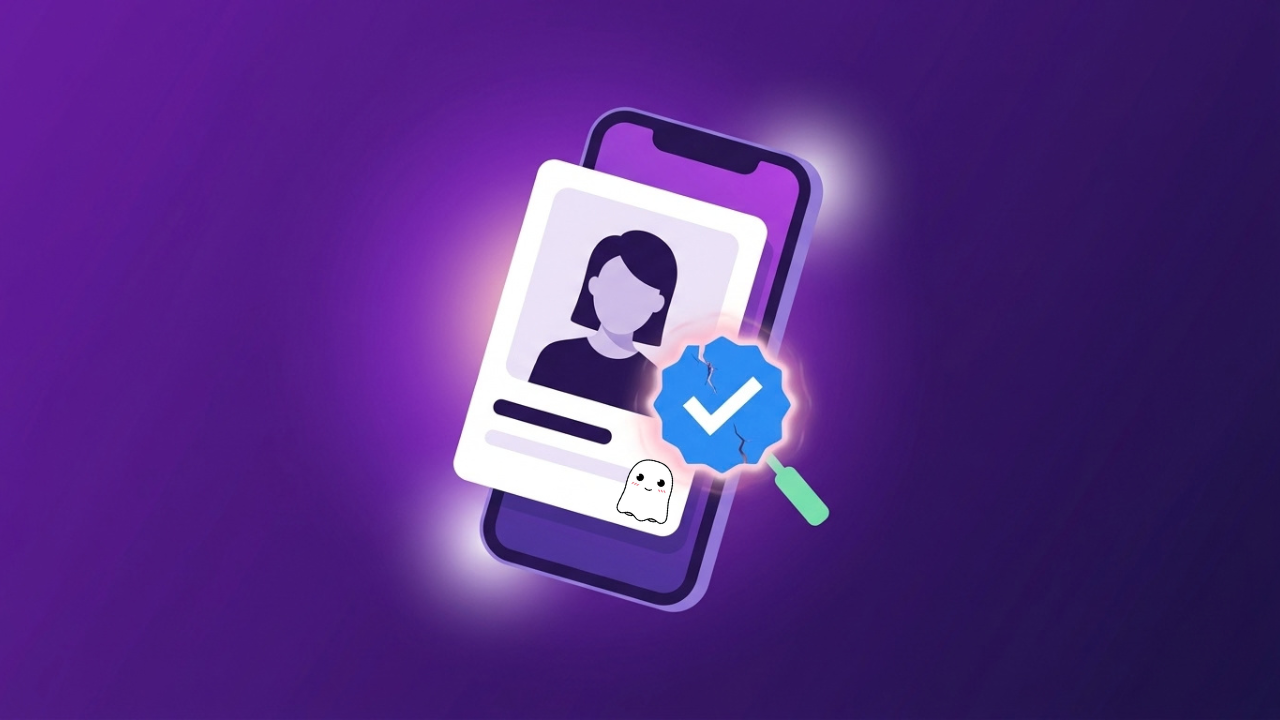
Obtaining the coveted blue checkmark is a significant accomplishment on Instagram. Not only does this prove that you are who you say you are and assist you in securing opportunities such as brand deals, but it also helps distinguish your account from clones and imposters who may pose as you. A clone account imitates the original account of a celebrity, a business, or even an ordinary user. These accounts are created to defraud people and might reflect poorly on a business or influencer’s reputation.
Recognizing how crucial and necessary it is to get one’s account verified, scammers see it as an opportunity. The swindle is pretty straightforward; the scammer will approach you with an offer to assist you in obtaining verification at a fee and then disappear with your money. As an Instagram user, you should be fully aware that there are no shortcuts to Instagram verification; only after following the proper verification process will Instagram verify you.
2. Email phishing.
[aesop_image img=”https://wp.socialcatfish.cloud/wp-content/uploads/2022/02/brett-jordan-LPZy4da9aRo-unsplash-1.jpg” panorama=”off” align=”center” lightbox=”on” captionsrc=”custom” captionposition=”left” revealfx=”off” overlay_revealfx=”off”]
Instagram email scams are a scam in which a phony emails. These emails are well crafted and appear to be from a reputable source. The fraudster sends you a fake Instagram email posing as Instagram in order to obtain your personal information, such as your user name and password, to steal your data. Or even a brand that wants to collaborate with you and dupes you into providing additional information for you to proceed. This is called a phishing scam.
What are the tell-tale signs that indicate an Instagram phishing scam?
- If the content has any misspellings, this may be an indicator of a phishing email.
- If the URL (the text in the bar at the top of the screen) isn’t “instagram.com” you have probably been sent to a fake website. These websites are often infected by malware.
3. False giveaways
[aesop_image img=”https://wp.socialcatfish.cloud/wp-content/uploads/2022/02/pexels-photo-5650051.jpeg” panorama=”off” align=”center” lightbox=”on” captionsrc=”custom” captionposition=”left” revealfx=”off” overlay_revealfx=”off”]
Anyone can become enthused about a freebie. While businesses frequently offer promotional gifts, fake accounts can deceive unsuspecting users through give-away scams. This fraud is aimed to entice users into completing survey questions about random topics in exchange for a chance to win luxury and designer items, as well as all-expense-paid trips. However, the prize is not without conditions; you will need to submit sensitive information in exchange for a reward or follow specified accounts to be eligible. This is known as a survey scam.
4. Deletion of accounts
[aesop_image img=”https://wp.socialcatfish.cloud/wp-content/uploads/2022/02/02qutLyAIXfRBfQBsgzy8Ee-1.fit_lim.size_1200x630.v1569492842.jpg” panorama=”off” align=”center” lightbox=”on” captionsrc=”custom” captionposition=”left” revealfx=”off” overlay_revealfx=”off”]
Building a dedicated following takes time and effort. After accumulating a few thousand followers on Instagram and hoping to monetize, the thought of your account getting deleted is unimaginable, as scammers are well aware. You’ll receive a direct message or email from an account impersonating Instagram alerting you that your account has issues and that you must change your password or login or submit further information to prevent it from being deleted. This is typically a scammer’s attempt to steal personal information or take over your account and solicit money from your friends and family while posing as you.
5. Instagram dm scam
[aesop_image img=”https://wp.socialcatfish.cloud/wp-content/uploads/2022/02/neonbrand-nZJBt4gQlKI-unsplash.jpg” panorama=”off” align=”center” lightbox=”on” captionsrc=”custom” captionposition=”left” revealfx=”off” overlay_revealfx=”off”]
There are several ways to be scammed via Instagram direct message; however, the most common way plays out like this. You receive a direct message from a strange account stating that they saw an X-rated video of you on a rated site, then provide a link to the video. When you click on the link, you are taken to a website that looks identical to the Instagram login page, leading you to believe you have logged out accidentally. Once you attempt to re-login, the fraudster has all of your information, including your login credentials and message records. This is another type of Instagram phishing scam.
A summary on how to avoid being scammed on Instagram.
[aesop_image img=”https://wp.socialcatfish.cloud/wp-content/uploads/2022/02/andrej-lisakov-XL-hPDNeZvs-unsplash-1.jpg” panorama=”off” align=”center” lightbox=”on” captionsrc=”custom” captionposition=”left” revealfx=”off” overlay_revealfx=”off”]
- Do not pay someone who claims to be able to expedite Instagram verification. It is only possible if you follow the Instagram community guidelines and the formal process.
- Be wary of freebies and sweepstakes. It’s important to do your research before doing business with any company on Instagram. Check the account’s legitimacy before participating in a giveaway by reviewing the profile, the number of followers, prior posts, and comments, and following up on previous wins. Spam accounts on Instagram are usually suspicious.
- Try and avoid emails or clicking links from unknown senders.
- Do not hand out your personal information, no matter how tempting the offer. Serious clients that want to collaborate with you will always find a professional approach to express their intentions.
- Report any spam accounts that you suspect are scammers, and then block them so they cannot message you.
How can I report Instagram scams?
[aesop_image img=”https://wp.socialcatfish.cloud/wp-content/uploads/2022/02/pexels-vojtech-okenka-392018.jpg” panorama=”off” align=”center” lightbox=”on” captionsrc=”custom” captionposition=”left” revealfx=”off” overlay_revealfx=”off”]
One might wonder how one can report a scammer on Instagram and why this is necessary when you can simply block them and move on. However, reporting a probable scammer will prompt Instagram to act and ban the account, preventing the scammer from successfully deceiving someone else who is not as aware as you. Here is the guide,
- Select the account’s profile.
- There are three dots placed vertically for Android users on the upper right and horizontally for iPhone users.
- When you click on them, a report option appears.
- Select the report account option.
- Then, tap on “Its posting content that shouldn’t be on Instagram.”
- Then select the “misleading or possible scam option”, and you are done.
The Wrap-up
The tips above can help protect you against scams on Instagram. But spotting these scams isn’t always so straightforward. That’s where a reverse image search comes in. A reverse image search can help you find out who’s really behind an account. It’s simple, before interacting, doing business, or starting a relationship with someone online, run a reverse image search on one of their pictures to make sure they are who they say they are.
Name Search Examples
To get more accurate results, enter the full name including at least First name, Middle name and Last name.
Email Search Examples
Phone Search Examples
Username Search Examples
Address Search Examples
Start typing the initial part of the address and select from the addresses given dropdown afterward.
We Respect Your Privacy.