
 Multiple Faces Detected



 March 5th, 2026
Airchat is built on a simple, appealing idea: that hearing someone’s actual voice makes online interaction feel more human, more honest, and more real.
And for most users, it does. But the Commodity Futures Trading Commission estimates that pig butchering scams alone cost Americans roughly $10 billion every year, and voice-based platforms like Airchat are becoming one of the primary hunting grounds. In 2026, a convincing voice is not proof of identity. It’s a tool.
If someone on Airchat doesn’t feel right, Social Catfish can help you verify who you’re actually talking to before the conversation goes any further.
What Is Airchat?
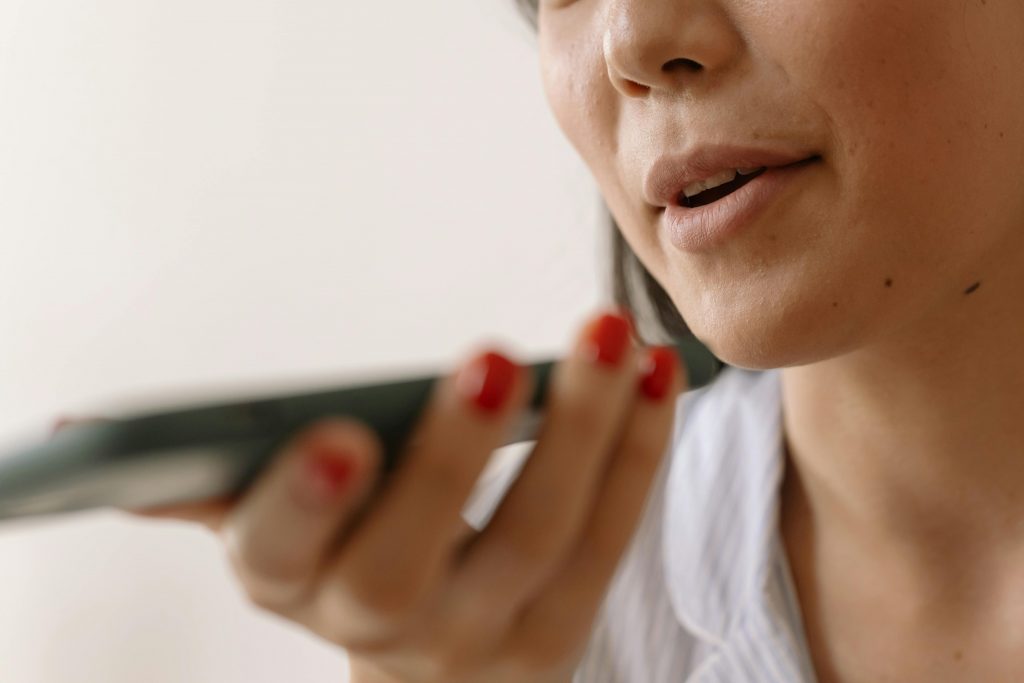
Airchat is an audio-first social media platform founded by AngelList founder Naval Ravikant and former Tinder chief product officer Brian Norgard. Instead of typing posts, users record voice notes that the app transcribes in real time using AI. The result is a Twitter-like feed where you can scroll through posts, hear the voices behind them, and reply with your own audio recordings.
The app launched in 2023, relaunched in April 2024 to significant buzz in Silicon Valley, and has attracted notable early adopters and investors from OpenAI’s Sam Altman to Y Combinator founder Garry Tan. Its invite-based model and voice-forward format have positioned it as one of the more intimate and personality-driven social platforms available.
Ravikant described his vision as wanting “a house party in my pocket,” a place to pull out your phone and talk to someone interesting anytime. That intimacy is genuinely appealing. It’s also exactly what scammers look for.
Why Airchat Creates a False Sense of Security
Every other social media platform gives you text and photos. Airchat gives you a voice, and that changes everything psychologically.
When you hear someone speak, your brain processes it differently from text. Tone, warmth, humor, and vulnerability all come through in ways that a typed message can’t fake as easily. Users naturally lower their guard. Conversations feel more like real relationships. Trust builds faster.
The problem is that in 2026, that voice may not be real.
AI voice cloning scams have surged by 148% in 2025, according to Resemble AI. Global losses from deepfake-enabled fraud exceeded $200 million in just the first quarter of 2025 alone. Scammers can now replicate someone’s voice using just a few seconds of publicly available audio from a social media post, a podcast appearance, or even a voicemail. On an audio-first platform like Airchat, where every post is a voice recording, bad actors have an almost unlimited supply of raw material to harvest, clone, and weaponize.
Beyond voice cloning, Airchat’s invite-based model creates another layer of false trust. When you receive an invite from someone, or when someone joins through a mutual connection, the assumption is that they’ve been vetted. They haven’t. Scammers infiltrate invite-only platforms quickly, often by obtaining invites through social engineering or by creating enough legitimate-seeming activity to blend in.
The Scams That Specifically Target Airchat Users
The “Authentic Connection” Setup
Airchat’s intimate format is a perfect incubator for the early stages of a romance or friendship scam. Unlike Instagram, where a fake profile is immediately obvious if it only has three posts, a well-produced Airchat presence requires almost nothing. Just a few convincing voice notes, a plausible backstory, and the patience to let trust build naturally.
The FBI warns that romance scammers will seem genuine, caring, and believable, and that con artists are present on most dating and social media sites. On Airchat, where voices feel personal and conversations feel real, the setup phase of a scam can happen faster and more convincingly than almost anywhere else online.
AI Voice Cloning and Impersonation
This is the scam Airchat is uniquely vulnerable to. A fraudster identifies a public figure, a creator, or even a regular user whose voice appears in publicly available recordings. Using widely available AI tools, they clone that voice and use it to impersonate the real person, whether to build a fake romantic connection, solicit money, or gain someone’s trust before moving the conversation off-platform.
Deepfake vishing, fraudulent voice interactions that leverage AI-generated voice clones, has rapidly evolved into one of today’s most sophisticated social engineering threats. Scammers harvest target audio on social media to craft hyper-realistic impersonations that bypass traditional caller ID and voice-biometric checks. On a platform where audio is the primary medium of communication, this attack is more dangerous than anywhere else.
Pig Butchering Through Voice-Based Trust
The fastest-growing financial scam of 2026 is pig butchering, a long-term confidence scheme where a scammer spends weeks building emotional rapport before steering the victim toward a fake investment opportunity. Airchat’s conversational, relationship-driven format is ideal for this. A scammer can spend weeks posting genuine-sounding voice content, building a following, developing rapport with specific users, and then introducing the investment angle once trust is firmly established.
The Commodity Futures Trading Commission estimates this type of fraud costs Americans roughly $10 billion each year. The FBI has specifically warned that scammers will establish frequent contact and claim to have earned large profits through trading cryptocurrency before directing victims to fraudulent platforms.
Celebrity and Influencer Impersonation
Airchat has attracted high-profile early adopters including founders, investors, creators, and public intellectuals. That makes it fertile ground for impersonation. A scammer clones the voice of a recognized Airchat personality, creates an account that mirrors their content style, and begins interacting with that person’s followers. The followers, hearing what sounds like the real person, are far more likely to trust whatever comes next: a DM, a recommendation, a request to move conversations off-platform.
Red Flags on Airchat That a Voice Doesn’t Explain Away
- Their audio posts feel polished but their profile is new or sparse
- They move quickly from public interaction to private DMs
- They pressure you to leave Airchat for WhatsApp, Telegram, or Signal
- Their voice sounds slightly off: too smooth, oddly paced, or without natural filler words like “um” or “uh”
- They claim to be a public figure but their account lacks the history or verification you’d expect
- They introduce cryptocurrency, investment opportunities, or financial topics unprompted
- Their backstory doesn’t hold up to a basic search: their name, employer, or location doesn’t match public records
- They ask for money, gift cards, or wire transfers for any reason, no matter how compelling the story
How to Verify Someone on Airchat

Here’s the scenario: someone has been posting consistently on Airchat for a few weeks. Their voice is warm and engaging. They’ve replied to your posts, started a conversation in your DMs, and the whole thing feels genuine. But something you can’t name feels slightly off.
That feeling is worth listening to. Here’s how to investigate.
Use Social Catfish
Before the conversation goes further, the first thing to check is their profile photo. Run it through Social Catfish’s Reverse Image Search and find out if that face exists anywhere else on the internet under a different name. Most fake profiles are caught right here.
If the photo comes back clean but something still feels off, search their Airchat handle through Username Search. Scammers rarely use a handle just once. Finding that same username on a dating app or forum under a different identity tells you everything you need to know.
The moment they ask to move off Airchat and share a phone number, run it through Reverse Phone Search before you reply. If the number doesn’t match the name or location they’ve given you, or has been flagged in prior scam reports, that’s your answer. The same goes for an email address; a Reverse Email Search can surface accounts and identities connected to it that they never mentioned.
Other Ways to Verify
Google their name and the word “scam.” It takes ten seconds and catches repeat offenders. If the name has been flagged before, it often surfaces immediately in search results or on scam-reporting forums.
Check for a professional footprint. If someone claims to be a doctor, engineer, or business owner, that should be verifiable outside of Airchat. Search their name on LinkedIn. No professional history, no employer, and no verifiable background is a red flag regardless of how convincing they sound.
Request a spontaneous video call. Ask for an unscripted, live video call with a specific action, like holding up three fingers or waving. This still eliminates the majority of scammers who lack the technology to run a live deepfake in real time. It’s not foolproof in 2026, but it’s a meaningful additional hurdle.
Listen across multiple posts. Since everything on Airchat is audio, you can actually compare voice quality and consistency over time. A cloned voice is often unnaturally consistent, slightly too smooth, and may sound subtly different between posts if different audio samples were used to generate it. Real voices vary. They have good days and bad days, energy shifts, and background noise.
How to Protect Yourself on Airchat
Treat voice as one signal, not as proof. The entire premise of Airchat is that voice makes things more human. It does, but in 2026, it doesn’t make them more verifiable. Hear the voice, enjoy the conversation, and still verify independently.
Watch for unnatural audio quality. AI-cloned voices are convincing but not perfect. Listen for overly smooth delivery without natural pauses, slight robotic consistency in tone, or audio that never stumbles. Real people say “um” and trail off. Real people also breathe awkwardly at the start of a recording. Cloned voices often don’t.
Keep conversations on the platform as long as possible. Anyone who pushes quickly to move from Airchat to a private messaging app is removing the one layer of accountability the platform provides. Scammers move off-platform because it erases the reporting trail and isolates the victim.
Never send money to someone you haven’t verified independently. No story, whether a medical emergency, a business opportunity, or a travel delay, justifies sending money to someone whose identity you haven’t confirmed through more than a voice on an app.
Report suspicious accounts. Airchat has in-app reporting. Use it. The faster fake accounts are flagged, the better protected the entire community becomes.
Frequently Asked Questions
Yes. Airchat is a legitimate social media platform built by Naval Ravikant and Brian Norgard. The app itself is not a scam, but like any social platform, it can be used by scammers who exploit its unique format to build false trust.
Not anymore. AI voice cloning technology can generate a convincing replica of someone’s voice from just a few seconds of publicly available audio. In 2026, a voice on a social app is not reliable proof of identity and needs to be verified through independent means.
Trust your instincts. If the audio feels too smooth, too consistent, or slightly off in ways you can’t name, stop engaging and start verifying. Run their profile photo and username through Social Catfish, search their name against public records, and never move money or personal information based on voice alone.
Recovering money from online scams is extremely difficult, especially if it was sent via wire transfer, gift cards, or cryptocurrency. File a report with the FTC at reportfraud.ftc.gov and the FBI’s Internet Crime Complaint Center at ic3.gov, and contact your bank immediately.
Verify their identity first using Social Catfish. When you meet, choose a public location, let a trusted person know where you’re going, and don’t share your home address before you’ve confirmed the person is who they claim to be.
The Bottom Line
Airchat’s voice-first format is genuinely different, and for most users it makes the platform feel more honest and more human than anywhere else online. That feeling is real. The problem is that in 2026, it can be manufactured. Voice cloning has made it possible for a scammer to sound like anyone, and Airchat’s intimate, trust-driven format makes that exploitation more dangerous than on platforms where you’d already be more guarded.
The rule hasn’t changed; it’s just more urgent: verify before you trust. A voice is no longer enough. Use Social Catfish to confirm who you’re really talking to before you invest your time, your emotions, or your money in someone you’ve only ever heard.