
 Multiple Faces Detected


 February 11th, 2026
In the age of artificial intelligence, you can no longer trust what you see. AI face swap technology has advanced to the point where scammers can create videos, selfies, and profile photos that look convincingly real but feature completely fabricated faces or stolen identities manipulated to deceive victims.
According to research from Resemble AI, there were 163 documented deepfake incidents in Q1 2025 alone, with over $200 million in documented losses. These AI-powered face swaps are used in romance scams, business email compromise, identity theft, and fraud operations that exploit the human tendency to trust visual evidence.
Social Catfish helps you detect fake images and videos through reverse image search, identity verification, and comprehensive background checks that expose AI-manipulated content before you’re deceived. Understanding the red flags of AI face swap technology protects you from increasingly sophisticated visual fraud.
In this guide, we’ll explain how AI face swap works, the red flags that reveal fake images and videos, and how to protect yourself from this cutting-edge deception.
What Is AI Face Swap?
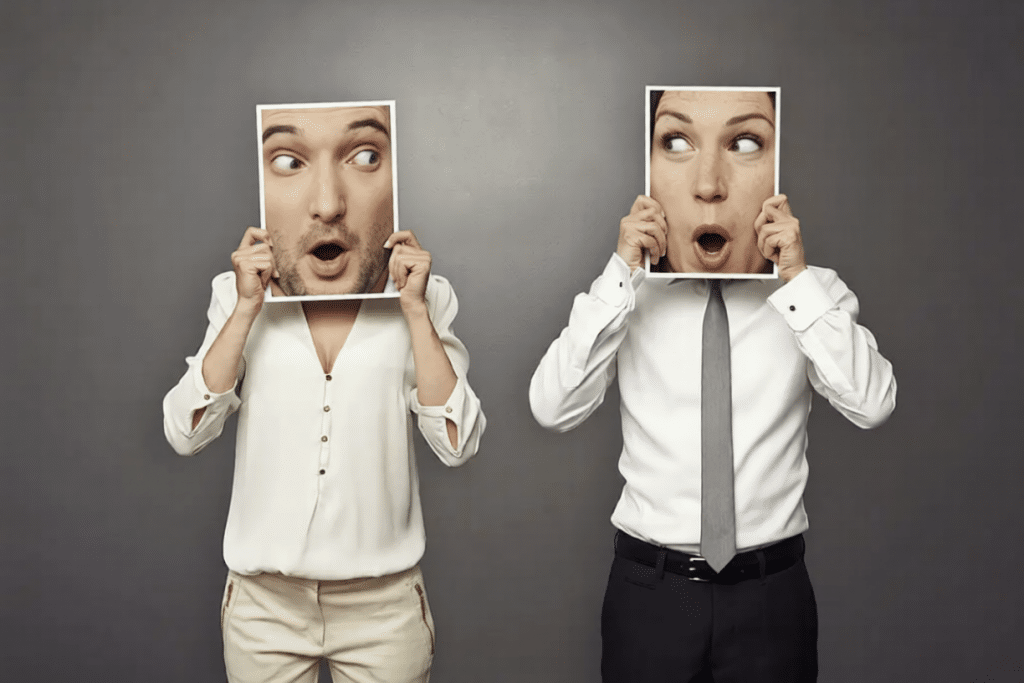
AI face swap technology uses artificial intelligence to replace one person’s face with another in photos, videos, or real-time streams, creating convincing visual content where someone appears to be someone they’re not.
How AI Face Swap Works
AI face swap technology analyzes facial features from source material, maps one person’s face onto another’s head, adjusts lighting and skin tone to match, synchronizes facial movements in video, and generates realistic results in seconds.
How Scammers Exploit Face Swap
Scammers weaponize face swap to create fake video verification calls, generate realistic profile photos using stolen faces, impersonate executives in business scams, produce fake content for sextortion, conduct romance scams with manipulated video, and create false evidence in blackmail.
Common Types of AI Face Swap Scams
Romance Scam Video Calls
Scammers use face swap during video calls to appear as the attractive person whose photos they’ve been sending, swapping their real face with the stolen face in real-time.
The Scam: Victims believe they’re video chatting with profile photos when they’re actually seeing AI manipulation.
Business Email Compromise (BEC)
Scammers use face swap to impersonate CEOs or executives in video calls requesting wire transfers or sensitive information.
The Scam: Employees see their CEO’s face requesting urgent action when it’s actually a scammer using face swap.
Fake Identity Verification
Scammers use face swap to “verify” identity by appearing as the person whose ID documents they’ve stolen, passing video verification.
The Scam: Platforms requiring video verification are fooled by face swap showing the scammer’s movements with stolen identity’s face.
Sextortion and Blackmail
Scammers create fake explicit content using face swap to place victims’ faces on pornographic material, then demand money.
The Scam: Victims see convincing fake videos of themselves in situations that never occurred.
Catfishing with Enhanced Credibility
Catfishers use face swap to create profile photos and casual selfies using stolen faces, appearing more authentic than simple stolen photos.
The Scam: Victims see multiple consistent photos when they’re actually face-swapped fabrications.
Red Flags in AI Face-Swapped Photos
Despite improving technology, face-swapped images contain telltale signs.
Unnatural Skin Texture
Look for skin that appears too smooth or waxy, lacks natural pores or imperfections, has inconsistent texture between face and neck, appears overly airbrushed, or shows unnatural blending at hairline or jawline.
Mismatched Lighting
Watch for face lighting that doesn’t match body or background, shadows falling in wrong directions, different light temperatures between face and surroundings, and inconsistent highlights.
Blurred or Soft Edges
Check where face meets hair, neck, or background for blurry transition zones, soft undefined boundaries, edges that look pasted, and unnatural blending at ears or neck.
Unnatural Facial Proportions
Examine for eyes, nose, or mouth sized incorrectly for face shape, features positioned unnaturally, face shape not matching head size, and asymmetry that seems off.
Color and Tone Mismatches
Look for face color that doesn’t match neck or body, different color temperature in face versus rest of image, inconsistent saturation levels, and unnatural skin tones.
Artifacts Around Features
Check for glitches around eyes, nose, mouth, pixelation near facial features, doubled edges or ghosting, and unusual textures.
Red Flags in AI Face-Swapped Videos
Inconsistent Facial Movements
Watch for mouth movements that don’t match speech, facial expressions that lag behind audio, unnatural blinking patterns, and expressions that seem delayed or robotic.
Flickering or Glitching
Look for brief moments where face flickers or distorts, glitches during quick head movements, face boundaries that shimmer, and momentary appearance of original face underneath.
Inconsistent Quality
Notice if face quality differs from rest of video, face appears sharper or blurrier than background, video quality changes when face is visible, and resolution seems different for face versus body.
Poor Performance with Movement
Watch during fast head movements, extreme facial expressions, profile views or angled positions, and hand movements near face. Face swap degrades with movement and extreme angles.
Unnatural Hair and Accessory Behavior
Check how hair, glasses, and accessories interact with face: hair that doesn’t move naturally, glasses that don’t reflect correctly, accessories that float, and hair that passes through face unnaturally.
Audio-Visual Mismatches
Listen for voice that doesn’t match face’s appearance, lip movements that don’t sync with speech, audio quality differing from video quality, and background sounds that don’t match visible environment.
How to Verify Photos and Videos
Request Multiple Spontaneous Photos or Videos
Ask for photos taken at specific times with time stamps, specific poses or actions, multiple angles and expressions, and photos showing identifiable current backgrounds.
Real people comply easily. Scammers using face swap struggle with spontaneous requests.
Conduct Live Video Calls with Challenges
During video calls, ask them to turn to profile views, request specific facial expressions, have them move quickly or touch face, ask them to cover/uncover face parts, and request they show hands near face.
Face swap technology degrades with these challenges.
Use Reverse Image Search
Upload photos to Social Catfish’s reverse image search to check if the face appears on other profiles or has been stolen.
Analyze Metadata
Check file metadata for editing software signatures, look for creation dates that don’t match, examine EXIF data for inconsistencies, and check if files show manipulation signs.
Compare Across Multiple Platforms
Request photos from different platforms. Face swap scammers often can’t maintain consistency across all platforms.
How Social Catfish Helps Detect Face Swap Fraud

Professional verification exposes fake identities regardless of AI manipulation quality.
Reverse Image Search
Social Catfish’s reverse image search finds if faces have been stolen from other sources, even if modified. If the same face appears on multiple unrelated profiles, it’s likely fraudulent.
Identity Verification
Social Catfish’s name and background verification confirm whether someone exists with the identity they claim, matching public records regardless of how convincing the photos appear.
Phone Number Verification
Social Catfish’s phone lookup verifies contact information, connects to the claimed identity, exposing scammers even when face-swapped videos seem real.
Social Media Cross-Referencing
Using Social Catfish’s social media search finds all profiles associated with someone, revealing authentic long-standing accounts or recently-created profiles with limited history.
Multi-Point Verification
The power of Social Catfish is combining multiple verification methods, including phone records, public records, social media history, and background checks that can’t be faked with a face swap.
What to Do If You Suspect Face Swap
If you believe someone is using AI face swap, take action.
Stop Communication
Don’t confront them. Stop all communication immediately and block them on all platforms.
Verify Through Social Catfish
Use Social Catfish’s comprehensive tools to investigate real identity through methods that can’t be manipulated with face swap.
Document Everything
Save all photos, videos, messages, and communications before accounts are deleted.
Report the Fraud
File reports with the FBI IC3 at ic3.gov, the FTC at ReportFraud.ftc.gov, the platform where you met them, and local law enforcement if you’ve lost money.
Frequently Asked Questions
Sometimes, especially with rapid movement or extreme angles. However, technology is improving rapidly. Use Social Catfish’s verification tools rather than relying on visual inspection alone.
No. Real-time face swap during video calls is possible. Request spontaneous actions, extreme movements, and multiple angles. Verify identity through Social Catfish using non-visual methods.
Look for skin texture issues, lighting mismatches, blurred edges, and color inconsistencies. Use Social Catfish’s reverse image search and comprehensive verification to confirm identity.
Don’t pay. Document everything, report to law enforcement and the FBI IC3, and use Social Catfish to gather evidence. Face-swapped content can often be proven fake through forensic analysis.
Verify identities through Social Catfish using phone, name, and background checks. Request spontaneous verification actions during video calls. Never send money to people you can’t verify through multiple independent methods.
Conclusion
AI face swap technology has eliminated the reliability of visual verification. Photos and videos can be manipulated so convincingly that seeing someone’s face is no longer proof of identity. Scammers use this technology to pass video verification, create fake profile photos, and impersonate real people in increasingly sophisticated fraud operations.
Protection requires moving beyond trusting what you see to comprehensive multi-point verification. Social Catfish provides the tools you need, reverse image search, phone verification, background checks, and identity verification that expose fraud regardless of how convincing the face swap appears.
Don’t trust photos or videos alone. Verify through Social Catfish, request spontaneous proof that can’t be pre-recorded or manipulated, and remember: in the age of AI face swap, verification is everything.