Multiple Faces Detected


 February 17th, 2026
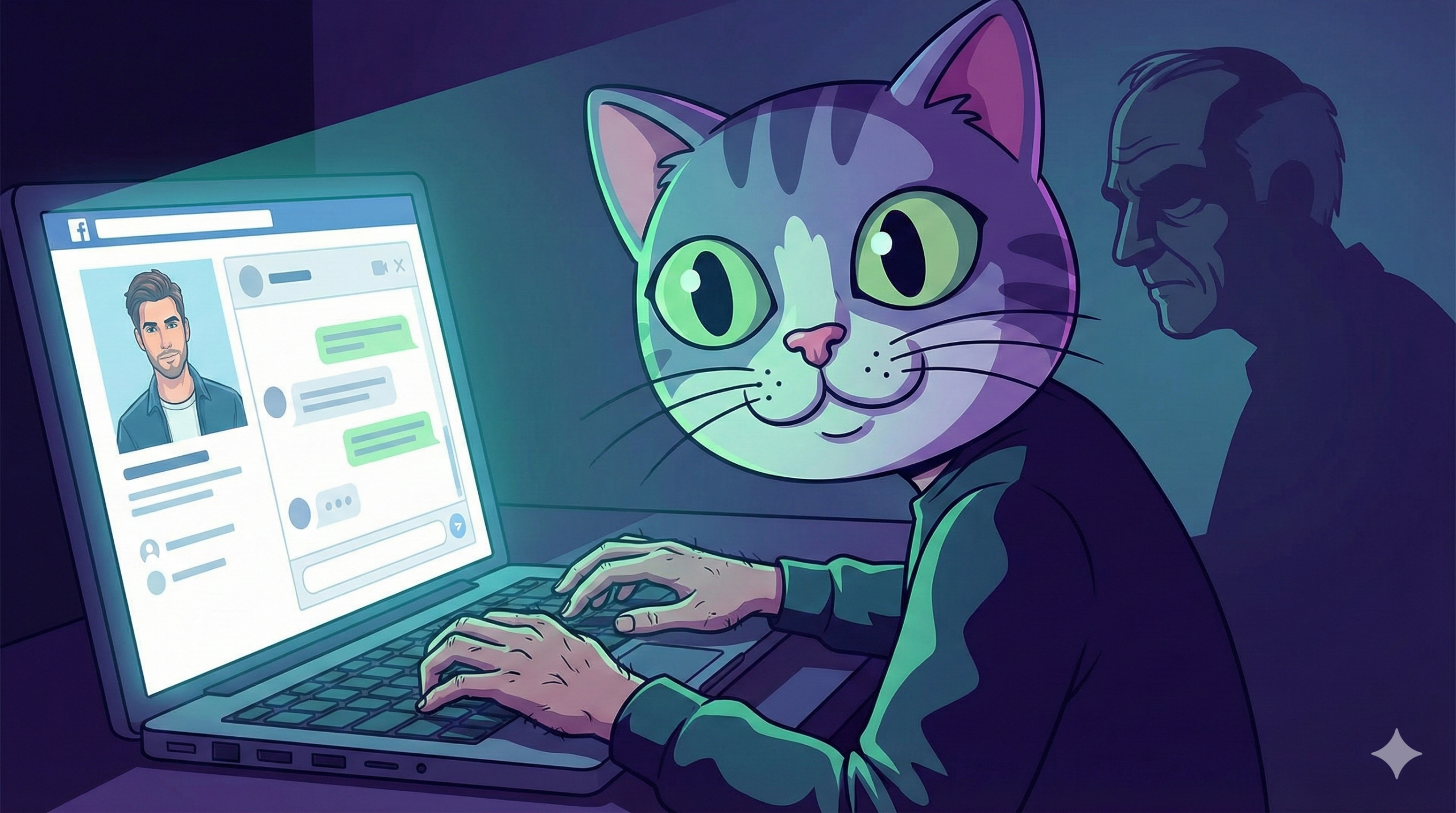
Catfishing is when someone creates a fake online identity to deceive others, typically using stolen photos and fabricated personal details to build romantic or financial relationships.
The term came from the 2010 documentary “Catfish,” but the practice has been around since the earliest days of online communication. Today, 55% of online daters have encountered fake profiles, according to Norton’s 2024 Cyber Safety Insights Report.
Most catfishers follow similar patterns. They steal attractive photos from social media, create elaborate backstories, and target people looking for connection. The relationship moves fast, declarations of love within weeks, promises of meeting “soon,” and eventually requests for money or personal information.
Understanding these patterns helps you spot deception before you’re emotionally invested or financially compromised.
How Do I Know If I’m Being Catfished?
You’re likely being catfished if the person refuses video calls, has few social media connections, asks for money, provides inconsistent information, or uses photos that appear professionally shot or model-quality. Trust your instincts, if something feels off, it probably is.
The clearest sign is avoidance. Real people with genuine interest will eventually meet in person or video chat. Catfishers always have an excuse: broken camera, bad internet, work restrictions, family emergencies. One excuse is understandable. Six months of excuses is a pattern.
10 Warning Signs Someone Is Catfishing You
- They Refuse to Video Chat or Meet in Person
Every catfisher has the same playbook here. The camera is broken. Their internet can’t handle video. They’re traveling for work. A family member is sick. The excuses stack up, but they never run out.
Real people want to see who they’re talking to. If you’ve been chatting for weeks and they won’t FaceTime even once, you’re not talking to the person in those photos.
If they constantly make excuses to avoid showing their face on camera, they are likely hiding behind a stolen identity. You can quickly unmask them by running their profile pictures through the best reverse image search tools to see where those photos actually originated.
- Their Photos Look Too Perfect or Professional
You know the photos – flawless lighting, professional composition, model-quality appearance. Real people’s social media includes awkward birthday party photos, bad haircuts, and pictures where they’re squinting into the sun.
If a match’s photos look too perfect, don’t just take them at face value. Use a reverse lookup to find someone with a photo and confirm if that person is actually the one you are communicating with.
Catfishers steal images from models, influencers, or photographers’ portfolios. The photos are stunning because they’re literally professional work. If every single photo looks like it belongs in a magazine, run a reverse image search. - They Have a Minimal Social Media Presence
Check their friend count, post history, and tagged photos. A real 28-year-old should have hundreds of connections, years of posts, and photos where friends tagged them at parties, weddings, or random events.
Fake profiles typically show:
– Under 50 friends or followers
– No tagged photos from other people
– Account created recently (check the join date)
– No mundane posts, just the occasional dramatic update
– Friends who also have minimal profiles - Their Story Keeps Changing
They told you they work in finance, then mentioned their medical degree. First they lived in Boston, now it’s Seattle. Small inconsistencies are normal, but if you’re keeping notes to track their backstory, something’s wrong.
Catfishers manage multiple fake identities. They forget which details they told which person. Pay attention when the facts don’t line up, most people can tell you about their job, hometown, or family without contradicting themselves weekly. - They Declare Strong Feelings Unusually Fast
“I’ve never felt this way before” by week two. “I think I’m falling in love with you” before you’ve met. “You’re the only person who understands me” after three conversations.
This is love bombing – a deliberate tactic used by romance scammers. The intensity creates emotional attachment before you have time to think critically. Real relationships build gradually. Fake ones explode immediately. - They Ask for Money or Financial Help
This is the goal. The entire relationship builds toward this moment. The request usually follows a crisis: medical emergency, travel problem, business opportunity, family tragedy. They need money right now, and you’re the only person who can help.
Common financial scam patterns:
– “I need money for a plane ticket to visit you”
– “My account is frozen but I’ll pay you back next week”
– “This business opportunity requires upfront capital”
– “My child/parent needs emergency medical treatment”
Real romantic partners don’t ask people they’ve never met for money. Period. - They Work in Vague or Hard-to-Verify Professions
Catfishers claim jobs that are difficult to check and explain away their availability. “I work on an oil rig” justifies limited communication. “I’m in the military overseas” explains why they can’t video chat. “I’m a contractor doing classified work” means you can’t Google them.
These careers also set up future financial scams. Oil rig workers get “stuck” and need travel money. Military personnel need help shipping packages. Contractors have business deals that require investment. - They Only Communicate on One Platform
They pushed you off the dating app immediately. Now it’s only WhatsApp, or Google Hangouts, or Telegram. They won’t text your actual phone number. They won’t add you on Instagram or Facebook.
This isolation serves two purposes. First, it prevents you from seeing their real social media (or lack thereof). Second, when the platform bans their account for scamming, they can claim it was a technical error and move you to another app. - Their English Suddenly Changes
You’ve been chatting with someone who writes perfectly. Then they send a message full of odd phrasing or grammar mistakes. Or the opposite – their casual messages are flawless, but when they’re “emotional” or “drunk,” the English gets worse.
Many catfishing operations use teams. Different people manage the account at different times. You’re not talking to one person with consistent communication patterns – you’re talking to whoever’s on shift. - Your Gut Tells You Something is Wrong
You’ve started Googling “catfish warning signs.” You screenshot conversations to show friends. You feel anxious instead of excited when they message. You’re reading this article.
Listen to that instinct. People in healthy relationships don’t typically research whether their partner is real. If you feel like you’re being played, you probably are.
What Are the Warning Signs of a Catfish?
The most reliable warning signs are refusing to video chat, having a minimal social media presence, asking for money, declaring intense feelings quickly, and providing inconsistent information about their background or daily life. Multiple warning signs together indicate catfishing, especially when combined with avoidance of real-time interaction.
Watch for clusters, not isolated incidents. One missed video call isn’t suspicious. Six months of excuses combined with vague career details and a brand-new Instagram account? That’s a pattern.
How Can I Verify If Someone’s Photos Are Real?
The fastest way to verify photos is using reverse image search. Upload or drag their profile picture into Google Images, TinEye, or specialized reverse image search tools. If the photo appears on multiple websites, belongs to a model or influencer, or connects to a different name, you’ve caught them.
Here’s how to check:
Google Images: Right-click their photo and select “Search Image with Google” or go to images.google.com and click the camera icon to upload the image.
TinEye: Upload the photo at tineye.com. TinEye searches across billions of images and shows where else that photo appears online.
Social Catfish: Use a dedicated reverse image search tool that checks dating sites, social media, and public records databases simultaneously.
If the search returns results, look for:
- The same photo on modeling websites or stock photo libraries
- Multiple profiles using the same image with different names
- Photos posted years before they claimed to take them
- Professional photography credits showing the real photographer
No results doesn’t guarantee authenticity, they might have stolen photos from a private account or recent images that haven’t been indexed. But finding the photo elsewhere is definitive proof you’re being catfished.
Questions That Trip Up Catfishers
Ask specific questions that require real-time knowledge or personal detail. Catfishers work from scripts and stolen information, they can’t improvise convincing answers about daily life.
Effective questions:
- “What’s the weather like there right now?” (they should know immediately, not need to Google it)
- “Send me a photo holding up three fingers” (tests if they control the images)
- “What did you have for breakfast this morning?” (should answer instantly, not vaguely)
- “Tell me about your commute to work” (specific details are hard to fabricate)
- “What’s your favorite restaurant near you?” (locals have immediate answers)
Notice how they respond. Real people answer quickly and add details without prompting. Catfishers stall, change the subject, or provide generic responses that could apply anywhere.
Phone calls help too. Listen for:
- Background noise that doesn’t match their claimed location
- Inability to answer questions you just asked in text
- Someone else talking in the background coaching them
- Accent that doesn’t match where they claim to be from
According to the FBI’s Internet Crime Complaint Center, confidence fraud – which includes catfishing and romance scams – resulted in $736 million in losses in 2023. Verifying someone’s identity before getting emotionally or financially involved is the best protection.
Why Do People Catfish Others?
People catfish for money, emotional gratification, revenge, boredom, or to explore different identities. Financial scams are the most common, romance scammers build fake relationships specifically to extract money. Some catfishers want attention or validation without revealing their real appearance. Others target ex-partners or enemies. A few are simply lonely and believe a fake identity is their only path to connection.
The motivation often becomes clear over time. Scammers eventually ask for money. Those seeking attention will avoid meeting indefinitely but crave constant communication. Revenge catfishers typically reveal themselves once they’ve gathered information or caused enough emotional damage.
Understanding the motivation doesn’t make catfishing acceptable, but it helps you recognize the pattern before you’re deeply involved. Romance scammers follow a playbook – intense emotional connection, followed by a crisis, followed by a financial request.
What to Do If You Confirm It’s a Catfish
Spotting the warning signs is only the beginning of protecting yourself. Once your intuition tells you something is wrong, follow a professional checklist to verify identity online to confirm if you are dealing with a real person or a sophisticated fraudster.
Stop communicating immediately. Don’t send money, don’t try to “help” them, and don’t believe promises to pay you back or meet in person “once this crisis is over.” Block them on all platforms.
Document everything:
- Screenshot all conversations
- Save any photos they sent
- Record any phone numbers, email addresses, or usernames
- Note any websites or profiles they used
Report them:
- Report the profile on whatever platform you met (Tinder, Facebook, Instagram, etc.)
- File a complaint with the FBI’s Internet Crime Complaint Center at ic3.gov
- If they scammed you financially, report to the FTC at reportfraud.ftc.gov
- Submit details to Social Catfish’s scam database to warn others
Protect yourself:
- Check your bank accounts and credit cards for unauthorized charges
- Change passwords on any accounts you discussed with them
- Review your privacy settings on social media
- If you sent money, contact your bank immediately about potential fraud
Don’t feel embarrassed. Catfishers are professionals running full-time operations. According to the FTC, romance scam victims lost a median of $4,400 in 2023. You’re not alone, and it’s not your fault for trusting someone who seemed genuine.
If you sent intimate photos, know that some catfishers use these for sextortion, threatening to share images unless you pay. Don’t pay. Contact local law enforcement and the FBI immediately. The images spreading is awful, but paying won’t stop them from demanding more money.
How to Protect Yourself From Catfishing
Verify before you trust. Use reverse image searches, reverse phone lookups, and identity verification strategies before getting emotionally invested. Insist on video calls within the first few weeks. Never send money to someone you haven’t met in person.
Other protective measures:
- Google their phone number, see what comes up
- Use a reverse phone lookup to verify their identity
- Check if their photos appear on romance scam databases
- Ask mutual friends about them (if you met through someone you know)
- Meet in public places for first in-person meetings
- Tell friends or family who you’re meeting and when
The best defense is patience. Real relationships can wait for verification. Fake ones push for immediate trust and commitment. Anyone who gets angry when you want to verify their identity is showing you who they are, believe them.
Frequently Asked Questions
Most catfishers wait 4-8 weeks to build trust before making a financial request. Some wait longer – three to six months, if they sense the victim has significant resources. The timeline varies, but the pattern is consistent: establish emotional connection, create a crisis, request money. Repeat until the victim stops sending money or catches on.
Yes, though it’s less common. Some scammers use deepfake technology or pre-recorded videos, though this requires more technical skill. Others recruit attractive people to appear on video calls while the scammer continues managing the text relationship. Most video call catfishing involves showing a real person once or twice, then returning to excuses about broken cameras or bad internet.
Contact your bank or payment service immediately to report fraud. If you used a wire transfer (Western Union, MoneyGram), contact the company right away, transfers can sometimes be recalled if caught quickly. File reports with the FBI’s IC3, the FTC, and local police. Don’t send more money if they promise to return what you sent. Document all communication and cut off contact completely.
No. While financial scams are the most common motivation, some catfishers want emotional connection, validation, or attention without revealing their real identity. Others catfish for revenge, targeting ex-partners or people they feel wronged by. Some are exploring gender or sexual identity in a way they don’t feel safe doing openly. The motivation varies, but the deception remains harmful regardless of intent.
Share specific evidence gently. Run reverse image searches and show them the results. Point out inconsistencies in the person’s story without attacking your friend’s judgment. Avoid ultimatums like “Stop talking to them or I won’t be your friend”, which often pushes them closer to the catfisher. Stay supportive and available. When they’re ready to see the truth, make sure they know you’re there without judgment. Catfishers isolate their victims from friends and family, so maintaining the relationship helps your friend escape when they’re ready.