
 Multiple Faces Detected



 September 9th, 2026
For years, the standard advice for verifying someone you met online was simple: get on a video call. If they show up on camera looking like their photos, they are real. That advice worked because faking a live video call required significant technical skill and equipment. In 2026, it does not. AI face-swap tools are now accessible, cheap, and capable of replacing a scammer’s face with a stolen identity in real time during an actual FaceTime or Zoom call. The old safeguard has a gap in it, and knowing what that gap looks like is now part of staying safe online.
Name Search Examples
To get more accurate results, enter the full name including at least First name, Middle name and Last name.
Email Search Examples
Phone Search Examples
Username Search Examples
Address Search Examples
Start typing the initial part of the address and select from the addresses given dropdown afterward.
We Respect Your Privacy.
What Is a Deepfake Video Call Scam?
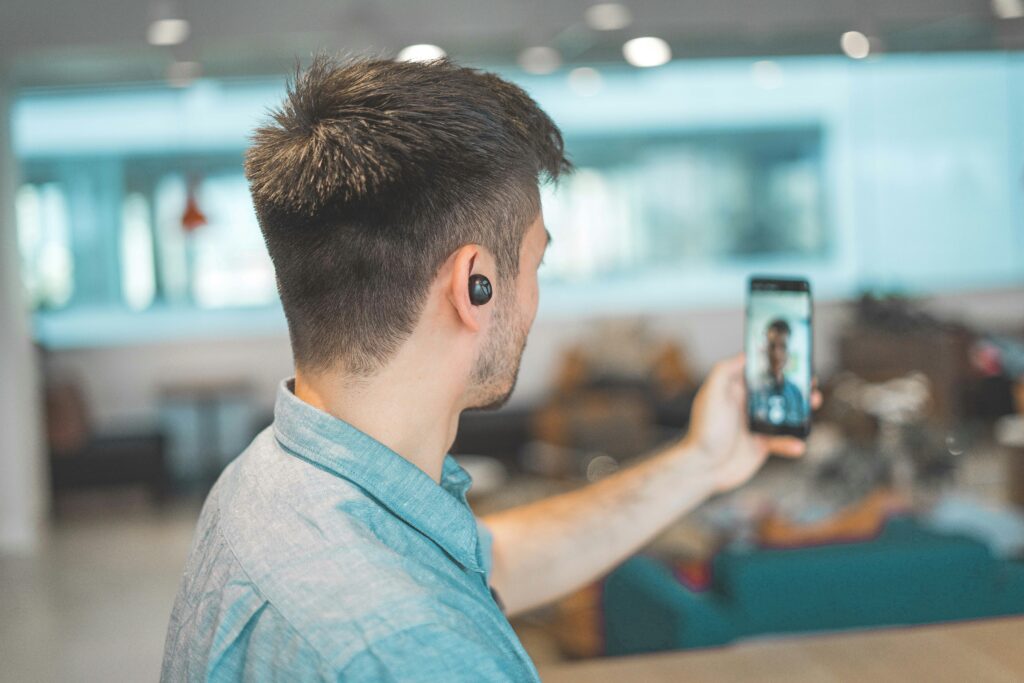
A deepfake video call scam uses AI-powered face-swapping software to replace the scammer’s real face with a different person’s face during a live video call. The scammer appears on camera, but the face the victim sees belongs to someone else, typically the same person whose photos have been used to build the fake profile.
This is different from an older and simpler trick in which scammers shared a pre-recorded video clip during a call to simulate being live. Real-time deepfake scams involve an actual live call where the scammer is genuinely present and responsive, but their face has been digitally replaced. The conversation is real. The face is not.
How Scammers Fake Their Face in Real Time
Real-time face-swapping technology was previously limited to well-funded productions with dedicated hardware. Several factors have made it accessible to individual scammers operating with minimal equipment.
The tools that make this possible:
- Consumer-grade face-swap apps including DeepFaceLive, FaceFusion, and several commercial alternatives can run on a standard gaming laptop with a mid-range GPU
- Virtual camera software routes the processed face-swapped video feed through a fake camera device that appears as a normal webcam to FaceTime, Zoom, Skype, and other video call platforms
- Open-source models trained on publicly available facial data can generate convincing swaps from a handful of source photos — exactly the kind of photos available on anyone’s social media profile
The setup requires a real photo or video source of the target identity, processing hardware capable of running the model in real time, and a virtual camera driver to pipe the output into the calling app. A motivated scammer with basic technical literacy can assemble this in an afternoon using freely available software.
The quality of the output varies significantly by hardware and model quality, but it is now consistently good enough to pass casual inspection on a standard video call, particularly when the scammer controls lighting, camera distance, and call duration.
Signs You Are Talking to a Deepfake
Real-time face-swap technology produces characteristic artifacts that are visible once you know what to look for. Most of these are most apparent when you specifically prompt the person to move or change their environment.
1. Edge blur or flickering around the face:
The boundary between the swapped face and the neck, hair, and background is the hardest area for face-swap models to render cleanly. Look specifically at the hairline, the jaw, and the ears. Soft, shifting, or slightly blurred edges that do not match the sharpness of the rest of the image are a consistent indicator of a composited face.
2. Lag between audio and lip movement:
Real-time processing introduces latency between the scammer’s actual speech and the rendered face’s lip movement. On a good connection with low processing lag, this may be subtle. On any connection with additional computational load, it becomes visible as a brief but consistent mismatch between what you hear and when the lips move.
3. Flat or reduced facial expression range:
Face-swap models perform best on neutral or slightly expressive faces and struggle with extreme expressions, strong emotion, or rapid micro-movements.
4. Unusual camera angle fixation:
A scammer running a deepfake needs to keep the source face in a relatively stable, forward-facing orientation for the model to perform well. Watch for someone who is unusually resistant to adjusting their camera angle, who always faces directly forward, or who offers excuses when you ask them to reposition.
5. Glitching at call start or during connection changes:
The rendering pipeline is most likely to produce visible artifacts when it initializes or when connection quality changes. Watch the first few seconds of a call and any moment when the connection fluctuates; brief moments where the underlying real face is visible, or where the rendering produces obvious distortion, are most likely to occur at these transition points.
Name Search Examples
To get more accurate results, enter the full name including at least First name, Middle name and Last name.
Email Search Examples
Phone Search Examples
Username Search Examples
Address Search Examples
Start typing the initial part of the address and select from the addresses given dropdown afterward.
We Respect Your Privacy.
What to Do If You Suspect a Deepfake
Do not send money under any circumstances while the concern is unresolved.
The entire purpose of a deepfake on a scam call is to create enough credibility to justify a financial request. Any payment made while the suspicion exists is almost certainly unrecoverable.
Run the spontaneous action test before anything else.
Ask for a specific, unscripted physical action as described above. A genuine person passes this immediately. A deepfake either refuses with an excuse or produces visible artifacts when the action is performed. This test costs nothing and takes under thirty seconds.
Verify through a completely independent channel.
If the caller claims to be someone you know a family member, a colleague, a public figure contact that person through a phone number or contact method you already have, not one provided during the call. A family member who is genuinely in an emergency can be reached through a number you already know. If the independent channel confirms the person is fine and did not call you, the call was a scam.
Do not confront the scammer directly.
Ending the call and moving to verification is more effective than confrontation, which often prompts the scammer to escalate pressure or switch tactics.
How to Verify Who You Are Really Talking To
A deepfake video call is designed to make a stolen identity appear live. The verification that catches it comes from outside the call rather than from anything you can observe on screen.
If you have any photo, username, phone number, or contact detail connected to the person’s claimed identity, enter it into Social Catfish before the situation progresses.
Reverse image search:
Upload any photo they have shared profile photos, photos sent during the relationship, or any image associated with the claimed identity to Social Catfish’s reverse image search. Facial recognition finds where that face appears online and under what names. A stolen identity’s photos trace back to the real person they were taken from, appearing under a different name on a different platform.
Username and contact detail search:
Enter any username, phone number, or email associated with the claimed identity into Social Catfish’s cross-platform search. The search returns every account linked to those details and the real identity behind them, confirming whether the claimed identity is consistent across independent sources or manufactured specifically for this interaction.
All searches are completely confidential. The person being searched receives no notification.
FAQ
No. Video call platforms process and transmit the video feed they receive from the device’s camera input, which, when deepfake software is involved, is a virtual camera outputting the processed face. The platform has no mechanism for detecting that the face is synthetic rather than live.
Simple actions like blinking are now handled adequately by most real-time face-swap models. More demanding tests — waving a hand directly in front of the face, turning sharply to a profile angle, or holding a written note close to the camera — are more likely to produce artifacts or failures because they exceed what current models handle cleanly.
Not necessarily. A scammer running a good deepfake at close distance on a high-quality setup can pass casual inspection. The specific tests in this guide are designed to stress the rendering in ways that casual observation does not. Passing a standard video call is no longer sufficient verification on its own.
Contact your bank or payment platform immediately; recovery windows narrow quickly for wire transfers and are effectively closed for cryptocurrency. File reports with the FTC at reportfraud.ftc.gov and the FBI at ic3.gov. Preserve all call records, screenshots, and communication logs before filing.
Conclusion
The advice to get on a video call was good advice when live video could not be faked in real time. That is no longer the case. Real-time deepfake technology is accessible, improving rapidly, and actively being used in romance scams, family emergency scams, and business fraud. Knowing the visual tells and running the spontaneous action test before any financial discussion is the updated version of the old safeguard. And when a call raises enough doubt to act on, Social Catfish’s reverse image and cross-platform search verifies the identity behind the face before any money changes hands.
Name Search Examples
To get more accurate results, enter the full name including at least First name, Middle name and Last name.
Email Search Examples
Phone Search Examples
Username Search Examples
Address Search Examples
Start typing the initial part of the address and select from the addresses given dropdown afterward.
We Respect Your Privacy.