
 Multiple Faces Detected


 October 1st, 2026
When someone sends you a Rose on Hinge, it carries more weight than a regular like, and that weight is intentional. Roses are scarce by design; they are the only way to engage with profiles in the Standouts tab, and they are algorithmically weighted to affect how your profile performs. If you are trying to understand what Standouts actually are, what a Rose means compared to a regular like, or how Hinge’s matching algorithm decides who you see, here is the honest breakdown, including what these features can and cannot tell you about the people you match with.
Name Search Examples
To get more accurate results, enter the full name including at least First name, Middle name and Last name.
Email Search Examples
Phone Search Examples
Username Search Examples
Address Search Examples
Start typing the initial part of the address and select from the addresses given dropdown afterward.
We Respect Your Privacy.
What Is the Hinge Standouts Feature?

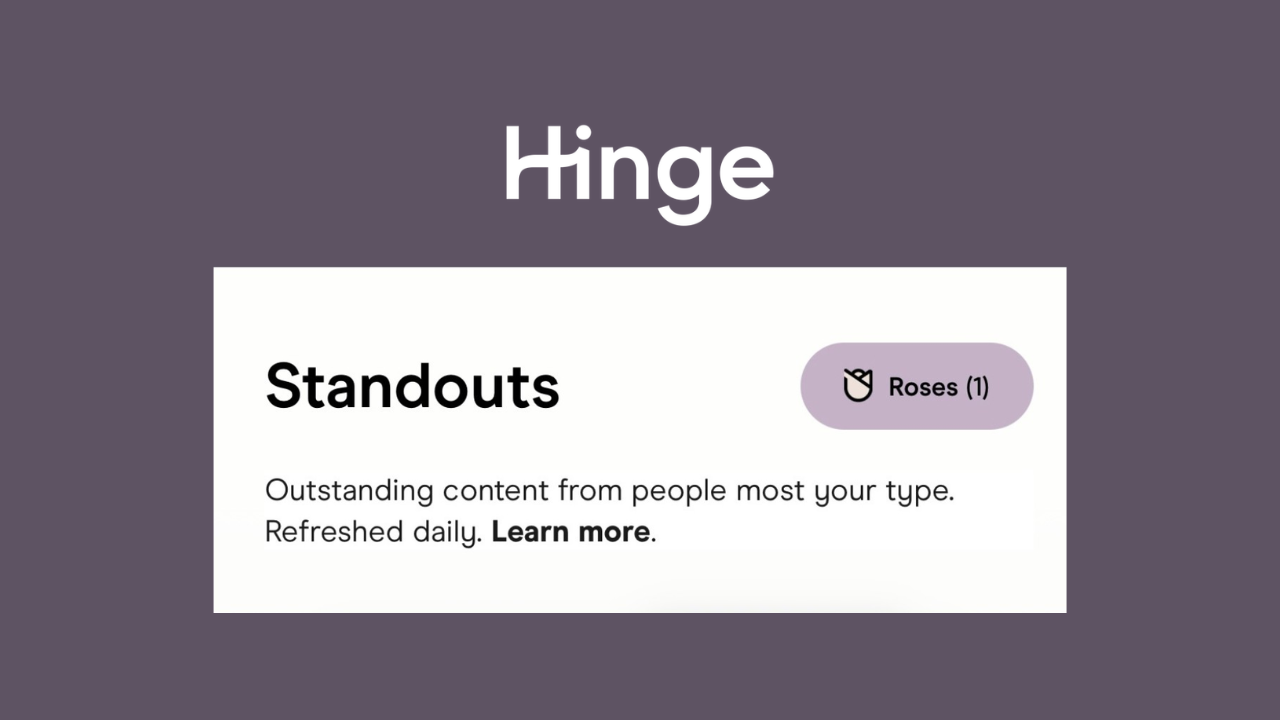
Standouts is a separate tab within Hinge, distinct from the main Discover feed that shows a daily-curated selection of profiles the algorithm has identified as likely to be particularly appealing to you.
How Standouts works:
- Standouts refreshes daily with a new set of profiles
- The profiles shown are selected by Hinge’s algorithm based on your in-app behavior — which profiles you have engaged with, how you have responded to specific prompts, and patterns in your like and pass history
- Standouts profiles cannot be liked with a regular like — the only way to engage with a Standouts profile is by sending a Rose
- You can view the Standouts tab and browse the profiles without using a Rose, but any engagement requires one
What Standouts is designed to do:
Hinge describes Standouts as surfacing profiles that are most likely to match your preferences based on behavioral signals rather than just stated preferences. The tab is intended to show you a higher-signal subset of potential matches rather than a randomized or purely proximity-based feed. Whether the curation matches your actual preferences depends on how much behavioral data Hinge has accumulated from your use of the app.
Standouts vs. Discover:
Your main Discover feed shows profiles in an order influenced by location, dealbreaker settings, and algorithmic signals but includes a broader range of profiles. Standouts is a filtered, higher-confidence subset of that broader pool, curated specifically for you and refreshed daily.
What Does a Rose Mean on Hinge?
A Rose is Hinge’s premium engagement signal, a like that carries more algorithmic weight than a standard like and is the only currency that works in the Standouts tab.
The scarcity design:
- Free Hinge users receive one Rose per week
- Hinge+ and HingeX subscribers receive additional Roses with their subscription
- Additional Roses can be purchased beyond the subscription allotment
The scarcity is deliberate. Hinge has stated that Roses are designed to signal genuine, considered interest rather than casual engagement. A regular like costs nothing and requires minimal decision-making. A Rose represents a week’s allocation for free users, which creates a meaningful threshold for using one.
What a Rose does algorithmically:
When you send someone a Rose, your profile ranks higher in their like queue and appears more prominently than a regular like in their incoming activity. Hinge has stated that profiles liked with a Rose are more likely to be seen and responded to than profiles liked with a standard like, not just because of the visual prominence but because of how the algorithm weights the signal.
What receiving a Rose tells you about the sender:
Someone who sent you a Rose from the Standouts tab used one of their scarce weekly Roses specifically on you after seeing you surface in their daily curated selection. For free users especially, this represents a deliberate choice. It does not tell you anything about who the person is, whether their profile accurately represents them, or whether the connection will be meaningful, but it does indicate a higher threshold of intentionality than a standard like.
Name Search Examples
To get more accurate results, enter the full name including at least First name, Middle name and Last name.
Email Search Examples
Phone Search Examples
Username Search Examples
Address Search Examples
Start typing the initial part of the address and select from the addresses given dropdown afterward.
We Respect Your Privacy.
What Standouts and Roses Actually Tell You — and Does Not
What Standouts surfacing a profile confirms:
Hinge’s algorithm identified that profile as likely to appeal to you based on your behavioral history in the app. The profile met whatever threshold Hinge’s curation uses for that day’s Standouts selection.
What Standouts does not confirm:
That the person’s profile accurately represents who they are, that their photos are current or genuine, or that the match will be meaningful. Algorithmic curation is based on stated preferences and behavioral patterns; it cannot verify identity, detect fake profiles, or assess whether someone is presenting themselves honestly.
What receiving a Rose confirms:
Someone chose to use one of their scarce weekly Roses on your profile rather than a standard like, indicating a higher level of intentional interest than a casual swipe.
What receiving a Rose does not confirm:
Anything about who the person is, whether their profile photos belong to them, or whether the interest they have expressed reflects an honest presentation of themselves. Roses carry more algorithmic weight than regular likes; they do not carry any identity verification weight at all.
The honest framing:
Standouts and Roses are signals about algorithmic compatibility and engagement intentionality. They don’t distinguish between a genuine person who’s truly interested and someone who’s built a compelling profile that surfaces well in Hinge’s curation without accurately representing who they are. That distinction requires verification outside the app’s own systems.
Verify Who You Are Actually Matching With
A Rose from Standouts is a meaningful signal that someone chose to engage with your profile intentionally. Before that engagement develops further, the verification that Hinge’s algorithm cannot provide takes two minutes outside the app.
Reverse Image Search Their Profile Photos
Save their main profile photo or any photo from their profile and upload it to Social Catfish’s reverse image search.
What this confirms:
Social Catfish uses facial recognition rather than file matching, finding the same face across different photos and on platforms that standard reverse image search misses. A genuine person’s profile photos appear consistently under their own name across their real social media. A photo that traces back to someone else’s Instagram or appears under a completely different name on another platform tells you the Hinge profile is using borrowed images, regardless of how algorithmically appealing the profile presented itself.
Why this matters specifically for Standouts:
Profiles that perform well in Hinge’s curation tend to have high-quality, attractive photos and well-crafted prompts. These are also the characteristics that make a profile effective; a fabricated profile with appealing, stolen photos surfaces in algorithmic curation the same way a genuine one does. The reverse image search catches the distinction that the algorithm cannot.
Cross-Reference Their Name or Username
If the match has shared their name in their profile or early in the conversation, enter it into Social Catfish’s cross-platform search. The search returns every platform where that name or any associated handle is active, alongside the real identity connected to it.
A genuine person with an established identity has a social media presence consistent with what their Hinge profile describes. A profile with no corresponding presence on any other platform, or one that surfaces under a different name or identity elsewhere, is worth knowing about before the connection develops further.
If They Have Shared Contact Details
If the conversation has moved to exchanging phone numbers, enter the number into Social Catfish’s reverse phone search. The search returns the real name and carrier registration behind the number and flags whether it is a legitimate line or a VoIP number with no verified identity, a consistent signal in fake profile operations, regardless of how the profile performed in algorithmic curation.
All Social Catfish searches are completely confidential. The person being searched receives no notification that a search was run.
They Sent You a Rose on Hinge — Who Are They, Really?
Hinge’s algorithm can flag interest — it can’t confirm who’s behind the profile.
What a Rose Gives You
A weak signal about algorithmic interest — not a name, not a real identity, not proof of anything.
Run their photo or name through a full search to see who’s actually behind that profile — and whether it connects to anything else online.
What the Search Found
✔ Photo cross-referenced across platforms
✔ Name checked against public records
✔ Profile consistency reviewed
Private and confidential — only you see the results.
FAQ
Standouts is a separate, daily-curated tab in Hinge that shows a selection of profiles the algorithm has identified as likely to appeal to you based on your behavioral history in the app. Standout profiles can only be engaged with using a Rose; regular likes do not work in the Standouts tab. The selection refreshes daily.
A Rose is Hinge’s premium engagement signal. Free users receive one Rose per week, making each Rose a deliberate allocation rather than a casual tap. Roses carry more algorithmic weight than regular likes, appearing more prominently in the recipient’s queue.
The algorithm learns from which profiles you engage with, which prompts you respond to, and your patterns of interaction over time. The Most Compatible feature applies this framework to surface daily high-confidence match recommendations.
No. Boost increases your profile’s visibility; more people see it during the Boost window, but it does not affect your compatibility score or algorithmic ranking with any specific person. Boost affects the quantity of people who encounter your profile, not the quality of the match signal for any individual pairing.
Algorithmically, yes. Standouts curation is based on profile quality signals: photo attractiveness, prompt engagement, and behavioral compatibility patterns. A fabricated profile with high-quality stolen photos and well-crafted prompts can surface in Standouts the same way a genuine profile does.
Conclusion
Standouts and Roses are Hinge’s mechanisms for surfacing high-confidence matches and encouraging intentional engagement. The Gale-Shapley foundation and behavioral machine learning behind the algorithm make Hinge’s matching meaningfully more sophisticated than a proximity-based swipe feed. What the algorithm cannot do is verify identity: a profile that surfaces in Standouts and receives a Rose has met a threshold of algorithmic appeal, not a threshold of authenticity. A two-minute reverse image search on any Standouts match’s photos through Social Catfish covers the identity verification gap that Hinge’s own systems are not designed to close.
Name Search Examples
To get more accurate results, enter the full name including at least First name, Middle name and Last name.
Email Search Examples
Phone Search Examples
Username Search Examples
Address Search Examples
Start typing the initial part of the address and select from the addresses given dropdown afterward.
We Respect Your Privacy.