
 Multiple Faces Detected


 September 25th, 2026
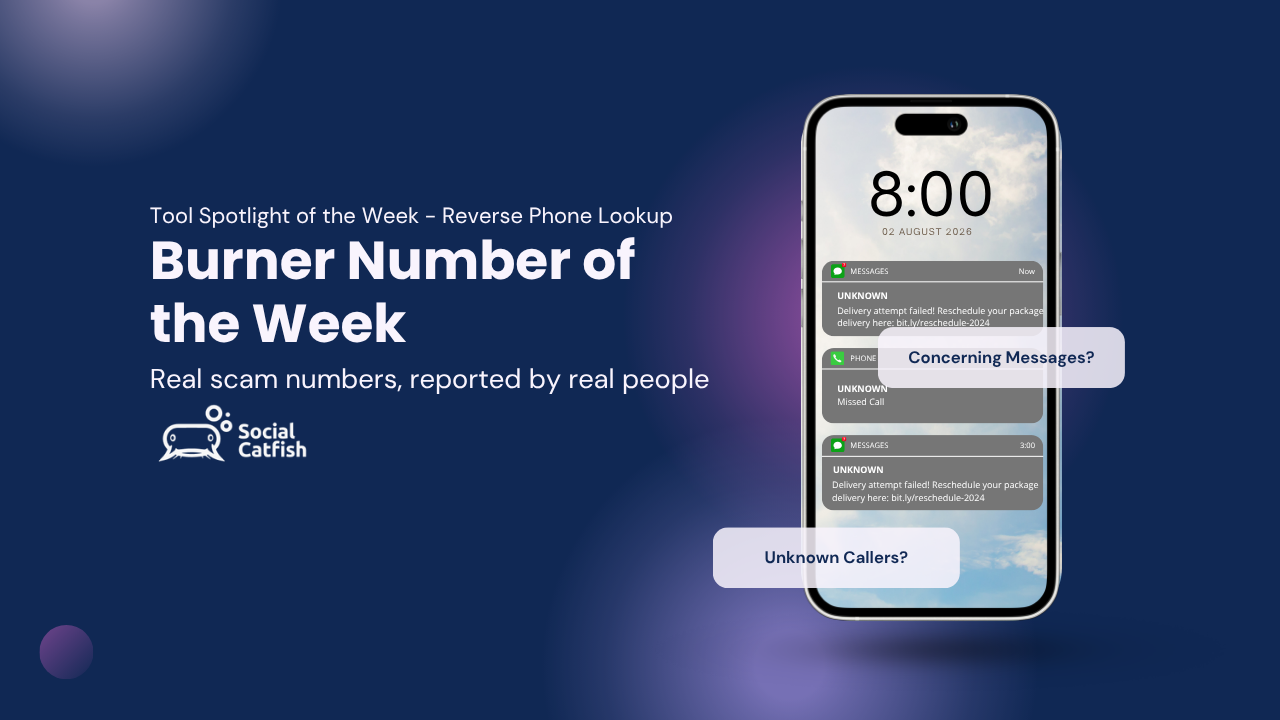
People don’t just search “how do I spot a scam call”; they search the exact number that just called them, hoping someone else has already dealt with it. That’s the gap this series is built to fill. Every week, we’re pulling real numbers straight from Social Catfish’s own reported-numbers queue flagged by actual users, not scraped from a spam-blocking app listing them out and spotlighting the one story worth slowing down on.
Some weeks that means a number tied to a well-known scam pattern; other weeks, like this one, it’s a small detail the reporter caught themselves that ends up being the whole story.
Name Search Examples
To get more accurate results, enter the full name including at least First name, Middle name and Last name.
Email Search Examples
Phone Search Examples
Username Search Examples
Address Search Examples
Start typing the initial part of the address and select from the addresses given dropdown afterward.
We Respect Your Privacy.
This Week’s 5 Reported Numbers
Pulled straight from Social Catfish’s reported-numbers queue, all flagged by real users this month:
This week’s reports
Click any row to expand ↓
(802) 399-9768
Posed as the reporter’s bank, asked about a specific withdrawal.
“Asking me if I withdrew a certain amount in my account. It pretended to be my Bank. But the area code wasn’t my Bank number.”
(806) 438-6010
Solicited fake Apple Pay “approvals” for large purchases.
(715) 230-0387
Posed as Ford Motor Company selling an extended warranty, then transferred the call to “continue payment.”
(916) 248-5517
Tried to extract names and details of the target’s family and friends.
(318) 485-2079
Romance-and-grant scam number used to repeatedly contact a reporter’s 89-year-old mother.
Private and confidential — only you see the results.
This Week’s Spotlight: the”Bank”Calling from Vermont
Number 1 is worth slowing down on, because the reporter caught the tell themselves before we even ran a lookup:
“Asking me if I withdrew a certain amount in my account. It pretended to be my Bank. But the area code wasn’t my Bank number.”
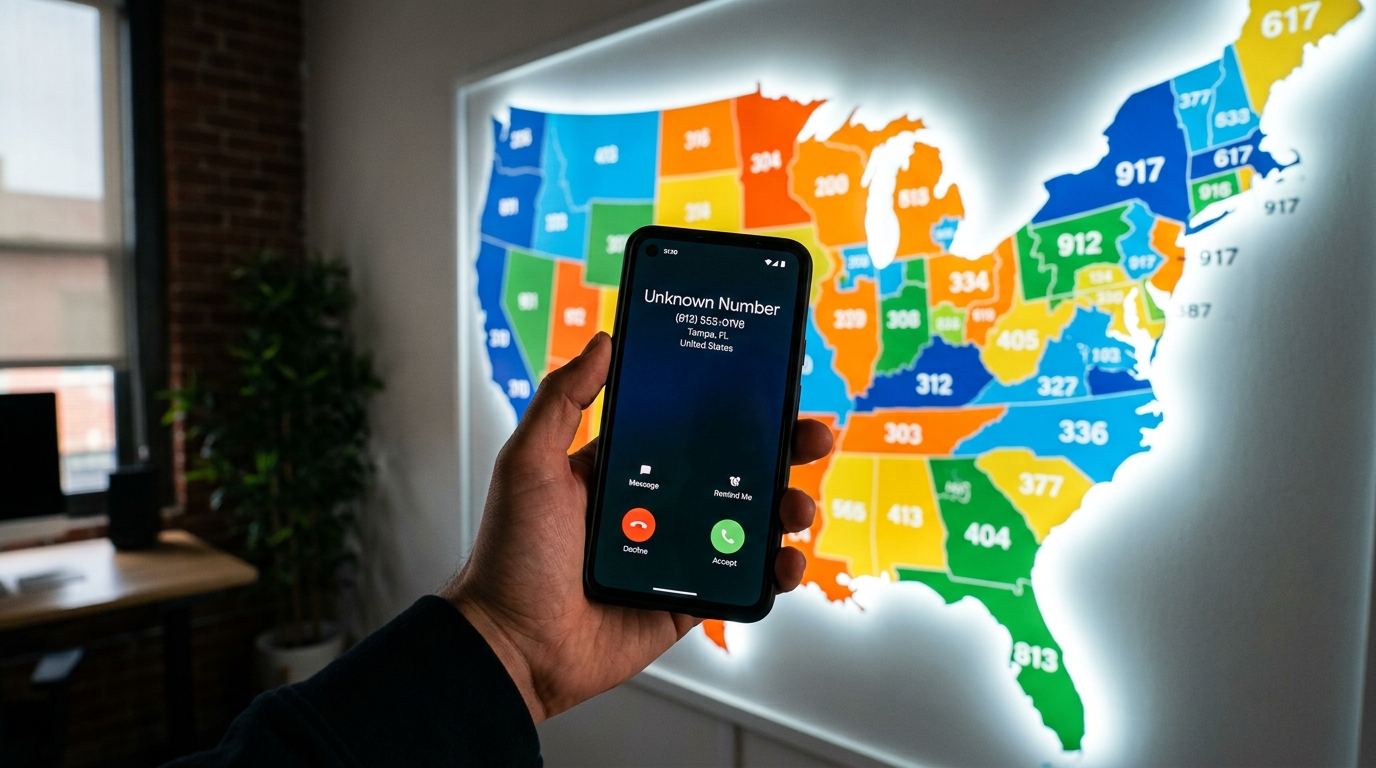
What we checked: 802 is Vermont’s only area code; it covers the entire state. If the caller claimed to be a bank’s fraud line and the reporter doesn’t live in or bank in Vermont, that mismatch alone is a real red flag, independent of anything the caller said on the call.
What else we checked: whether this exact number had been reported anywhere else publicly. It hadn’t. That’s worth being upfront about: unlike a stolen photo, which tends to resurface everywhere it’s been reused, a scam number doesn’t need a long public history to be dangerous. Scammers cycle through spoofed and burner numbers constantly, sometimes for a single batch of calls before dropping the number entirely. The area-code mismatch was the reliable tell here, not the number’s reputation.
The giveaway: banks don’t call you out of the blue to ask if you withdrew money, and real bank fraud departments never need you to confirm a transaction on a call you didn’t initiate. If a “bank” calls from an area code that doesn’t match anywhere you actually bank, that’s not a coincidence.
“Chase Fraud Dept.”
(802) 399-9768
What that caller ID actually confirms
Private and confidential — only you see the results.
What We Checked on the Other Four
We ran the same secondary check searching for any independent public reports on all five numbers, not just the spotlighted one. None of the five turned up prior complaints anywhere else online, including the Ford-warranty number, the Apple Pay number, the information-harvesting number, or the elder-targeting romance/grant number. That’s consistent with what we found on number 1: these numbers are disposable by design. A clean search result doesn’t mean a number is safe; it usually just means it’s new, or it’s being rotated out quickly enough that public trackers haven’t caught up yet. A report like the ones above, plus a mismatch like an area code or a callback number that doesn’t match the real company, is what actually catches these, not whether the number has a long paper trail.
The Takeaway
A reverse phone lookup won’t always hand you a rap sheet of prior complaints; sometimes a number is too new or too disposable to have one yet. What it will always show you is where a number is actually registered, which alone is often enough to catch a caller pretending to be someone local when they’re not. If any of the five numbers above just called you, or if a new one does next week, don’t wait to find out the hard way; hang up and call the real number on the back of your card, not the one that called you.
Name Search Examples
To get more accurate results, enter the full name including at least First name, Middle name and Last name.
Email Search Examples
Phone Search Examples
Username Search Examples
Address Search Examples
Start typing the initial part of the address and select from the addresses given dropdown afterward.
We Respect Your Privacy.